Advertisements
Advertisements
प्रश्न
Match the following products with their microbial sources:
| Products | Microbial Sources | ||
| (a) | Vitamin B2 | (1) | Rhizopus arrhizus |
| (b) | Fumaric acid | (2) | Candida lipolytica |
| (c) | Vitamin B12 | (3) | Trichoderma konigii |
| (d) | Lipase | (4) | Neurospora gossypii |
| (e) | Cellulase | (5) | Pseudomonas denitrificans |
| (f) | Citric Acid | (6) | Aspergillus niger |
जोड्या लावा/जोड्या जुळवा
Advertisements
उत्तर
| Products | Microbial Sources | ||
| (a) | Vitamin B2 | (4) | Neurospora gossypii |
| (b) | Fumaric acid | (1) | Rhizopus arrhizus |
| (c) | Vitamin B12 | (5) | Pseudomonas denitrificans |
| (d) | Lipase | (2) | Candida lipolytica |
| (e) | Cellulase | (3) | Trichoderma konigii |
| (f) | Citric Acid | (6) | Aspergillus niger |
shaalaa.com
या प्रश्नात किंवा उत्तरात काही त्रुटी आहे का?
APPEARS IN
संबंधित प्रश्न
State the medicinal value and the bioactive molecules produced by Monascus purpureus.
What are A, B, C, and D in the table given below :
| Types of microbe | Name | Commercial product |
| Fungus | A | Penicillin |
| Bacterium | Acetobacter aceti |
B |
| C | Aspergillus niger | Citric acid |
| Yeast | D | Ethanol |
Write in brief about the Biogas production process.
Which of the following is/are the microbial source(s) for the enzyme pectinase?
Which of the following are produced without distillation?
Identify the diagram given below.
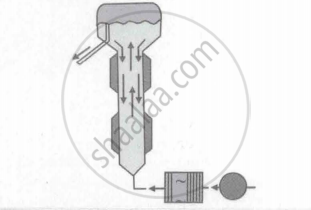
Match Column I (Product) and Column II (Source organisms/Organisms used in production) and choose the correct option.
| Column I | Column II | ||
| i. | Vitamin C | a. | S. cerevisiae |
| ii. | Beer | b. | A. niger |
| iii. | Chloromycetin | c. | Sclerotiana libertine |
| iv. | Pectinase | d. | S. venezuelae |
Name the microbial sources of any two vitamins.
Mention the respective source and state the specific use of any two bioactive molecules.
Which antibiotic is produced by Streptomyces venezuelae?
