Advertisements
Advertisements
प्रश्न
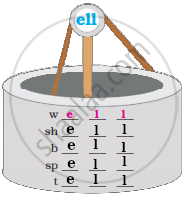
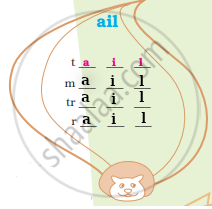
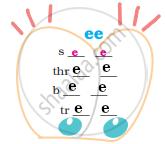
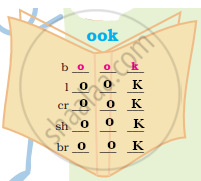
Make word families. The first word in each has been written for you.


Advertisements
उत्तर
APPEARS IN
संबंधित प्रश्न
In “A Horse and Two Goats”, how did Muni feel about his married life?
I prefer going out with friends to staying alone at home.
(Begin : I would rather ………….)
Given on the next page is a picture of a yacht. Label the parts of the yacht using the terms given in the box
|
Bow |
cabin |
rudder |
cockpit |
|
stern |
boom |
mainsail |
mast |

Words which describe ‘sleek’, ‘alert’, and ‘abrupt’
The words ‘grip’, ‘dawn’. ‘usher’, ‘coin’, ‘passport’ have a literal as well as a figurative meaning. Write pairs of sentences using each word in the literal as well as figurative sense.
Comment on the attitude shown by Taplow towards Crocker-Harris.
Go to your school/college library and read some other stories by O’Henry like, ‘The Gift of the Magi’, ‘The Last Leaf’ and ‘After Twenty years’. Write the stories in short in your notebook.
Imagine that Revathi’s father is abroad on business and she wishes to convey the news of her prize - winning plants. Draft an email for the above subject.
(Use an email format.)
Complete Dr. APJ Abdul Kalam’s profile with information picked from the lesson.
PROFILE - Dr APJ Abdul Kalam
- Title:
- Profession:
- Branch of science:
- Important position in Government held:
- His three visions for India:
Think and write in your own words.
Why is the maiden Autumn said to wear rice stems in her hair?
Read the script from:
| Joan (Girl) | Good morning, Captain squire ........... (up to) |
| Joan | (Simply) ............. Polly and Jack have promised to come with me. |
Write a summary of that part of the script (in Indirect speech) in 15 to 20 lines.
Write a paragraph comparing Don Quixote and Sancho Panza. The following words will help you to write a compare and contrast paragraph.
| Similarities | Differences |
| is similar to | on the other hand |
| both | however |
| also | But |
| too | in contrast to |
| differs from | |
| while | |
| unlike |
Fill in the blank with choosing the preposition from the option.
“It would be a pity ______ destroy it now.”
Here is a short story.
Once a lion lay fast asleep in the Ranathambore forest of Rajasthan. Some mice were playing hide and seek near him. One mouse got trapped under the lion’s paw. The lion woke up, laughed loudly, and let the mouse go!
After some days the mouse heard the lion’s roar. He saw that the lion lay in great pain as he was tied with many ropes. The mouse used his sharp teeth and cut the rope. ‘‘You are a true friend,’’ said the lion.
From Aesop’s Fables
A friend in need is a friend indeed
What does this mean?
- We must be there for friends in trouble
- Only a good friend will be with us when we are in trouble.
How did Woman 5 spend her time in the waiting hall?
Write the full form for the following.
wasn’t - ______
Imagine someone has invited your family to a program and you were the only person at home when the invitation was given orally.
Group Discussion:
You along with your friends Sujit, Rohit and Kishore discussing their likes and dislikes. But all are fascinated with the reading habit. Write a short group discussion in the form of dialogue telling the importance of reading for enhancing knowledge.
Observe the tourist leaflets given and answer the following.
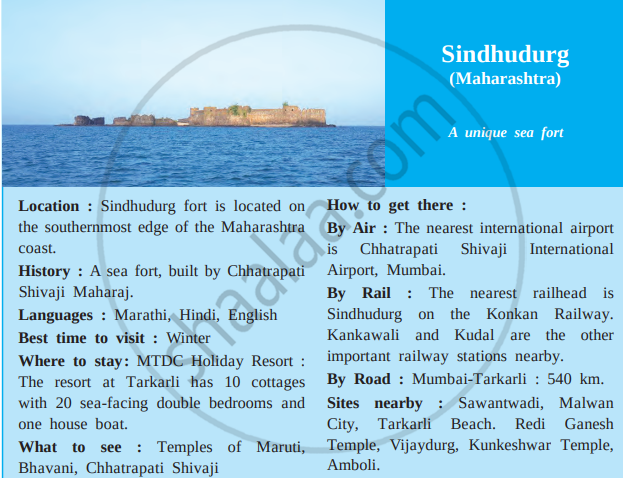

- Which places do these leaflets describe?
- What are the main points given in each leaflet?
- How can one reach Tadoba?
- Which is the best season to visit Tadoba? Why?
- List tourism-related words, e.g., tourist, booking etc.
As a Member of the Student Council of ABC School, you wish to start a Laughter Club to develop the appreciation for humour among students. Write a proposal in not more than 150 words, outlining the steps you would take to make this club a success.
