Advertisements
Advertisements
प्रश्न
Is the chromosome number of zygote, embryonal cells and adult of a particular organism always constant? How is the constancy maintained in these three stages?
Advertisements
उत्तर
Mitosis is a cell division which results in the formation of two daughter cells from a cell with the same number of chromosomes. Zygote undergoes mitotic divisions to develop into an embryo which in turn, also undergoes mitotic divisions to become an adult. So, the constancy of chromosomes is maintained in these three stages.
APPEARS IN
संबंधित प्रश्न
Mention the changes a flower undergoes after fertilisation.
What is the name of female organ of a flower (other than carpel)?
What is made in anther of a flower?
Explain the terms 'self pollination'
Fill in the blank by selecting suitable word:
A flower that bears both the male and the female parts is known as __________ flower.
Fill in the blanks:
A stamen consists of ______ and ________.
Which of the following is not an unisexual flower?
a) Coconut
b) Papaya
c) Gulmohor
d) Maize
Draw a diagram of the longitudinal section of a flower and label the following parts.
A student is observing the temporary mount of a leaf peel under a microscope. Draw a labelled diagram of the structure of stomata as seen under the microscope
Differentiate between self-pollination and cross-pollination.
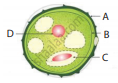
Identify the parts A, B, C, and D?
Which type of development is observed in male gametophytes of plants?
What would be the number of chromosomes of the aleurone cells of a plant with 42 chromosomes in its roots tip cells?
Sperm and egg nuclei fuse due to ______.
The flower of the Hibiscus plant is ______
In a bisexual flower inspite of the young stamens being removed artificially, the flower produces fruit. Provide a suitable explanation for the above situation.
Give reason for the following:
Fertilization cannot take place in flowers if pollination does not occur.
What are the agents for pollination?
In flowering plants, the pollen grains are transferred to stigma by pollination but the female germ cells are present in the ovary.
Explain with the help of a labelled diagram (only concerned parts), how the male germ cell reaches the ovary.
Type of sexual reproduction is ______.
