Advertisements
Advertisements
प्रश्न
In the given figure, ∠B = 60°, AB = 16 cm and BC = 23 cm,
Calculate:
- BE
- AC
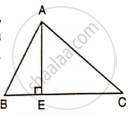
बेरीज
Advertisements
उत्तर
In ΔABE,
sin 60° = `"AE"/"AB"`
⇒ `sqrt(3)/(2) = "AE"/(16)`
⇒ AE = `sqrt(3)/(2) xx 16`
= `8sqrt(3) "cm"`
(i) In ∆ABE,
m∠AEB = 90°
∴ By Pythagoras Theorem, we get
BE2 = AB2 - AE2
⇒ BE2 = (16)2 - (8√3)2
⇒ BE2 = 256 - 192
⇒ BE2 = 64
⇒ BE = 8 cm
(ii) EC = BC - BE = 23 - 8 = 15
In ∆AEC,
m∠AEC = 90°
∴ By Pythagoras Theorem, we get
AC2 = AE2 + EC2
⇒ AC2 = (8√3)2 + (15)2
⇒ AC2 = 192 + 225
⇒ AC2 = 417
⇒ AC = 20. 42 cm
shaalaa.com
Solution of Right Triangles
या प्रश्नात किंवा उत्तरात काही त्रुटी आहे का?
पाठ 22: Solution of Right Triangles [Simple 2-D Problems Involving One Right-angled Triangle] - TEST YOURSELF [पृष्ठ ३४३]
