Advertisements
Advertisements
प्रश्न
How are organisms classified?
Advertisements
उत्तर
The classification of living organisms is based on their similar characteristics, body structure, and biological features.
- All organisms are first classified into living and non-living categories.
- Then, living organisms are further divided into two main groups: Plants and Animals.
- Animals are classified into different groups based on their body structure, such as:
- Vertebrates (Ksheryuki) and Invertebrates (Aksheruki)
- Mammals, Birds, Reptiles, Amphibians, and Fishes
The scientist Carl Linnaeus developed the Binomial Nomenclature system, which is used for the classification of living organisms.
संबंधित प्रश्न
Define and understand the following term:
Order
______ is a cold blooded animal.
Write true (T) or false (F)
Starting from Class, Species comes before the Genus.
You are provided with the seeds of gram, wheat, rice, pumpkin, maize, and pea. Classify them whether they are monocot or dicot.
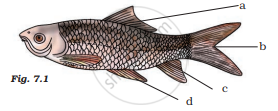
Label a,b,c and d. given in Fig. 7.1 Give the function of (b)
Paired and jointed legs are seen in phylum ______.
Order is a number of related families having common characters placed in an order.
Identity the incorrect statement:
Which one of the following belongs to the family Muscidae?
What is the difference between flora, fauna and vegetation? Eichhornia crassipes is called as an exotic species while Rauwolfia serpentina is an endemic species in India. What do these terms exotic and endemic refer to?
