Advertisements
Advertisements
प्रश्न
Give one example of following motion :
Uniform velocity
Advertisements
उत्तर
Example of uniform velocity : A body, once started, moves on a frictionless surface with uniform velocity.
APPEARS IN
संबंधित प्रश्न
What is the Differnece between speed and velocity ?
Fill in the following blank with suitable word:
The physical quantity which gives both, the speed and direction of motion of a body is called its……………
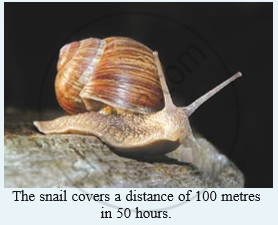
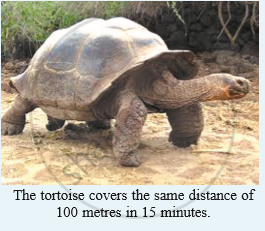
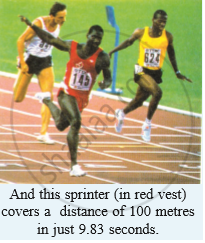
A snail covers a distance of 100 metres in 50 hours. Calculate the average speed of snail in km/h.
An aircraft travelling at 600 km/h accelerates steadily at 10 km/h per second. Taking the speed of sound as 1100 km/h at the aircraft’s altitude, how long will it take to reach the ‘sound barrier’ ?
Convert a speed of 54 km/h into m/s.
Give one example of a motion where an object does not change its speed but its direction of motion changes continuously.
The diagram below shows the pattern of the oil on the road at a constant rate from a moving car. What information do you get from it about the motion of the car.

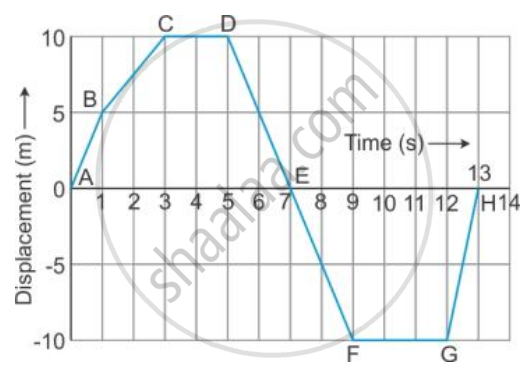
From the displacement-time graph of a cyclist given below in the Figure, find The average velocity in the first 4 s.
Define uniform velocity and give one example.
Distinguish between speed and velocity.
