Advertisements
Advertisements
प्रश्न
Fill in the blank choosing the word from the box. Refer to a dictionary if required.
The Chairman of this concern seems to derive pleasure from inflicting pain on others. He humiliates and hurts his subordinates for no reason. He is a real ______.
पर्याय
thespian
sadist
polyglot
ambidextrous
philanthropist
misanthrope
bibliophile
nonagenarian
teetotaller
globetrotter
optimist
Advertisements
उत्तर
The Chairman of this concern seems to derive pleasure from inflicting pain on others. He humiliates and hurts his subordinates for no reason. He is a real sadist.
APPEARS IN
संबंधित प्रश्न
Say whether the following sentence is in the Active or the Passive voice. Write A or P after the sentence.
My father gave it to the mechanic. ______
Pick out five Compound words from the lesson.
Find from the story the Homophone of the following word.
(Word that sound the same, but differ in spelling and meaning.)
weak
Write the following dialogue from the story in the Indirect Speech.
‘Who are you?’ asked the bird. ‘I am the Happy Prince.’
‘Then why are you crying? I am wet with your tears.’
Complete the following chart of personal pronouns using words from the brackets-
(him, our, we, he, her, their, it, me, your).
| Person | Pronouns | |||
| First | I, ______ | my, ______ | ______, us | mine, ours |
|
Second |
you | ______ | you | yours |
| Third | ______ she, it, they | his, ______ its, ______ | ______ her, them, ______ | his, hers, its, theirs |
- Which of the above pronouns do you use when you talk about yourself ?
- Suppose you are telling someone about the good/bad things they have done.
- What pronoun are you likely to use ?
- Suppose you are complaining about one or more persons/things to your teacher/ mother. What pronouns will you use?
Words that have the same spelling, but differ in meaning when used in different contexts are called homographs. For example,
- A temple fair attracts a lot of crowds.
Her performance in the test was fair. - A rose is the king of flowers.
The sun rose with a golden glow.
Think of 5 homographs and list them below. Then write 2 sentences of your own, to bring out the difference in meanings.
| Homograph | Sentences |
| (1) |
|
| (2) |
|
| (3) |
|
| (4) |
|
| (5) |
|
What are conjunctions? explain with some example?
Find one example of the following punctuation mark from the story and copy the sentence in which they are used - semi-colon.
Complete these sentence using the appropriate modal. The clues in the bracket will help you.
Poongothai ____________ speak several languages. (ability in the present)
When we reached the park, __________.
Complete the following table with two more compound words.
| Noun + Noun |
kitchen garden, 1. ______ 2. ______ |
| Noun + Verb |
mouthwash 1. ______ 2. ______ |
| Verb + Noun |
watchman 1. ______ 2. ______ |
| Preposition + Noun |
overcoat 1. ______ 2. ______ |
| Gerund + Noun |
bleaching powder 1. ______ 2. ______ |
| Noun + Gerund |
housekeeping 1. ______ 2. ______ |
| Adjective + Preposition + Noun |
good for nothing 1. ______ 2. ______ |
| Noun + Preposition + Noun |
mother-in-law 1. ______ 2. ______ |
Combine the pair of a sentence using the appropriate connector.
Yusuf was running high temperature. He could not take part in the competition.
The doctor advised him against ______ in the sun.
Find the antonym for the following word.
Disgrace ×
Change the possessive adjective into a possessive pronoun.
My bike is costly.
Look at the words in the boxes. Match the words to make as many new words as possible. One is done for you. Eg. out house.
| out | root |
| river | wall |
| water | garden |
| flower | garden |
| sun | hill |
| aerial | bed |
| busy | sill |
| window | house |
| foot | shine |
| compound | fall |
Look at the punctuation of these sentence. Why are they punctuated differently? Discuss in class.
Who’s going to see them?
Read these sentence from the story carefully. Do they give command or request or make statement? Write 'C' for command and 'R' for request and 'S' for statement.
The tendril moved towards grandfather.
Complete the Conditional Sentence. Decide whether to use Type I, II, or III.
If she __________ (come) to see us, we will go to the zoo.
Write the correct punctuation mark that best complete the sentence.
Wow___What a wonderful event ____
Pick the words from the box and put them in the appropriate column
- kindly
- soft
- sweet
- everywhere
- bright
- constanly
- few
- then
- huge
- loudly
| Adverb | Adjective |
He ate two chocolates _______ he got cough.
Fill in the blank
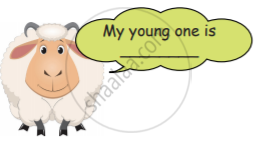
Complete the following sentence using past perfect tense.
The satellite _________ on the moon before they gave the command. (land)
______ girls who attended the class informed the others about the test.
Add suitable question tag to the following sentence and punctuate properly.
You should add a little salt to the buttermilk
Find out the synonym of the underlined word in each of the following sentence.
Anna would say with an impudent smile.
Write compound words using the pictures.
 |
+ |  |
| _________ | ||
Rewrite the following using a complete word instead of a contracted form.
I wouldn’t throw it away.
We have seen that clauses are parts of a sentence, and they are classified as main and subordinate or dependent clauses. Dependent clauses can be further classified as follows according to the work they do in a sentence.

How do we decide whether a clause is a noun clause, an adjective clause or an adverb clause? There is a simple rule - we can replace an adverb clause with an adverb, an adjective clause with an adjective and a noun clause with a noun.
Look at the following examples -
- But I don’t know the answer. (Noun)
But I don’t know what they want. (Noun clause) - He told us a funny story. (Adjective)
He told us a story that was funny. (Adjective clause) - They went away. (Adverb)
They went when you were talking to your friend. (Adverb clause)
Now complete the following on your own :
- But I don’t know ____________.
- He told us ____________.
- They went ____________.
