मराठी

Evaluate the Following Definite Integrals as Limit of Sums. Int_1^4 (X^2 - X) Dx - Mathematics

Advertisements
Advertisements

प्रश्न

Evaluate the following definite integrals as limit of sums.

`int_1^4 (x^2 - x) dx`

Advertisements

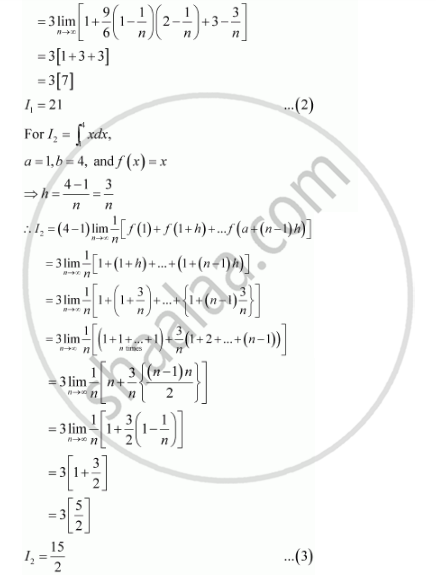
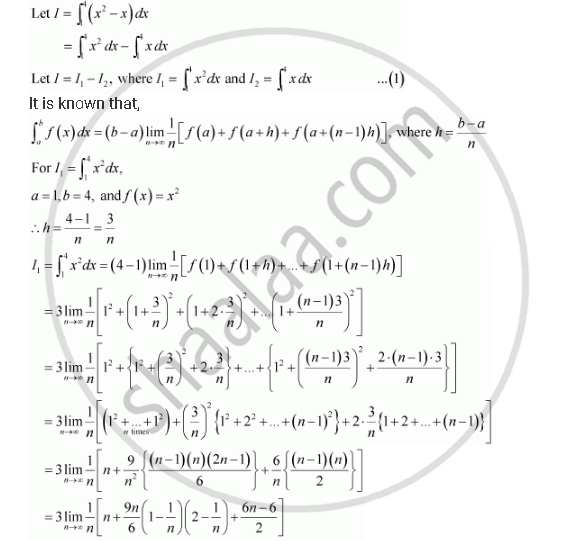
उत्तर
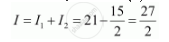
From equations (2) and (3), we obtain
shaalaa.com
  या प्रश्नात किंवा उत्तरात काही त्रुटी आहे का?
पाठ 7: Integrals - Exercise 7.8 [पृष्ठ ३३४]

APPEARS IN

एनसीईआरटी Mathematics Part 1 and 2 [English] Class 12
पाठ 7 Integrals
Exercise 7.8 | Q 4 | पृष्ठ ३३४

व्हिडिओ ट्यूटोरियलVIEW ALL [3]

संबंधित प्रश्‍न

Evaluate `int_(-1)^2(e^3x+7x-5)dx` as a limit of sums


Evaluate `int_1^3(e^(2-3x)+x^2+1)dx`  as a limit of sum.


Evaluate the following definite integrals as limit of sums.

`int_0^5 (x+1) dx`


Evaluate the following definite integrals as limit of sums. 

`int_2^3 x^2 dx`


Evaluate the definite integral:

`int_(pi/2)^pi e^x ((1-sinx)/(1-cos x)) dx`


Evaluate the definite integral:

`int_0^(pi/4) (sinx cos x)/(cos^4 x + sin^4 x)`dx


Evaluate the definite integral:

`int_(pi/6)^(pi/3)  (sin x + cosx)/sqrt(sin 2x) dx`


Evaluate the definite integral:

`int_0^1 dx/(sqrt(1+x) - sqrtx)`


Evaluate the definite integral:

`int_0^(pi/4) (sin x +  cos x)/(9+16sin 2x) dx`


Prove the following:

`int_0^1 xe^x dx = 1`


Prove the following:

`int_(-1)^1 x^17 cos^4 xdx = 0`


Prove the following:

`int_0^(pi/4) 2 tan^3 xdx = 1 - log 2`


Evaluate  `int_0^1 e^(2-3x) dx` as a limit of a sum.


Choose the correct answers The value of `int_0^1 tan^(-1)  (2x -1)/(1+x - x^2)` dx is 

(A) 1

(B) 0

(C) –1

(D) `pi/4`


\[\int\frac{\sin^3 x}{\sqrt{\cos x}} dx\]

\[\int\frac{1 + \cos x}{\left( x + \sin x \right)^3} dx\]

\[\int\cot x \cdot \log \text{sin x dx}\]

\[\int x^3 \sin \left( x^4 + 1 \right) dx\]

\[\int \sec^4    \text{ x   tan x dx} \]

\[\int\frac{1}{x\sqrt{x^4 - 1}} dx\]

\[\int\limits_0^1 \left( x e^x + \cos\frac{\pi x}{4} \right) dx\]


Evaluate the following integral:

\[\int\limits_{- 1}^1 \left| 2x + 1 \right| dx\]

\[\int\limits_{- \pi/2}^{\pi/2} \sin^4 x\ dx\]

\[\int\frac{\sqrt{\tan x}}{\sin x \cos x} dx\]


Using L’Hospital Rule, evaluate: `lim_(x->0)  (8^x - 4^x)/(4x
)`


Evaluate `int_1^4 ( 1+ x +e^(2x)) dx` as limit of sums.


Evaluate `int_(-1)^2 (7x - 5)"d"x` as a limit of sums


If f and g are continuous functions in [0, 1] satisfying f(x) = f(a – x) and g(x) + g(a – x) = a, then `int_0^"a" "f"(x) * "g"(x)"d"x` is equal to ______.


Evaluate the following:

`int_0^1 (x"d"x)/sqrt(1 + x^2)`


Evaluate the following:

`int_0^(1/2) ("d"x)/((1 + x^2)sqrt(1 - x^2))`  (Hint: Let x = sin θ)


Evaluate the following:

`int_(pi/3)^(pi/2) sqrt(1 + cosx)/(1 - cos x)^(5/2)  "d"x`


The value of `lim_(x -> 0) [(d/(dx) int_0^(x^2) sec^2 xdx),(d/(dx) (x sin x))]` is equal to


If f" = C, C ≠ 0, where C is a constant, then the value of `lim_(x -> 0) (f(x) - 2f (2x) + 3f (3x))/x^2` is


Share
Notifications

Englishहिंदीमराठी


      Forgot password?
Use app×