Advertisements
Advertisements
प्रश्न
Describe any three adaptations in anemophilous flowers.
Give adaptations in anemophilous flowers.
Give any four adaptations of anemophilous flowers.
Advertisements
उत्तर
- The flowers are small, inconspicuous, colourless, and without nectar and fragrance (odour).
- The pollen grains are light in weight, dry and produced in large numbers to increase chances of pollination considering the wastage of pollen grains.
- Stigma is feathery enough to trap pollen carried by wind currents.
- Stamens are exserted with long filaments and versatile anthers.
- Stamens and stigmas are exposed to air currents.
Notes
Students should refer to the answer according to their questions.
APPEARS IN
संबंधित प्रश्न
With the help of a suitable example, explain protandry.
As a senior biology student you have been asked to demonstrate to the students of secondary level in your school, the procedure(s) that shall ensure cross-pollination in a hermaphrodite flower. List the different steps that you would suggest and provide reasons for each one of them.
The transfer of pollen grains from the anther to the stigma of the same or of another flower of the same kind is known as ______.
Differentiate between the following:
Self pollination and cross pollination.
Can a unisexual flower be self pollinated?
Fill in the blanks with suitable words.
_______ is a water-pollinated flower.
- Nucellus
- Antipodals
- Synergids
- Micropyle
Describe pollination. How many types of pollinations are found?
What are the different adaptations shown by bird-pollinated flowers?
For which of the following attractants and rewards are required?
Pollination by water occurs in ______.
Even in absence of pollinating agents seed-setting is assured in ______.
Which of these is a condition that makes flowers invariably autogamous?
A botanist studying Viola (common pansy) noticed that one of the two flower types withered and developed no further due to some unfavorable condition, but the other flower type on the same plant survived and it resulted in an assured seed set. Which of the following will be correct?
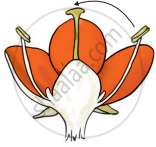
Which type of pollination does the figure indicate?
The term used for transfer of pollen grains from anthers of one plant to stigma of a different plant which, during pollination, brings genetically different types of pollen grains to stigma, is ______
What is epihydrophily?
In sea grass, pollens are long, ribbon like and without exine exhibiting ______ pollination.
Anemophily is the process of pollination by which agent?
Chiropterophily involves pollination by which organisms?
