Advertisements
Advertisements
प्रश्न
Derive the relation between commercial unit of energy (kWh) and SI unit of energy (joule).
State the one-kilowatt-hour relationship with joule.
Advertisements
उत्तर
We can establish a relation between kilowatt-hour (kWh) and Joule (J) as –
1 kilowatt-hour = 1 kilowatt for 1 hour
= 1000 watt for 1 hour
But,
`1 "watt" = (1 "Joule")/(1 "s")`
So ,
1 kilowatt - hour = 1000 `"Joules"/"second"` for 1 hour
= `1000 "Joules"/"seconds" 60 xx 60 "seconds"`
= `3.6 xx 10^6` J
संबंधित प्रश्न
A certain household has consumed 250 units of energy during a month. How much energy is this in joules?
Write true or false of the following statement.
In an electric fan, electrical energy changes into the mechanical energy.
Fill in the blank
An electric fan converts electrical energy into ______ energy.
Select the correct alternatives
The correct statement is
State two factors on which the potential energy of a body at a certain height above the ground depends.
What do you mean by conservation of mechanical energy? State the condition when does it hold.
Match the following:
| Column A | Column B |
| (a) Needle | (1) class II lever |
| (b) Doorknob | (2) inclined plane |
| (c) Ramp | (3) Class I lever |
| (d) Lemon crusher | (4) Wheel and axle |
| (e) Seesaw | (5) wedge |
What is energy?
Define the term efficiency of a machine.
Answer the following in a word or two or in a sentence.
Write the formula for calculating the efficiency of a machine.
Answer the following in short.
What do you understand by the term efficiency of a machine’?
How many joules are there in one kilowatt-hour?
Name the quantity whose unit is :
(a) kilowatt
(b) kilowatt-hour
A certain household consumes 650 units of electricity in a month. How much is this electricity in joules?
Observe the picture and put a tick (✓) if work is done and put a cross (x) if work is not done.
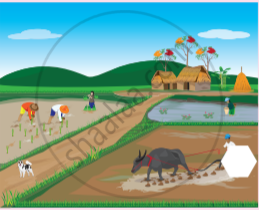 |
 |
 |
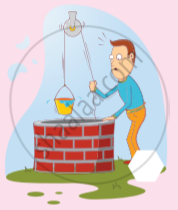 |
 |
 |
Which one of the following requires wind energy?
What energy transfer happen in a car engine?
The work done on an object does not depend upon the
A ball is dropped from a height of 10 m. If the energy of the ball reduces by 40% after striking the ground, how much high can the ball bounce back? (g = 10 m s–2)
