Advertisements
Advertisements
प्रश्न
A ball is dropped from a height of 10 m. If the energy of the ball reduces by 40% after striking the ground, how much high can the ball bounce back? (g = 10 m s–2)
Advertisements
उत्तर
Let the mass of the ball be m, then, the initial potential energy of the ball
= mgh = 10 x 10 x m
= 100 m J
Since the energy of the ball reduces by 40% after striking the ground, energy left with the ball = 60% of P.E.
= `60/100 xx 100 "m"`
= 60 m J
Let the ball bounce back to height W due to this remaining energy,
∴ mgh = 60 m
h = `(160"m")/"mg"`
= 6m
APPEARS IN
संबंधित प्रश्न
Fill in the blank
The ability to do work is called ______
Fill in the blank
The S.I.unit of energy is ______
Select the correct alternatives
When a bulb lights up on passing current, the change of energy is
What do you mean by conservation of mechanical energy? State the condition when does it hold.
Tick the most appropriate answer.
The force applied on a machine to do work is called the
Answer the following in short.
What do you understand by the term efficiency of a machine’?
How many joules are there in one kilowatt-hour?
The commercial unit of energy is :
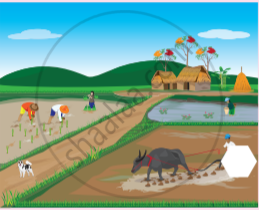
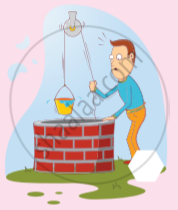
Observe the picture and put a tick (✓) if work is done and put a cross (x) if work is not done.
 |
 |
 |
 |
 |
 |
Which one of the following requires wind energy?
