Advertisements
Advertisements
प्रश्न
Complete of the following, so as to make a true statement:
A quadrilateral has ..... vertices, no three of which are .....
Advertisements
उत्तर
A quadrilateral has four vertices, no three of which are collinear.
संबंधित प्रश्न
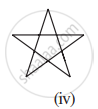
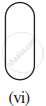
Given here are some figures:
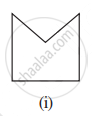 |
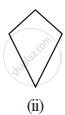 |
 |
 |
 |
 |
 |
 |
Classify each of them on the basis of the following:
- Simple curve
- Simple closed curve
- Polygon
- Convex polygon
- Concave polygon
In a quadrilateral, define of the following Exterior .
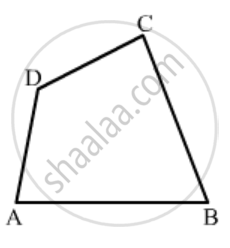
In Fig. 16.19, ABCD is a quadrilateral.
Name a pair of adjacent sides.
A quadrilateral has three acute angles each measures 80°. What is the measure of the fourth angle?
Complete the following statement by means of one of those given in brackets against each:
If in a quadrilateral only one pair of opposite sides are parallel, the quadrilateral is ................
The consecutive sides of a quadrilateral have
In quadrilateral WXYZ, the pairs of opposite angles are ______.
In the following figure, ∠XYZ cannot be written as ______.

Using the information given, name the right angles in part of figure:
RT ⊥ ST

Draw a rough sketch of a quadrilateral KLMN. State two pairs of adjacent sides.
