Advertisements
Advertisements
प्रश्न
Compare the properties of solids, liquids and gases in tabular form.
Advertisements
उत्तर
| SOLID | LIQUID | GAS |
| Solids have a fixed shape and a fixed volume. | Liquids have a fixed volume, but no fixed shape. | Gases have neither a fixed volume nor a fixed shape. |
| Solids cannot be compressed. | Liquids can be compressed. Large pressure is required to compress them. | Gases can be compressed easily. |
| Solids have high density. | Liquids have lesser density than solids. | Gases have the least density among the three. |
| The force of attraction between the particles is very strong. | The intermolecular force of attraction is weaker than solids | The intermolecular force of attraction is weakest. |
| The space between the particles of solids is negligible. | They have considerable space between the particles. | The space between gas particles is large. |
APPEARS IN
संबंधित प्रश्न
Classify the following into solids, liquids and gases.
Oxygen, milk, common salt, wax, stone, L.P.G, carbon- dioxide, sugar, mercury, coal, blood, butter, copper, coconut oil, kerosene.
For the following statement, say whether it describes a solid, a liquid or a gas.
Particles move about very quickly but do not leave the surface
To identify materials of common use
Procedure – Just move around in your house – in the drawing room, sitting room, bedroom, kitchen, bathroom etc. Identify the things and All in the blanks in the table given below
| No. | Place | Name of the thing | Material used for making the thing |
| 1 | Study room | ||
| 2 | Drawing room | ||
| 3 | Kitchen | ||
| 4 | bathroom | ||
| 5 | Any other place |
See the given pictures and write down the state of each object. (Solid, Liquid, Gas)
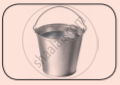 |
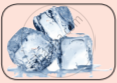 |
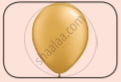 |
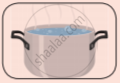 |
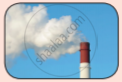 |
| _____ | ______ | ______ | ______ | ______ |
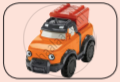 |
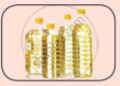 |
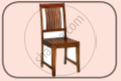 |
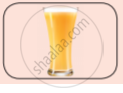 |
 |
| ______ | _______ | ______ | ______ | ______ |
Write the states of water.
Strainer is a kind of sieve which is used to separate a liquid from solid.
Solids are compressible.
Define the term ‘Diffusion’.
A strong current of trivalent gaseous boron passed through a silicon crystal decreases the density of the crystal due to part replacement of silicon by boron and due to interstitial vacancies created by missing Si atoms. In one such experiment, one gram of silicon is taken and the boron atoms are found to be 1000 ppm by weight, when the density of the Si crystal decreases by 12%. The percentage of missing vacancies due to silicon, which are filled up by boron atoms will be ____ g. [Given · Atomic wt. Si= 30, B = 11]
The density of solid Argon is 1.6 ml at - 233°C. If the Argon atom is assumed to be sphere of radius 1.5 × 10⁻⁸ cm, then the ______ % of solid Argon is apparently occupied.
[Take : NA = 6 × 10²³, Atomic mass of Ar = 40]
