मराठी
तामिळनाडू बोर्ड ऑफ सेकेंडरी एज्युकेशनएस.एस.एल.सी. (इंग्रजी माध्यम) इयत्ता १०

Chipko movement is initiated against ______.

Advertisements
Advertisements

प्रश्न

Chipko movement is initiated against ______.

रिकाम्या जागा भरा
Advertisements

उत्तर

Chipko movement is initiated against the cutting down of trees.

shaalaa.com
Forests: Our Lifeline
  या प्रश्नात किंवा उत्तरात काही त्रुटी आहे का?
पाठ 22: Environmental Management - Evaluation [पृष्ठ ३२६]

APPEARS IN

सामाचीर कलवी Science [English] Class 10 SSLC TN Board
पाठ 22 Environmental Management
Evaluation | Q I. 3. | पृष्ठ ३२६

संबंधित प्रश्‍न

Herbs form the ______ layer in the forest.


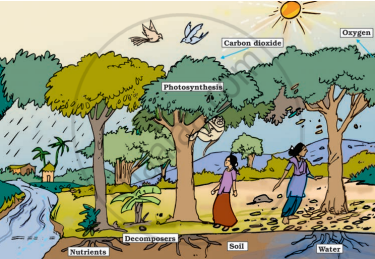
In the figure, the artist has forgotten to put the labels and directions on the arrows. Mark the directions on the arrows and label the diagram using the following labels:

clouds, rain, atmosphere, carbon dioxide, oxygen, plants, animals, soil, roots, water table.


Which of the following is the ‘biodiversity hot spots'?


When we destroy a forest, we destroy ______ 


In our country, vast tracts of forests are cleared and a single species of plant is cultivated. This practice promotes ______ 


Forests are not responsible for


State whether the following statement is true or false. If false, give the correct statement.

Forests influence climate, water cycle and air quality


State whether the following statement is true or false. If false, give the correct statement.

The forest keeps on growing and changing and can regenerate


People say that nothing goes waste in a forest. Can you explain, how?


Visit a forest. Here is a list of points that would make your visit more fruitful.

  1. Make sure that you have permission to go into the forest.
  2. Make sure that you can find your way around. Get a map and go along with someone who is familiar with the area.
  3. Keep a record of the things you see and do. Observations make the visit interesting. Sketches and photographs are useful.
  4. You may record bird calls.
  5. Collect different kinds of seeds or hard fruits like nuts.
  6. Try to recognise various types of trees, shrubs, herbs, etc. Make lists of plants from different places in the forest and of different layers. You may not be able to name all the plants, but it is worth recording and seeing where they grow. Make a record of approximate heights of plants, crown shape, bark texture, leaf size, and flower colour.
  7. Learn to recognise the animal’s droppings.
  8. Interview the forest officials and the people of surrounding villages and other visitors.

You must never collect birds’ eggs, and their nests should never be disturbed.

You can read more on the following website:


Share
Notifications

Englishहिंदीमराठी


      Forgot password?
Use app×