Advertisements
Advertisements
प्रश्न
A first order reaction is 40% complete in 50 minutes. Calculate the value of the rate constant. In what time will the reaction be 80% complete?
40% of a first order reaction is completed in 50 minutes. How much time will it take for the completion of 80% of this reaction?
Advertisements
उत्तर
1. For the first order reaction k = `2.303/t log ([A_0])/([A])`
Assume, [A0] = 100%, t = 50 minutes
Therefore, [A] = 100 – 40 = 60
k = `(2.303/50) log (100/60)`
k = 0.010216 min−1
Hence the value of the rate constant is 0.010216 min−1
2. t = ?, when the reaction is 80% completed,
[A] = 100 – 80 = 20%
From above, k = 0.010216 min−1
t = `(2.303/0.010216) log (100/20)`
t = 157.58 min
The time at which the reaction will be 80% complete is 157.58 min.
APPEARS IN
संबंधित प्रश्न
Answer the following in brief.
Derive the integrated rate law for the first-order reaction.
Rate constant of a reaction is 3.6 × 10⁻³ s–1. The order of reaction is ______.
Explain with the help of a potential energy diagram that the catalyst increases the rate of the reaction.
The rate constant of the first order reaction is 1.386 min–1. Calculate the time required for 80% reactant to decompose?
A zero-order reaction \[\ce{X -> Product}\], with an initial concentration 0.02 M has a half-life of 10 min. if one starts with concentration 0.04 M, then the half-life is
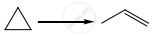
This reaction follows first-order kinetics. The rate constant at particular temperature is 2.303 × 10⁻² hour−1. The initial concentration of cyclopropane is 0.25 M. What will be the concentration of cyclopropane after 1806 minutes? (log 2 = 0.3010)
The rate constant of a first order reaction is 3 × 10⁻⁶ per s. If the initial concentration is 0.10 mol dm−3, the initial rate of reaction is ____________.
A first order reaction takes 40 minutes for 30% completion. Calculate the half-life of reaction.
The integrated rate law is a direct relationship between time and ______
Calculate half life of reaction if rate constant of first order reaction is 0.0178 minute−1.
