Advertisements
Advertisements
प्रश्न
1 kg of water freezes to form ice at 0°C. What amount of heat is withdrawn?
Advertisements
उत्तर
3,36,000 J.
संबंधित प्रश्न
Explain the term boiling ?
Who shall pay carbon tax ?
The substances like water which have ........... Heat capacity warm up more slowly than substances like iron which have .......... heat capacity.
A piece of iron of mass 2.0 kg has a heat capacity of 966 J K-1. Find its specific heat capacity in S.I unit.
The farmers fill their fields with water in winter. Give reason.
The temperature of a lead piece of mass 400 g rises from 20°C to 50°C when 1560 J of heat is supplied to it. Calculate: Heat capacity of lead piece.
63.2 g of copper at 50°C can just melt 3.8g of ice. If the specific latent heat of ice is 336 J/g, find the specific heat capacity of copper.
What is specific heat capacity?
The diagram below shows a cooling curve for 200 g of water. The heat is extracted at the rate of 100 Js-1. Answer the questions that follow:
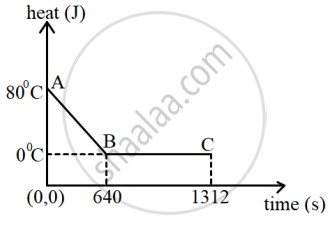
- Calculate specific heat capacity of water.
- Heat released in the region BC.
