मराठी
Tamil Nadu Board of Secondary EducationSSLC (English Medium) Class 6

Detergents

Advertisements

Topics

  • Home Management
  • Budgeting and Saving
    • Management of Household Finances: Budgeting and Saving
    • Budgeting
    • Factors Affecting Family Budget
    • Steps in Preparing Budget
    • Judicious Utilization of Availabl-e Resources
    • Concept of Saving
  • Space Organisation in the Kitchen
    • Space Organisation in the Kitchen
    • Characteristics of a Good Kitchen
    • Layout and Plannings
    • Work Triangle
    • Kitchens Are Planned to Save E Ergy and Time
  • Growth and Development During Middle Childhood
  • Home Furnishing
    • Home Furnishing
    • Objectives of Home Furnishing
    • Factors Affecting Selection of Fabrics
    • Fibre Characteristics
    • Curtains and Draperies
    • Rugs and Its Types
    • Carpets
    • Upholstery Fabric
  • Meal Planning
  • Milestones of Development
    • Milestones of Development
    • Growth and Development
    • Concept of Gang Age
    • Stages of Development
    • Physical Development (Middle Childhood - 6 to 12 Years)
    • Social Development (Middle Childhood 6-12 Years)
    • Emotional Development (Middle Childhood 6-12 Years)
    • Cognitive Development (Middle Childhood 6 To12 Years)
    • Language Development (Middle Childhood 6to12 Years)
    • Developmental Tasks
  • Selection and Care of Textiles and Clothing
  • Communication and Extension
  • Role of the Family, Peer Group and School in Middle Childhood
    • Role of the Family
    • Role of Peer Group
    • Role of Schools
  • Common Learning Difficulties of Children; Role of Family, School and Peers.
    • Learning Disabilities in Children
    • Recognising Learning Disabilities
  • Balanced Diet
  • Meal Planning for the Family.
    • Meal Planning for the Family
    • Principles of Meal Planning
    • Importance of Meal Planning
    • Factors Affecting Meal Planning
    • How to Save Money, Time and Energy by Meal Planning
    • Meals of the Day
    • Meal Plans for Different Age Groups
  • Storage and Preservation of Food
    • Hygienic Handling
    • Storage of Food
    • Household Methods of Preservation of Food
  • Selection of Fabrics
    • Selection of Fabrics
    • Finishing of the Fabrics
    • Desirable Features of the Fabrics
    • Factors Affecting Selection of Fabrics
  • Selection of Readymade Garments
    • Selection of Readymade Garments
    • Need for Readymade Garments
    • How to Select Or Buy Readymade Garments
    • Advantages of Readymade Garments
    • Disadvantages of Readymade Garments
    • Checking the Workmanship of the Readymade Garments
    • Factors Affecting the Selection and Consumption of Readymade Garments
  • Laundering
    • Laundering of Clothes
    • Methods of Cleaning
    • Laundry at Home
    • General Methods for Removing Dirt from Fabrics
    • Common Steps in Laundering at Home (Wet Method)
    • Laundering Specific Fabrics
    • Laundering of Fabrics Made from Natural Fibres
    • Laundering of Fabrics Made from Artificial (Or Manmade) Fibres
    • Difference Between Wet and Dry Methods of Cleaning
    • Methods of Finishing
    • Storage of Clothes
    • Stains and Their Removal
    • Common Stains and Their Removal
  • Laundry Material
    • Water
    • Detergents
    • Soap
    • Stiffening Agents
    • Starch
    • Blues
    • Optical Brighteners
    • Bleaching Agents
    • Oxidising Bleaches
    • Reducing Bleaches
    • Additional Laundry Reagents
    • Fabric Softeners Or Fabric Conditioners
    • Fabric Stain Removers
  • Social and Economic Issues in India
    • Understanding Terminology Related to Development
    • Some Developmental Schemes and Programmes in India
    • Gender Discrimination
    • Women Empowerment
    • Child Labour
    • Human Trafficking
    • Child Abuse
    • Social Impact of Sex Ratio, Female Foeticide and Infanticide
    • Morbidity and Mortality
    • Carbon Footprint
    • Population Explosion in India
    • Human Capital
    • Poverty Line
    • Some Developmental Schemes and Programmes in India
  • Role of Government Towards a Developed India
    • DWCRA (Development of Women Children in Rural Areas)
    • MNREGA (Mahatma Gandhi National Rural Employment Guarantee Act, 2005)
    • Ayushman Bharat
    • Pradhan Mantri Jan Arogya Yojana (PM-JAY)
    • Ujjwala Yojana
    • Pradhan Mantri Jan Dhan Yojana (PMJDY)
  • Communication Aids
    • Communication Aids
    • Flyers, Pamphlets, Leaflets, Or Posters
    • Brochures
    • Puppet Shows
    • Street Plays
  • Detergent and Its Working
  • Experiment
Maharashtra State Board: Class 7

Detergent and Its Working:

The word ‘detergent’ comes from the Latin word ‘detergere,’ meaning ‘to wipe away’. Detergents are substances used to clean and remove dirt. Some examples of detergents include soap nut (reetha), soap pod (shikakai), soap, washing powder, washing soda, liquid soap and shampoo.

Natural Detergents:

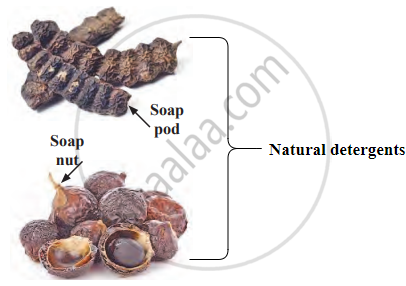
  • Soap nut (Ritha) and soap pod (Shikakai) are examples of natural detergents.
  • They contain a natural chemical called saponin, which creates foam and helps remove dirt and grease.
  • These natural detergents are gentle on the skin and do not cause any harm.
  • They are also safe for delicate fabrics like silk and wool, making them ideal for washing sensitive clothes.

Working of Detergent

  • The molecules of a detergent are long, and the properties of its two ends are different. A molecule of a detergent holds on to a water molecule at one end and an oil molecule at the other.
  • As a result, the molecules of oil mix with the water. This is how soap acts when we wash ourselves or our soiled clothes. Our body and clothes become oily for various reasons, such as applying gels or creams, oiling our hair, etc.
  • The oily layer sticks fast to the crisscrossing threads of the material of our clothes. Soap is used for removing it. Due to the property of holding on to both oil and water, soap water spreads easily on many types of surfaces.
  • The property of a substance of spreading on a surface is called surface activity, and the substance is said to be a surfactant. Detergents are surface active. One effect of surface activity is lather formation.

Action of detergents

Maharashtra State Board: Class 7

Experiment

1. Aim: To demonstrate how detergent helps mix oil and water, forming a uniform mixture.

2. Requirements: a clean glass bottle, water, oil (any cooking oil), and detergent solution.

3. Procedure

  • Take some water in a clean glass bottle.
  • Add a small amount of oil to the water.
  • Observe that the oil forms a separate layer on top of the water (oil floats).
  • Shake the bottle vigorously and let it settle. You will notice that the oil floats back on the water again.
  • Now add a few drops of detergent solution to the same mixture.
  • Shake the bottle again vigorously.
  • Observe that the mixture becomes uniform (homogeneous) and looks milky.

4. Conclusion: Without detergent, oil and water remain separate because oil is lighter and does not mix with water. When detergent is added, it breaks down the oil into tiny droplets, allowing it to mix with water. This shows that detergent helps oil and water form a stable mixture by acting as a bridge between them.

Advertisements
Share
Notifications

Englishहिंदीमराठी


      Forgot password?
Use app×