Advertisements
Online Mock Tests
Chapters
2: Unit-2: Children and Women in Sports
3: Unit-3: Yoga as Preventive Measure for Lifestyle Disease
4: Unit-4: Physical Education and Sports for CWSN
5: Unit-5: Sports and Nutrition
6: Unit-6: Test and Measurement in Sports
7: Unit-7: Physiology and Injuries in Sports
8: Unit-8: Biomechanics and Sports
▶ 9: Unit-9: Psychology and Sports
Chapter 10: Unit-10: Training in Sports
Advertisements
Solutions for Chapter 9: Unit-9: Psychology and Sports
Below listed, you can find solutions for Chapter 9 of CBSE Dr. Manu Sood for फिज़िकल एजुकेशन [अंग्रेजी] कक्षा १२.
Dr. Manu Sood solutions for फिज़िकल एजुकेशन [अंग्रेजी] कक्षा १२ 9 Unit-9: Psychology and Sports MULTIPLE CHOICE QUESTIONS [Pages 296 - 299]
Psychology means:
Science of matter
Science of mind or soul
Science of humanity
None of the above
Sports psychology deals with:
Psychological aspects of the sports and behaviour of sportsmen
Human nature
Behaviour of living things
None of the above
'Personality' comes from the Latin word persona, meaning:
privacy
person
mask
attitude
A person who is bold and outgoing is an:
Introvert
Extrovert
Ambivert
Somatotype
According to Carl Jung, these people are more comfortable living alone and being by themselves:
Ambiverts
Extroverts
Introverts
Ectoverts
These kind of people are characterized by outgoingness, responsiveness to other persons, activity, aggressiveness and the ability to make quick decisions:
Ambiverts
Extroverts
Introverts
Ectoverts
The big five model of personality contains the following dimensions:
openness, narcissism, psychoticism, conscientiousness, extraversion
psychoticism, neuroticism, extraversion, openness, agreeableness
openness, conscientiousness, extraversion, agreeableness, narcissism
conscientiousness, agreeableness, neuroticism, openness, extraversion
How are the big five personality factors (McRae and Costa, 1990, 1996) also known as?
RIVER Scale
BROOK Scale
PONDS Scale
OCEAN Scale
Which of the following is an intrinsic motivator?
Pay
Promotion
Feedback
Interest of play
Inner urge of an individual which motivates him or her towards the activity is called as ______.
Intrinsic motivation
external motivation
secondary motivation
awards and rewards
Motivation that drives individuals to naturally pursue actions that provide fun, joy, pleasure or challenge is called ______.
Extrinsic Motivation
Amotivation
Intrinsic Motivation
Cognitive Motivation
Carl Jung classified personality into ______ main types.
Two
Three
Four
Five
Extroverts:
Have more self-confidence
Take more interest in others
Are lively and realistic
All of the above
Introverts:
Are too self-conscious
Are reserved
Lack self-confidence
All of the above
A person having traits of both extroverts as well as introverts is called ______.
Endomorph
Ambivert
Mesomorph
Ectomorph
______ is also referred to as Neo-Freudian.
William Herbert Sheldon
Carl Gustav Jung
Gordon Allport
None of the above
Carl Gustav Jung was a ______ psychiatrist.
Swiss
German
British
Dutch
Which one of the following is not a factor of Big Five Theory?
Openness to new ideas
Submissiveness
Neuroticism
Extraversion
This is also known as predatory aggression:
Assertive behaviour
Instrumental aggression
Impulsive aggression
Hostile aggression
This is also called as reactive aggression:
Assertive behaviour
Instrumental aggression
Impulsive aggression
Hostile aggression
Carl Jung presented his theory of personality by classifying it on the basis of ______ important aspects.
Two
Three
Four
Five
Who introduced the concept of introversion and extroversion to the world of psychology?
William Herbert Sheldon
Gordon Allport
Carl Jung
None of the above
In physical education and sports, motivation is very effective method to bring the required and effective changes in the ........... of an athlete or a player:
Behaviour
Attitude
Interest
All of the above
Which of the following is a legitimate behaviour?
Hostile Aggression
Instrumental Aggression
Assertiveness
Proactive Aggression
Aggression is displayed in sports through ______.
assertion of views
use of abusive words
walking away from the opponent
strictly following the rules
Which of the following is an example of extrinsic motivation?
Trying to beat your personal best in a 100m sprint
Participating in badminton for enjoyment
Wanting to swim a length of the swimming baths to gain a badge
Taking up aerobics to get fitter
Which one of the following is an example of intrinsic motivation?
Trying to win the cup in a hockey tournament
Earning money by refereeing a football match for your younger children
Enjoying performing a new dance routine
Getting a swimming badge to please your parents
Persons who score low in extraversion trait of Big Five Theory have the following trait:
Sociable
Talkative
Expressive
Avoid the social meetings
The important feature/features of the Goal Setting Theory is/are:
It is time bound
Specificity of the task
Definite purpose of task
All of the above
The goal set by a sports-persons should be:
Possible to achieve
In the reach of the individual
Of known advantages of attaining it
All of the above
Which one of the following is not a technique of motivation in the field of sports?
Presence of spectators
Goal setting
Ignorance
Praise
Which of the following is not a result of regular exercise?
Increased bone density
Increased cholesterol level
Strong immune system
Increased longevity
Normally people do not adhere to a regular exercising programme due to:
lack of proper goals
adding a variety of exercises
social support enhancement
feedback from instructor
______ is used to describe a person's overall sense of self-worth or personal value.
Self Talk
Self-esteem
Mental Imagery
None of the above
Process of recreating images in mind to improve performance in sports is referred as?
Mental imagery
Self-talk
Self-esteem
Goal setting
Traits like sadness, mood swings and emotional instability are related with ______.
Extroversion
Agreeableness
Conscientiousness
Neuroticism
Which of the following is effective for prevention of Coronary Heart Disease?
Regular exercise
Sedentary lifestyle
Medicine
Dieting
Reactive Aggression is also called ______.
Instrumental Aggression
Hostile Aggression
Assertive Aggression
Both Instrumental Aggression and Hostile Aggression
Goal setting is a ______ approach, under motivational technique.
Cognitive
Pedagogical
Social
Facilitation
The concept of ______, generally refers to a person’s evaluation of, or attitude towards, him or herself.
Mental-imagery
Self-esteem
Self-talk
Goal-setting
Identify the characteristic of introvert personality.
Meet unknown people easily
Self-centered
Highly socialized
Expressive nature
Instrumental aggression is related to ______.
Accepting defeat
Achieving goal
Only performance
Hurting someone to gain something
______ is characterized by high sociability, if a person is outgoing and has a tendency to seek stimulation in the company of others.
Conscientiousness
Agreeableness
Extraversion
Neuroticism
Self-talk refers to our ______ consisting of statements we say to ourselves, either in our mind or out loud.
Internal thoughts
Internal behavior
Internal soul
Internal emotions
Shweta is over-stressed and anxious as she is preparing for her ‘NEET’ exam. Which of the following is a suitable reason for her to exercise?
To develop physical strength
Mental Relaxation
For Socialisation
To Reduce the risk of disease
Identify the type of exercise shown in the picture given below :
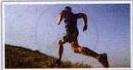
Yoga
Jogging
Cycling
None of the above
Identify the type of aggression shown in the picture given below:
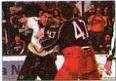
Instrumental aggression
Hostile aggression
Assertive behaviour
None of the above
Dr. Manu Sood solutions for फिज़िकल एजुकेशन [अंग्रेजी] कक्षा १२ 9 Unit-9: Psychology and Sports MATCH THE COLUMN [Page 299]
Match the following:
| (a) More comfortable living alone and being by themselves | (i) Motivation |
| (b) Socially active and more aware of what is going on around them | (ii) Introverts |
| (c) The drive to strive | (iii) Ambiverts |
| (d) Majority of the population | (iv) Extroverts |
(a) - (iv), (b) - (ii), (c) - (iii), (d) - (i)
(a) - (ii), (b) - (iv), (c) - (i), (d) - (iii)
(a) - (iii), (b) - (i), (c) - (ii), (d) - (iv)
(a) - (i), (b) - (iii), (c) - (iv), (d) - (ii)
Match List I with List II and select the correct answer from the code given below:
| List I | List II |
| (a) Creative, imaginative | (i) Conscientiousness |
| (b) Social and assertive | (ii) Neuroticism |
| (c) Emotionally unstable | (iii) Extroversion |
| (d) Goal oriented, hardworking, self-disciplined | (iv) Openness |
(a) - (i), (b) - (ii), (c) - (iii), (d) - (iv)
(a) - (iv), (b) - (iii), (c) - (ii), (d) - (i)
(a) - (ii), (b) - (i), (c) - (iii), (d) - (iv)
(a) - (i), (b) - (iii), (c) - (ii), (d) - (iv)
Match List – I with List – II and select the correct answer from the code given below:
| List – I | List – II |
| (i) Extraversion | 1. Enthusiasm |
| (ii) Conscientiousness | 2. Responsible |
| (iii) Agreeableness | 3. Compassionate behavior |
| (iv) Neuroticism | 4. Emotional instability |
(i) - 1, (ii) - 2, (iii) - 3, (iv) - 4
(i) - 4, (ii) - 3, (iii) - 2, (iv) - 1
(i) - 3, (ii) - 4, (iii) - 2, (iv) - 1
(i) - 2, (ii) - 3, (iii) - 4, (iv) - 1
Given below are traits of the big five theories of personality in List – I with their characteristics in List – II:
| List – I | List – II |
| Traits of Big 5 | Characteristics |
| (a) Openness | i. Active, optimistic and social |
| (b) Extroversion | ii. Insecure, nervous and anxious |
| (c) Neuroticism | iii. Creative, focused on tackling new challenges and curious |
| (d) Agreeableness | iv. Friendly, helpful and trustworthy |
Match the items of List – I with List – II and choose the correct option from the following:
(a) - iii, (b) - i, (c) - iv, (d) - ii
(a) - iii, (b) - i, (c) - ii, (d) - iv
(a) - iv, (b) - ii, (c) - iii, (d) - i
(a) - iv, (b) - i, (c) - ii, (d) - iii
Dr. Manu Sood solutions for फिज़िकल एजुकेशन [अंग्रेजी] कक्षा १२ 9 Unit-9: Psychology and Sports CASE STUDY [Page 300]
Vijay is a football player of Kennedy school. He is famous for his aggressive play in the field. Because of his aggression he scored many goals. At the same time, he was punished for his aggressive behaviour with opponent.
1. What level of aggression is needed in sports?
- Partial
- Full
- No need
- None of these
2. Hostile aggression is also known as ______ aggression.
- Reactive
- Channelled
- Assertive
- Instrumental
3. This is also known as predatory aggression:
- Assertive behaviour
- Instrumental aggression
- Impulsive aggression
- Hostile aggression
4. Which type of aggression is goal-oriented and within the rules of the game?
- Hostile aggression
- Instrumental aggression
- Reactive aggression
- Impulsive aggression
Rohan was a good athlete of our school. He used to undergo training regularly for the best results. In spite of his constant effort, he could not succeed. He got frustrated with his poor performance and stopped expressing his feelings and meeting friends. His parents took him to a psychologist for help. After a few consultations, he was able to focus well and succeeded.
1. Rohan can be motivated using:
- Blame
- Praise
- Recognition
- Both Praise & Recognition
2. Taking help of psychologist becomes ______ kind of motivation.
- Intrinsic
- Extrinsic
- Ambivert
- Both Intrinsic & Extrinsic
3. Pick the odd one out:
- Openness
- Extroversion
- Neuroticism
- Ambivert
4. Person with emotional instability and negative emotions are termed as ______.
- Neuroticism
- Introvert
- Openness
- Extrovert
Or
A person having both traits of introvert and extrovert is known as ______.
- Mesomorph
- Extroversion
- Ambivert
- Endomorph
Dr. Manu Sood solutions for फिज़िकल एजुकेशन [अंग्रेजी] कक्षा १२ 9 Unit-9: Psychology and Sports REASONING QUESTIONS [Pages 301 - 302]
Given below are the two statements labelled Assertion (A) and Reason (R):
Assertion (A): Internal motivation is an inner urge of the individual which motivates him or her towards the activity.
Reason (R): Medals, trophies, certificates and recognitions are examples of Internal motivation.
In the context of the above two statements, which one of the following is correct?
Both (A) and (R) are true and (R) is the correct explanation of (A).
Both (A) and (R) are true, but (R) is not the correct explanation of (A).
(A) is true, but (R) is false.
(A) is false, but (R) is true.
Given below are the two statements labelled Assertion (A) and Reason (R):
Assertion (A): Aggression is a behaviour to cause harm to other person.
Reason (R): Aggression is unintentional.
In the context of the above two statements, which one of the following is correct?
Both (A) and (R) are true and (R) is the correct explanation of (A).
Both (A) and (R) are true, but (R) is not the correct explanation of (A).
(A) is true, but (R) is false.
(A) is false, but (R) is true.
Given below are the two statements labelled Assertion (A) and Reason (R):
Assertion (A): Hostile aggression provokes one to harm others physically.
Reason (R): Aggression is intent to harm another person mentally and/or physically.
In the context of the above two statements, which one of the following is correct?
Both (A) and (R) are true, and (R) is the correct explanation of (A).
Both (A) and (R) are true, but (R) is not the correct explanation of (A).
(A) is true, but (R) is false.
(A) is false, but (R) is true.
Given below are the two statements labelled Assertion (A) and Reason (R):
Assertion (A): Introverts are more comfortable living alone and being by themselves.
Reason (R): They are actively involved in the world of people and things.
In the context of the above two statements, which one of the following is correct?
Both (A) and (R) are true and (R) is the correct explanation of (A).
Both (A) and (R) are true, but (R) is not the correct explanation of (A).
(A) is true, but (R) is false.
(A) is false, but (R) is true.
Given below are the two statements labeled Assertion (A) and Reason (R).
Assertion (A): Aggression is part of human behaviour and is necessary for an individual to live and struggle for higher achievements.
Reason (R): Aggression is inevitable and inseparable in sport activities.
In the context of the above two statements, which one of the following is correct?
Both (A) and (R) are true and (R) is the correct explanation of (A).
Both (A) and (R) are true, but (R) is not the correct explanation of (A).
(A) is true, but (R) is false.
(A) is false, but (R) is true.
Given below are two statements labelled Assertion (A) and Reason (R) :
Assertion (A): Self-esteem is centred around a belief in the self and respect for the self.
Reason (R): Mental imagery is a psychological skill that can be created in the mind in the absence of any external stimuli.
In the context of the above two statements, which one of the following is correct?
Both Assertion (A) and Reason (R) are true and Reason (R) is the correct explanation of the Assertion (A).
Both Assertion (A) and Reason (R) are true and Reason (R) is not the correct explanation of the Assertion (A).
Assertion (A) is true, but Reason (R) is false.
Assertion (A) is false, but Reason (R) is true.
Given below are two statements, one of which is labelled as Assertion (A) and the other is labelled as Reason (R). Read both statements carefully:
Assertion (A): Actions and responses of two athletes may differ during a match situation.
Reason (R): Personality is the combination of an individual’s thoughts, characteristics, behaviour, attitude and habits.
Both Assertion (A) and Reason (R) are true, and Reason (R) is the correct explanation of the Assertion (A).
Both Assertion (A) and Reason (R) are true, but Reason (R) is not the correct explanation of the Assertion (A).
Assertion (A) is true, but Reason (R) is false.
Assertion (A) is false, but Reason (R) is true.
Dr. Manu Sood solutions for फिज़िकल एजुकेशन [अंग्रेजी] कक्षा १२ 9 Unit-9: Psychology and Sports FIGURE/PICTURE BASED QUESTIONS [Page 302]
In the 2006 FIFA World Cup final match between France and Italy, Zinedine Zidane, the legendary French footballer, headbutted Italian defender Marco Materazzi in the chest. This incident occurred in the 110th minute of the match, with the score tied at 1-1. Zidane's action resulted in a red card, leading to his expulsion from the game and subsequent retirement from professional football. The incident remains one of the most memorable moments in football history.
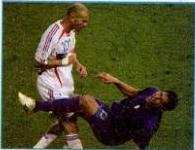
- The aggression shown by Zinedine Zidane is an example of ______ aggression.
- ______ Aggression is used to achieve a specific goal, such as winning a game or getting an advantage over an opponent and not because of anger or enmity.
- ______ aggression refers to violent and angry behaviour where the intent and primary goal is to harm the other person.
- ______ behaviour is generally seen as a positive form of expression, whereas aggression is a negative form of expression.
Or
Instrumental aggression, also known as ______ aggression, is marked by behaviours that are intended to achieve a larger goal.
Dr. Manu Sood solutions for फिज़िकल एजुकेशन [अंग्रेजी] कक्षा १२ 9 Unit-9: Psychology and Sports VERY SHORT ANSWER TYPE QUESTIONS [Pages 303 - 304]
What do you mean by Psychology?
What is meant by personality?
Write the types of personality.
Differentiate between Introvert and Extrovert personality?
What is meant by agreeableness?
How do individuals with high and low agreeableness differ?
Define motivation.
Explain briefly about Motivation.
Write two techniques of motivation.
How extrinsic motivation sometime may kill intrinsic motivation?
Explain the term "Realistic" in goal setting principles.
Explain Intrinsic motivation.
How participation in physical activities enhances self esteem among children?
What is Aggression?
What are the forms of Aggression?
What are the purposes of Aggression?
What do you mean by exercise adherence?
Explain the Jung's classification of personality.
What does the term self-esteem mean?
Name the types of self-esteem.
Define the term 'Emotions'.
What is hostile aggression?
What principles should be followed for goal setting?
What do you understand by "Goal Setting"?
Write a short note on Goal setting.
Mention any two strategies for enhancing adherence to exercise.
Write a short note on Sports Psychology.
Dr. Manu Sood solutions for फिज़िकल एजुकेशन [अंग्रेजी] कक्षा १२ 9 Unit-9: Psychology and Sports SHORT ANSWER TYPE QUESTIONS [Pages 304 - 305]
Explain the meaning of external motivation.
What is meant by motivation?
Explain the different techniques of motivation to achieve high goals in sports.
Suggest various external methods of motivating a person for better performance in sports.
Personality and Posture are the two opposite sides of the same coin. Comment.
What do you understand by the term "Specific" in goal setting principle?
Discuss any 2 types of aggression.
Explain Aggression due to situational Factors.
What does the term self-esteem mean?
What are the types of self-esteem?
What are outward signs of positive self-esteem?
What are signs of low self-esteem?
Mention any two strategies for enhancing adherence to exercise.
“Extrinsic motivation sometimes may kill intrinsic motivation.” Justify.
What do you mean by mental imagery?
What are benefits of mental imagery?
What is self-talk?
What do you understand by aggression in sports?
Discuss the role of aggression in context to its types.
What are types of self-talk?
Differentiate between Hostile aggression, Instrumental aggression and Assertiveness?
How can we enhance the sports performance with the help of self-talk? Explain.
How can we enhance the sports performance with the help of self-esteem? Explain.
How we can enhance the performance with the help of self-talk and self-esteem.
Differentiate between Introvert and Extrovert personality?
Describe personality.
Explain dimensions of personality.
Dr. Manu Sood solutions for फिज़िकल एजुकेशन [अंग्रेजी] कक्षा १२ 9 Unit-9: Psychology and Sports LONG ANSWER TYPE QUESTIONS [Page 305]
What are the psychological benefits of exercise? Explain.
Participation in sport results in all-round development of personality. Justify.
Differentiate between intrinsic and extrinsic motivation.
Explain in detail goal setting as technique of motivation.
Explain in detail Reinforcement as technique of motivation.
What do you mean by exercise adherence?
Give reasons and benefits of exercise.
What does the term self-esteem mean?
What are the types of self-esteem?
What do you mean by mental imagery?
What is role of mental imagery in sports?
What is self-talk?
What are types of self-talk?
Mention any two strategies for enhancing adherence to exercise.
Enlist the Big Five Theory Personalities and describe any three of them while comparing their characteristics.
Define motivation.
Differentiate between intrinsic and extrinsic motivation.
What do you understand by aggression in sports?
Explain any two types of aggression by given suitable examples from sports.
What is meant by motivation?
Discuss in detail any three techniques of motivation.
Solutions for 9: Unit-9: Psychology and Sports
Dr. Manu Sood solutions for फिज़िकल एजुकेशन [अंग्रेजी] कक्षा १२ chapter 9 - Unit-9: Psychology and Sports
Shaalaa.com has the CBSE Mathematics फिज़िकल एजुकेशन [अंग्रेजी] कक्षा १२ CBSE solutions in a manner that help students grasp basic concepts better and faster. The detailed, step-by-step solutions will help you understand the concepts better and clarify any confusion. Dr. Manu Sood solutions for Mathematics फिज़िकल एजुकेशन [अंग्रेजी] कक्षा १२ CBSE 9 (Unit-9: Psychology and Sports) include all questions with answers and detailed explanations. This will clear students' doubts about questions and improve their application skills while preparing for board exams.
Further, we at Shaalaa.com provide such solutions so students can prepare for written exams. Dr. Manu Sood textbook solutions can be a core help for self-study and provide excellent self-help guidance for students.
Concepts covered in फिज़िकल एजुकेशन [अंग्रेजी] कक्षा १२ chapter 9 Unit-9: Psychology and Sports are Concept of Personality, Types of Personalities, Carl Jung’s Theory of Personality, Big Five Factor Model of Personality: (Ocean), Meaning of Motivation, Distinction Between Intrinsic and Extrinsic Semiconductors, Motivation Techniques, Motivation and Sports, Exercise Adherence, Reason to Exercise, Benefits of Regular Exercise, Strategies for Enhancing Adherence to Exercise, Aggression in Sports, Types of Aggression, Aggression Management: A Challenge in Sports, Psychological Attributes in Sports: Self Esteem, Psychological Attributes in Sports: Mental Imagery, Psychological Attributes in Sports: Self Talk, Psychological Attributes in Sports: Goal Setting.
Using Dr. Manu Sood फिज़िकल एजुकेशन [अंग्रेजी] कक्षा १२ solutions Unit-9: Psychology and Sports exercise by students is an easy way to prepare for the exams, as they involve solutions arranged chapter-wise and also page-wise. The questions involved in Dr. Manu Sood Solutions are essential questions that can be asked in the final exam. Maximum CBSE फिज़िकल एजुकेशन [अंग्रेजी] कक्षा १२ students prefer Dr. Manu Sood Textbook Solutions to score more in exams.
Get the free view of Chapter 9, Unit-9: Psychology and Sports फिज़िकल एजुकेशन [अंग्रेजी] कक्षा १२ additional questions for Mathematics फिज़िकल एजुकेशन [अंग्रेजी] कक्षा १२ CBSE, and you can use Shaalaa.com to keep it handy for your exam preparation.
