Advertisements
Advertisements
The decomposition of phosphine (PH3) on tungsten at low pressure is a first-order reaction. It is because the
Concept: undefined >> undefined
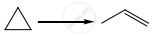
This reaction follows first-order kinetics. The rate constant at particular temperature is 2.303 × 10⁻² hour−1. The initial concentration of cyclopropane is 0.25 M. What will be the concentration of cyclopropane after 1806 minutes? (log 2 = 0.3010)
Concept: undefined >> undefined
Advertisements
For a first-order reaction, the rate constant is 6.909 min−1 the time taken for 75% conversion in minutes is
Concept: undefined >> undefined
In a first order reaction \[\ce{x -> y}\]; if k is the rate constant and the initial concentration of the reactant x is 0.1 M, then, the half life is
Concept: undefined >> undefined
Assertion: rate of reaction doubles when the concentration of the reactant is doubles if it is a first-order reaction.
Reason: rate constant also doubles.
Concept: undefined >> undefined
The rate constant of a reaction is 5.8 × 10⁻² s−1. The order of the reaction is ____________.
Concept: undefined >> undefined
If 75% of a first order reaction was completed in 60 minutes, 50% of the same reaction under the same conditions would be completed in ____________.
Concept: undefined >> undefined
Describe the graphical representation of first order reaction.
Concept: undefined >> undefined
Write the rate law for the following reaction.
A reaction that is `3/2` order in x and zero order in y.
Concept: undefined >> undefined
Write the rate law for the following reaction.
A reaction that is second order in NO and first order in Br2.
Concept: undefined >> undefined
Give two examples for zero order reaction.
Concept: undefined >> undefined
Identify the order for the following reaction.
Radioactive disintegration of 92U238
Concept: undefined >> undefined
The time for half change in a first order decomposition of a substance A is 60 seconds. Calculate the rate constant. How much of A will be left after 180 seconds?
Concept: undefined >> undefined
A zero order reaction is 20% complete in 20 minutes. Calculate the value of the rate constant. In what time will the reaction be 80% complete?
Concept: undefined >> undefined
From the following data, show that the decomposition of hydrogen peroxide is a reaction of the first order:
| t (min) | 0 | 10 | 20 |
| V (ml) | 46.1 | 29.8 | 19.3 |
Where t is the time in minutes and V is the volume of standard KMnO4 solution required for titrating the same volume of the reaction mixture.
Concept: undefined >> undefined
A first order reaction is 40% complete in 50 minutes. Calculate the value of the rate constant. In what time will the reaction be 80% complete?
Concept: undefined >> undefined
Define the ionic product of water. Give its value at room temperature.
Concept: undefined >> undefined
How many faradays of electricity are required for the following reaction to occur
\[\ce{MnO^-_4 -> Mn^2+}\]
Concept: undefined >> undefined
A current strength of 3.86 A was passed through molten Calcium oxide for 41minutes and 40 seconds. The mass of Calcium in grams deposited at the cathode is (atomic mass of Ca is 40g/mol and 1F = 96500 C).
Concept: undefined >> undefined
Zinc can be coated on iron to produce galvanized iron but the reverse is not possible. It is because ____________.
Concept: undefined >> undefined
