Advertisements
Advertisements
A reaction is second order in A and first order in B.
(i) Write the differential rate equation.
(ii) How is the rate affected on increasing the concentration of A three times?
(iii) How is the rate affected when the concentrations of both A and B are doubled?
Concept: undefined >> undefined
Distinguish between crystalline solid and amorphous solid.
Concept: undefined >> undefined
Advertisements
What is pseudo first order reaction? Give one· example of it.
Concept: undefined >> undefined
which of the following carbocations is least stable?
(A) 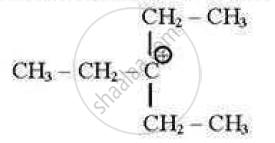
(B)
(C)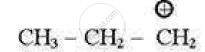
(D)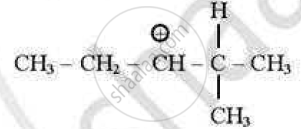
Concept: undefined >> undefined
Compound having general formula  is called
(A) diester
(B) acid anhydride
(C) hemiacetal
(D) acetal
Concept: undefined >> undefined
Write molecularity of the following reaction:
2NO(g)+O2(g)→2NO2(g)
Concept: undefined >> undefined
Describe anomalous behaviour of fluorine with the other elements of group 17 wilh reference to :
(a) Hydrogen bonding
(b) Oxidation state
(c) Polyhalide ions
Concept: undefined >> undefined
Which among the following pairs of elements is 'not' an example of chemical twins?
Concept: undefined >> undefined
For a reaction: 
Rate = k
(i) Write the order and molecularity of this reaction.
(ii) Write the unit of k.
Concept: undefined >> undefined
Write two differences between an ideal solution and a non-ideal solution.
Concept: undefined >> undefined
Write two factors that affect the rate of reaction.
Concept: undefined >> undefined
For a reaction A + B ⟶ P, the rate is given by
Rate = k [A] [B]2
How is the rate of reaction affected if the concentration of B is doubled?
Concept: undefined >> undefined
For a reaction A + B ⟶ P, the rate is given by
Rate = k [A] [B]2
What is the overall order of reaction if A is present in large excess?
Concept: undefined >> undefined
For a reaction : 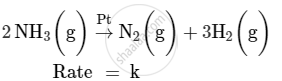
(i) Write the order and molecularity of this reaction.
(ii) Write the unit of k.
Concept: undefined >> undefined
Account for the following : Nitrogen does not form pentahalide.
Concept: undefined >> undefined
For the hydrolysis of methyl acetate in aqueous solution, the following results were obtained :
| t/s | 0 | 30 | 60 |
| [CH3COOCH3] / mol L–1 | 0.60 | 0.30 | 0.15 |
(i) Show that it follows pseudo first order reaction, as the concentration of water remains constant.
(ii) Calculate the average rate of reaction between the time interval 30 to 60 seconds.
(Given log 2 = 0.3010, log 4 = 0.6021)
Concept: undefined >> undefined
The following data were obtained during the first order thermal decomposition of SO2Cl2 at a constant volume :
SO2Cl2 (g) → SO2 (g) + Cl2 (g)
| Experiment | Time/s–1 | Total pressure/atm |
| 1 | 0 | 0.4 |
| 2 | 100 | 0.7 |
Calculate the rate constant.
(Given : log 4 = 0.6021, log 2 = 0.3010)
Concept: undefined >> undefined
Define the following term:
Essential amino acids
Concept: undefined >> undefined
MnO2 and Ca3(PO4)2 present in iron ore get reduced to Mn and P in the zone of _______.
(A) combustion
(B) reduction
(C) fusion
(D) slag formation
Concept: undefined >> undefined
