Definitions [4]
The branch of chemistry that deals with compounds originally derived from living organisms, such as sugar, starch, proteins, and acetic acid.
or
Organic compounds are the hydrides of carbon (hydrocarbons) and their derivatives. The branch of chemistry dealing with these compounds is called organic chemistry.
The branch of chemistry that deals with compounds obtained from non-living sources or minerals, such as common salt, blue vitriol, and nitrates.
Nomenclature is the system of assignment of names to organic compounds.
Compounds having the same molecular formula but different structural formula are known as Isomers and the phenomenon is known as Isomerism. (iso = same, meros = parts).
Key Points
2D Representations
| Type | Description | Example |
|---|---|---|
| Dash (Structural) Formula | Shows all atoms and all covalent bonds by dashes |
\[\begin{array}{cc} |
| Condensed Formula | Groups atoms together without showing all bonds | CH₃CH₂CH₃ or CH₃–CH₂–CH₃ |
| Bond Line / Zig-Zag Formula | Skeletal structure — lines represent C–C bonds; carbon atoms at line intersections and ends; H atoms implied |  |
3D Representations
| Type | Description |
|---|---|
| Wedge Formula |
Solid wedge
|
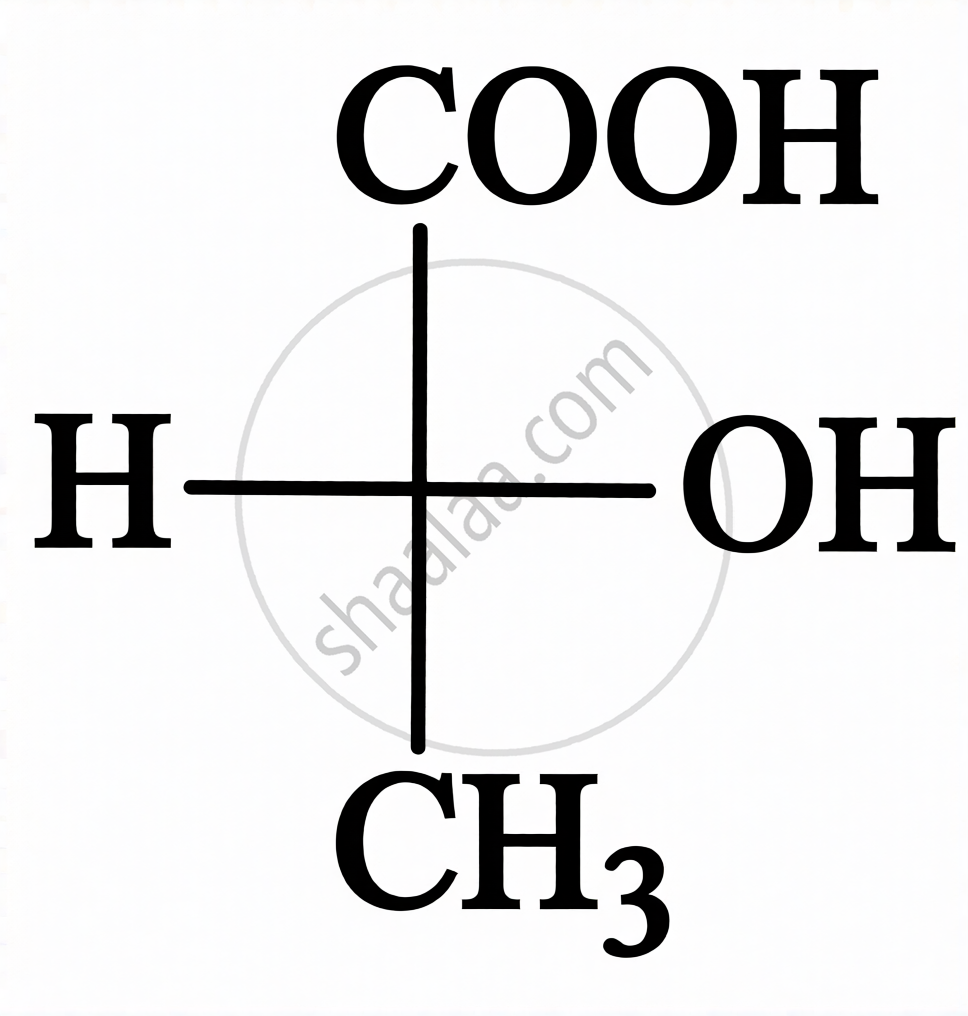
| Fischer Projection (Cross Formula) |
Carbon chain drawn vertically; horizontal lines represent bonds projecting up, vertical lines represent bonds going below the carbon.
|
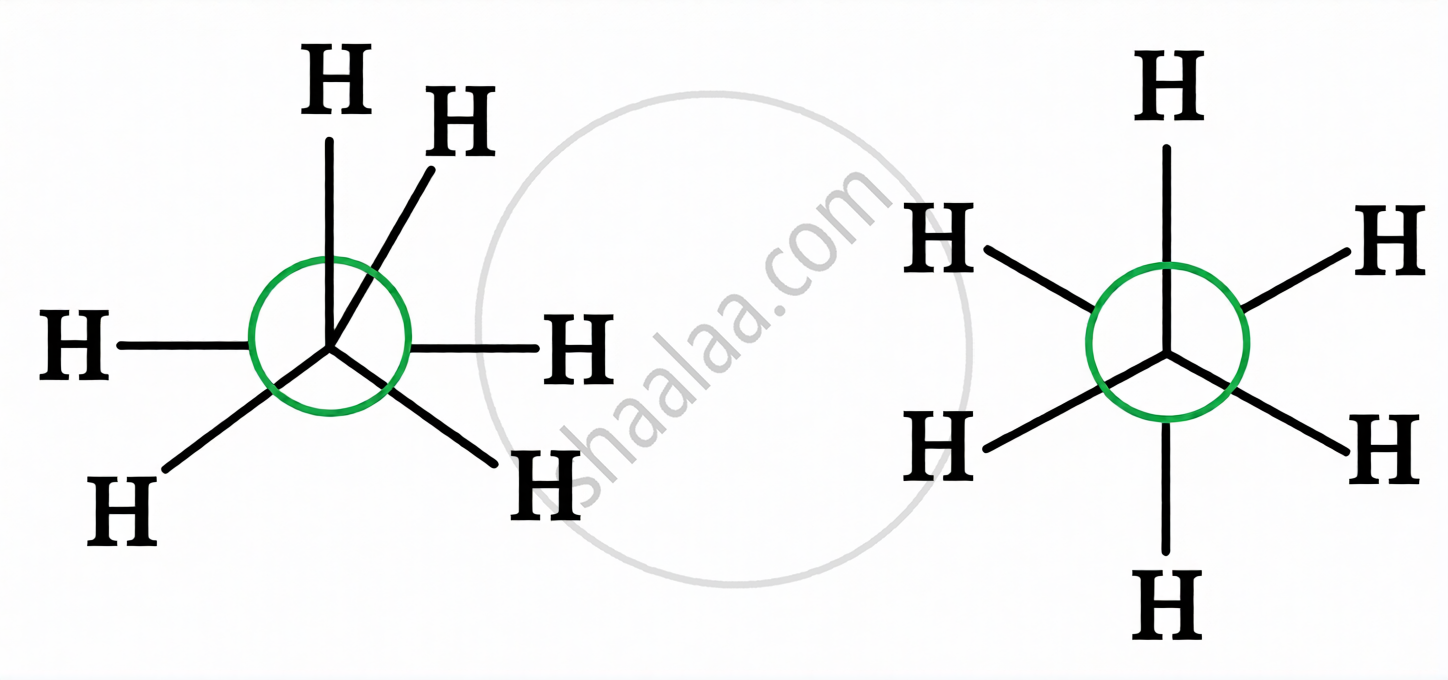
| Newman Projection |
Front carbon shown as a point, rear carbon as a circle; remaining 3 bonds at each carbon drawn as spokes of a wheel.
|
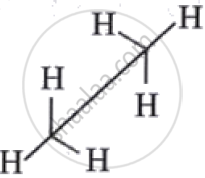
| Sawhorse / Perspective Formula |
Three-dimensional representation showing spatial arrangement.
|
 dashed wedge
  , normal line (—).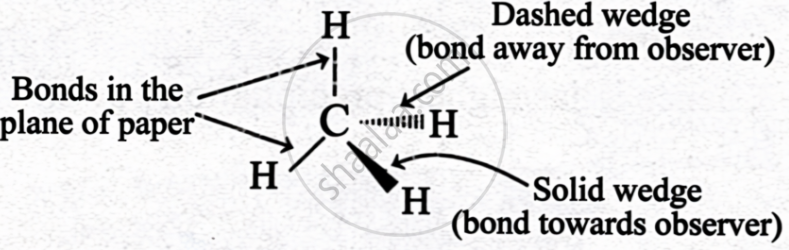
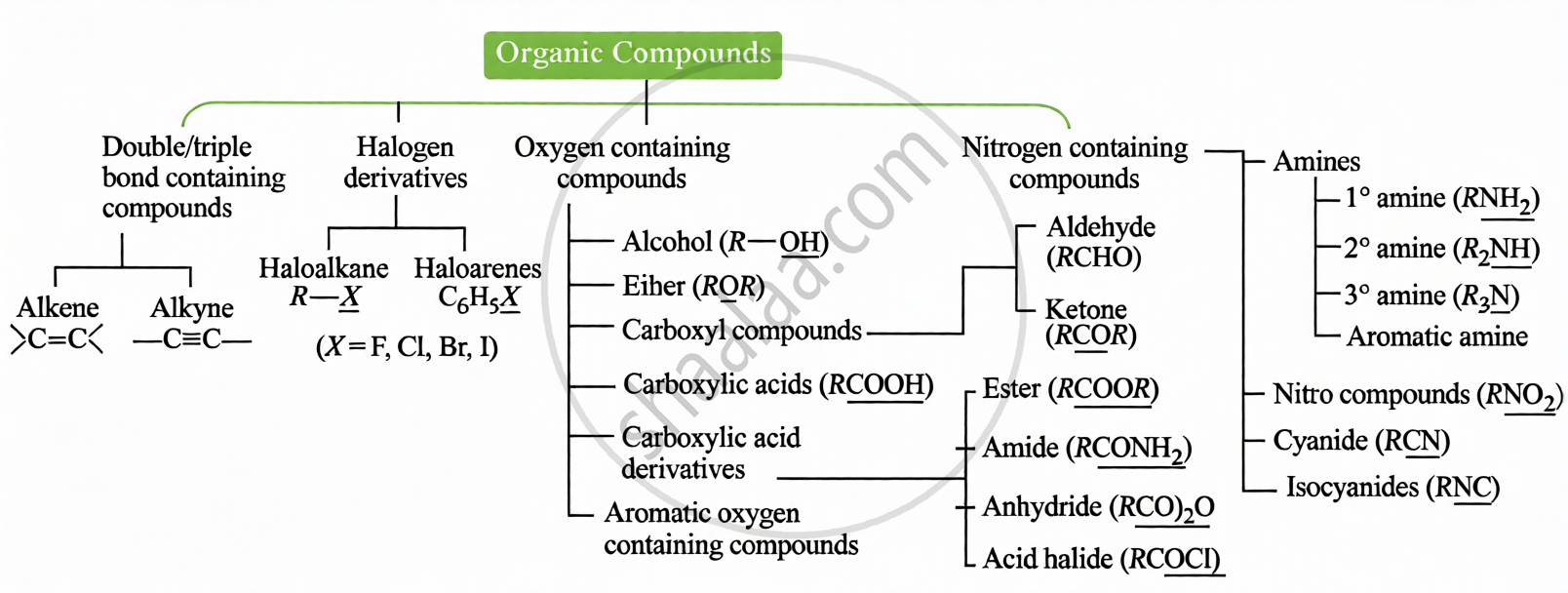
(i) Based on Functional Group:
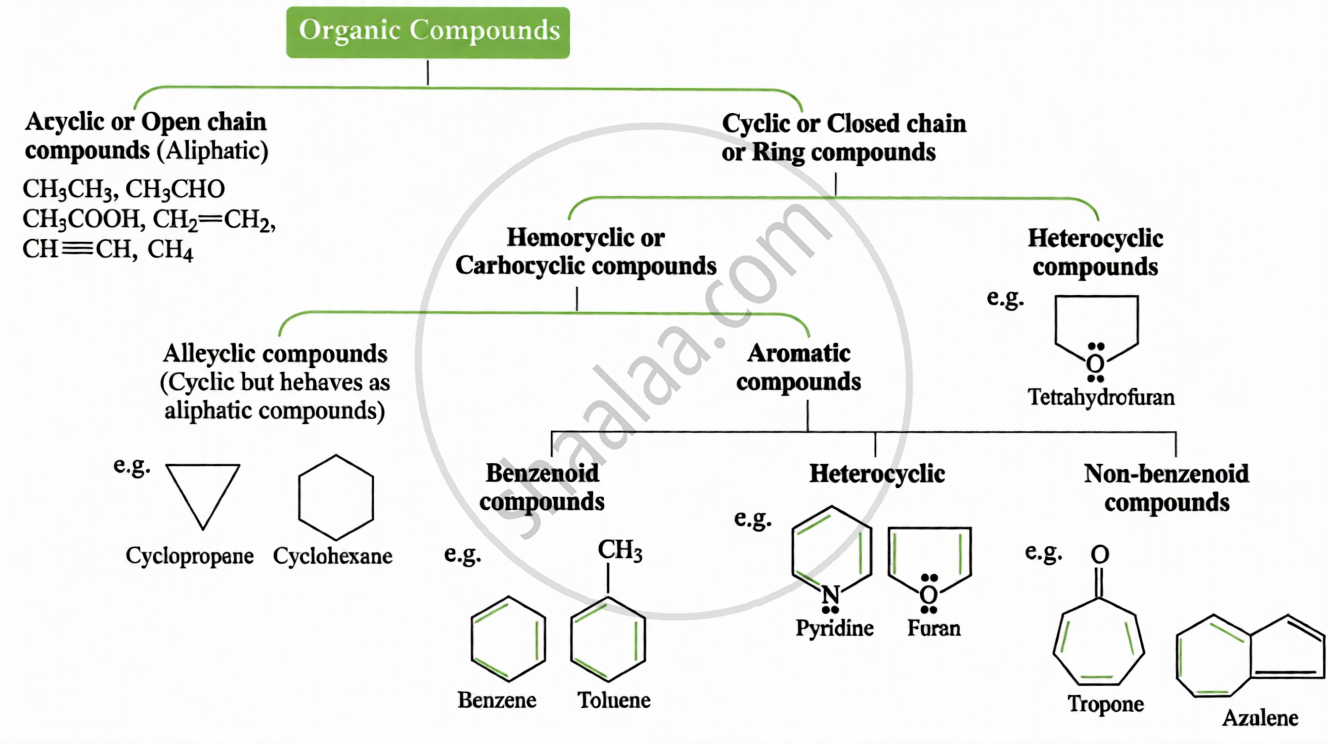
(ii) Based on Carbon Skeleton:
- Nomenclature is the process of giving a unique scientific name to each organism for universal identification.
- Scientific names follow rules set by ICBN (for plants) and ICZN (for animals).
- Names are usually derived from Latin or Greek and may describe features or honour scientists.
- Scientific names are written in italics (printed) or underlined (handwritten), with genus capitalised and species in lowercase.
- The IUPAC system provides a unique, systematic way to name carbon compounds based on structure, replacing confusing common names.
- An IUPAC name has three parts: prefix, parent, and suffix, reflecting the carbon chain and functional group.
- The parent name is based on the longest carbon chain, and its ending changes to –ane, –ene, or –yne depending on the number of bonds.
- Functional groups are shown as prefixes or suffixes, and the chain is numbered to give them the lowest possible number.
- If the suffix begins with a vowel, the final ‘e’ in the parent alkane name is dropped (e.g., propane → propanone).
1. Structural Isomerism
Same molecular formula but different connectivity (bonding) of atoms.
Types:
- Chain isomerism: Different carbon skeleton (straight/branched)
- Position isomerism: Functional group at different positions
- Functional isomerism: Different functional groups (e.g., alcohol vs ether)
- Metamerism: Different alkyl groups on either side of same functional group
- Tautomerism: Dynamic equilibrium between two forms (keto ↔ enol)
2. Stereoisomerism
Same molecular formula and bonding but different spatial arrangement.
Types:
I. Geometrical isomerism:
- Due to restricted rotation (double bond)
- Forms cis (same side) and trans (opposite side)
II. Optical isomerism:
- Mirror image isomers (enantiomers)
- Show optical activity (rotate plane polarized light)
Concepts [6]
- Organic Chemistry
- Structural Representation of Organic Molecules
- Classification of Organic Compounds
- Nomenclature
- Isomerism
- Theoretical Basis of Organic Reactions
