(English Medium)
Academic Year: 2025-2026
Date: मार्च 2026
Advertisements
- Answers to this Paper must be written on the answer sheet provided separately.
- You will not be allowed to write during the first 15 minutes.
- This time is to be spent in reading the question paper.
- The time given at the head of this Paper is the time allowed for writing the answers.
- Part I is compulsory. All questions from Part I are to be attempted.
- A total of five questions are to be attempted from Part II.
- The intended marks for questions or parts of questions are given in brackets [ ].
To be supplied with this Paper: Survey of India Map Sheet No. G43S7 and 20 cm of twine.
- In all Map Work, make wise use of arrows to avoid overcrowding of the map.
- The extract of Survey of India Map Sheet No. G43S7 must not be taken out of the examination hall. It must be handed over to the Supervising Examiner on completion of the paper
- The Map given at the end of this question paper must be detached, and after marking, must be fastened to your answer booklet.
- All sub-sections of the questions attempted must be answered in the correct serial order.
- All working including rough work should be done on the same answer sheet which is used to answer the rest of the paper.
Study the extract of the Survey of India Map Sheet No. G43S10 and answer the following questions:

-
- Identify the conventional symbol found at the six figure reference of 666364.
- Identify the drainage pattern in the Grid Square 6334.
-
- Calculate the shortest distance in km. from Malgaon to Mohabbatgarh.
- In which direction will Sneha be driving if she is going from Mohabbatgarh to Sanwara along the metalled road?
-
- Write whether the conventional symbol marked as a blue dot in the Pamera settlement is man-made or natural.
- A resident of Malgaon settlement (Grid Square 6131) has to report a crime at the nearest police station. Which settlement will he be visiting?
-
- How do the local people benefit from the causeways seen in this region?
- Explain why Fire lines are significant from the point of view of environment.
-
- Rajiv is travelling from Gulabganj for a visit to the Reserved Forest near Tarepara Nadi (Grid square 6728). Which two means of transport he would come across during his journey?
- Differentiate between the types of huts in Grid Square 6935 and the ones found in Grid Square 7033.
Chapter:
On the outline map of India provided:
- Shade and label an area of black soil in Gujarat.
- Mark using a dot and name a major river port of India.
- Shade and label the Deccan Plateau of India.
- Mark and label the Palk Strait.
- Mark with arrows and name the wind which brings rainfall to the Konkan coast.
- Shade and label a sparsely populated area in western India.
- Mark and label the hills that are popularly called Blue Mountain.
- Mark and name the river known as the ‘Sorrow of Bengal’.
- Mark and label the Indian Standard Meridian.
- Mark and label the Coromandel coast.
Chapter:
The Himalayas have a significant impact on the climate of India, as they ______.
Block the N.E. monsoon winds.
Causes rainfall in the Gangetic plains.
Create a rain shadow area in the Deccan plateau.
Cause cyclonic disturbance in the Bay of Bengal.
Chapter:
Ex-situ soil found in India is ______.
Alluvial soil
Black soil
Laterite soil
Red soil
Chapter:
Teak: Tropical deciduous forest.
Mahogany: Furniture
Stilted roots: Mangrove Vegetation
Ebony: Tropical Rainforest
Spines: Tropical Desert Vegetation
Chapter: [5] Natural Vegetation
Which of the following may be used for the recharging of underground water?
Planting of shelter belt
Plugging of gullies and ravines
Percolation pit
Tube-well irrigation
Chapter:
Arrange the following in descending order according to their carbon content:
Anthracite, Bituminous, Peat, Lignite
Bituminous, Lignite, Anthracite, Peat
Anthracite, Bituminous, Lignite, Peat
Anthracite, Lignite, Peat, Bituminous
Chapter:
Assertion (A): Agriculture in India is heavily dependent on monsoon rains.
Reason (R): Most Indian farmers practice rainfed agriculture and lack access to irrigation facilities.
(A) is true, but (R) is false.
(A) is false, but (R) is true.
Both (A) and (R) are true, and (R) is the correct explanation of (A).
Both (A) and (R) are true, but (R) is not the correct explanation of (A).
Chapter:
Which crop is associated with retting?
Sugarcane
Jute
Rice
Cotton
Chapter:
Which steel plant amongst the following does not belong to the public sector?
Bhilai
Tata Steel
Vishakhapatnam
Rourkela
Chapter:
If you need to transport perishable goods over a short distance, which mode of transport will you use and why?
Air transport because it is the fastest.
Road transport as it is economical.
Rail transport as it is ecofriendly.
Water transport as it can handle large amount of goods.
Chapter:
Which of the following methods of disposal is best applicable for the waste depicted in the picture below:
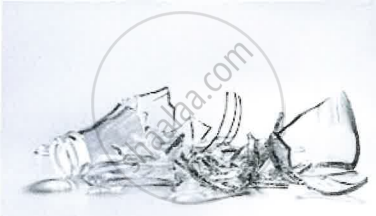
Burning waste in open area.
Recycling waste.
Dumping.
Composting.
Chapter:
“The climate in different parts of India is largely impacted by the relief features”.
Explain the above statement with the help of two suitable examples.
Chapter:
What is the source of winter rainfall in Punjab?
Chapter: [3] Climate
What is the source of winter rainfall in Tamil Nadu?
Chapter: [3] Climate
Give a reason for the following:
Kerala gets rainfall from the summer monsoons much before Uttar Pradesh.
Chapter:
Give a reason for the following:
Vishakhapatnam records a low annual range of temperature.
Chapter:
Give a reason for the following:
Winds are mostly offshore during the cold season.
Chapter:
Study the climatic data of station X and answer the following questions:
| Month | Jan. | Feb. | Mar. | Apr. | May | June | July | Aug. | Sep. | Oct. | Nov. | Dec. |
| Temp (°C) | 25.0 | 25.5 | 26.3 | 27.1 | 30.0 | 36.2 | 36.0 | 35.9 | 30.3 | 28.4 | 27.0 | 24.6 |
| Rainfall (cm) | 24.5 | 23.1 | 15.0 | 2.4 | 0.1 | 11.0 | 9.3 | 7.2 | 4.0 | 9.4 | 14.5 | 20.4 |
- Calculate the average temperature of station X for the summer season only. [1]
- Which is the driest month? [1]
- Name the wind that brings maximum rainfall to this station. [1]
Chapter:
| Nathu, a farmer in Bihar, does not get good yields as the soil he tills is coarse and has fair proportion of kankars. Motilal on the other hand has his field closer to the river and gets better yields. |
- Identify the two soils that are being discussed in the above passage.
- Give a possible reason why Motilal benefits from having his field along the river banks.
Chapter:
With reference to soil erosion in India, answer the following question.
How does population pressure affect soil erosion?
Chapter:
With reference to soil erosion in India answer the following question:
Mention any two innovative agricultural techniques that can help to prevent soil erosion.
Chapter: [4] Soil Resources
With reference to Red Soil, answer the following:
How is it formed?
Chapter: [4] Soil Resources
With reference to Red Soil, answer the following:
Why is it good for dry farming?
Chapter: [4] Soil Resources
With reference to Red Soils in India, answer the following question:
Name two states where it is found.
Chapter: [4] Soil Resources
Give a reason for the following statement:
Black Soil has self-ploughing property.
Chapter: [4] Soil Resources
Advertisements
Laterite soil is not suitable for cultivation.
Chapter: [4] Soil Resources
Give a reason for the following statement:
Alluvial soil has varying texture
Chapter:
Mahesh went for an excursion with his friend and came across a marshy area with trees that had stilt like roots.
Which natural vegetation belt did he come across?
Chapter: [5] Natural Vegetation
Mahesh went for an excursion with his friend and came across a marshy area with trees that had stilt like roots.
Name an area in India where this kind of vegetation is found.
Chapter: [5] Natural Vegetation
How does social forestry help to conserve forests?
Chapter:
Why are long and deep roots a typical characteristic of desert vegetation?
Chapter:
Give three reasons why forest conservation is the need of the hour.
Chapter: [5] Natural Vegetation
Name a forest conservation method that involves the local community.
Chapter: [5] Natural Vegetation
Which primitive system of agriculture had led to large scale destruction of forest in the past?
Chapter:
Name the process which involves planting two saplings for each tree that is felled.
Chapter: [5] Natural Vegetation
The need for irrigation in India is, to a large extent, influenced by the rainfall pattern of the country. Explain.
Chapter:
Why is canal irrigation a more suitable method of irrigation in the northern plains of India?
Chapter:
Name a state in India where tube wells are commonly used.
Chapter:
Give two geographical conditions that favour tube well irrigation in this state.
Chapter:
Study the picture given below and answer the questions that follow:
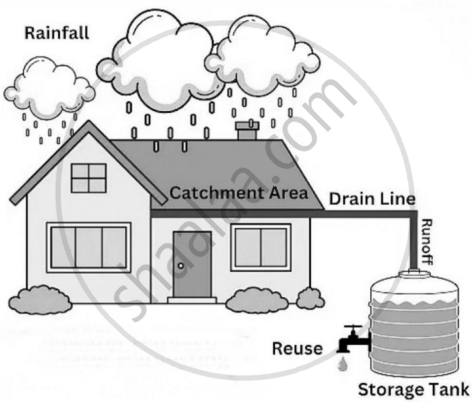
- Name the water conservation method shown in the picture.
- Mention any two similar water harvesting practices followed in India.
Chapter:
| There is ample potential of setting up biogas plants in India. The National Bioenergy Programme has been recommended by the concerned Ministry for implementation in two phases. The spread of biogas technology is a boon for Indian farmers with its direct and guaranteed benefits. |
- Why do you think generation of biogas can be achieved in every household of rural India?
- Mention two ways in which generation of this form of energy proves to be a boon for Indian farmers.
Chapter:
With reference to the picture given below, answer the following:
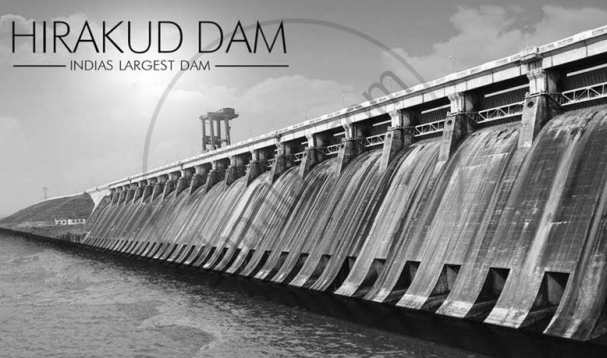
- On which river is it based?
- Name an Indian state benefitted by the project.
Chapter:
Name two Indian states where copper is found.
Chapter: [7] Mineral and Energy Resources
How is the distribution of mineral deposits responsible for the concentration of industries in the Chhota Nagpur Plateau?
Chapter:

- Identify the type of energy being harnessed in the above picture.
- Mention why this form of energy is preferred over fossil fuels.
- Why does India stand at an advantage in the production of this type of energy?
Chapter:
Mention two agricultural reforms done by the government for the betterment of the agricultural sector.
Chapter:
State one point of difference between Rabi and Kharif cropping seasons.
Chapter:
Name the state that is the leading producer of groundnut in India.
Chapter:
Advertisements
With reference to cultivation of coffee, answer the following:
Name a state that leads in the production of coffee in India.
Chapter:
With reference to cultivation of coffee, answer the following:
Give two geographical conditions present in this state that make it the leading producer.
Chapter:
With reference to cultivation of coffee, answer the following:
Other than coffee, name a crop that can also be raised in plantations.
Chapter:
Rohan, a farmer, hired some labourers to help him with ‘GINNING’.
- Name the crop grown by Rohan.
- Mention any two climatic conditions suitable for this crop.
Chapter:
Mention two points of difference between small-scale and large-scale industry.
Chapter:
Explain two ways in which the cotton textile industry is important for India’s economy.
Chapter: [9] Manufacturing Industries
With reference to the petrochemical industry, answer the following:
State a reason for the growing popularity of this industry in recent times.
Chapter:
With reference to the petrochemical industry, answer the following:
Why is it located close to oil refineries?
Chapter:
With reference to the petrochemical industry, answer the following:
Name any two petrochemical products.
Chapter:
Give one reason to explain the following:
Sugar production is gradually gaining importance in peninsular India.
Chapter:
Give one reason to explain the following:
Indian silk products are becoming less popular in the international market.
Chapter: [9] Manufacturing Industries
Give one reason to explain the following:
The importance of the iron and steel industry will never decline.
Chapter:
The Golden Quadrilateral has contributed towards improvement of the Indian economy - Explain.
Chapter:
“Roadways have an edge over railways in India.” Give reasons to support your answer.
Chapter:
Air transport is fast but not suitable for all regions and purposes in India. Give arguments in favour of the statement.
Chapter:
Which is the inland waterway that connects Prayagraj to Haldia?
Chapter:
Give a reason for the following:
At present times, airports are being established even in smaller towns of India.
Chapter:
Give a reason for the following:
Railways are well developed in the northern states of India.
Chapter:
Give a reason for the following:
Helicopter services are crucial during emergencies.
Chapter:
What is the impact of waste generation on surface water?
Chapter:
What is the impact of waste generation on the landscape?
Chapter:
Study the picture given below and answer the questions that follow: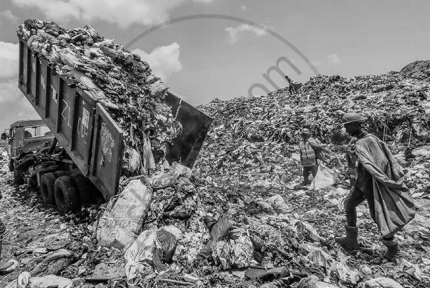
- Name the method of waste disposal seen in the picture.
- Why is this method considered a harmful method of waste disposal?
Chapter:
|
Fire broke out at the Kochi city waste treatment plant. Thick clouds of toxic smoke engulfed the city. The waste at the plant also contained plastic and biomedical wastes, both of which on combustion are extremely harmful for the general health of people. - Economic Times, 10.03.2023 |
- Which method of waste management would have helped in reducing health hazard in the above case?
- Mention one measure you can adopt in school to reduce waste.
- State one way in which domestic waste can be made useful.
Chapter: [11] Waste Management
Enumerate two advantages of composting as a method of waste disposal.
Chapter:
Other Solutions
Submit Question Paper
Help us maintain new question papers on Shaalaa.com, so we can continue to help studentsonly jpg, png and pdf files
CISCE previous year question papers ICSE Class 10 Geography with solutions 2025 - 2026
Previous year Question paper for CISCE ICSE Class 10 -2026 is solved by experts. Solved question papers gives you the chance to check yourself after your mock test.
By referring the question paper Solutions for Geography, you can scale your preparation level and work on your weak areas. It will also help the candidates in developing the time-management skills. Practice makes perfect, and there is no better way to practice than to attempt previous year question paper solutions of CISCE ICSE Class 10 .
How CISCE ICSE Class 10 Question Paper solutions Help Students ?
• Question paper solutions for Geography will helps students to prepare for exam.
• Question paper with answer will boost students confidence in exam time and also give you an idea About the important questions and topics to be prepared for the board exam.
• For finding solution of question papers no need to refer so multiple sources like textbook or guides.
