Advertisements
Advertisements
प्रश्न
Write the expression of integrated rate equation for zero order reaction.
Advertisements
उत्तर
The integrated rate equation for zero-order reaction is k = `([R_0 - R])/t`
Where,
k = Rate constant
R0 = Initial concentration of reactant
R = Final concentration of reactant
t = Time taken
APPEARS IN
संबंधित प्रश्न
The decomposition of NH3 on platinum surface is zero order reaction. What are the rates of production of N2 and H2 if k = 2.5 × 10⁻⁴ mol−1 L s−1?
Derive integrated rate law for a zero-order reaction \[\ce{A -> Product}\].
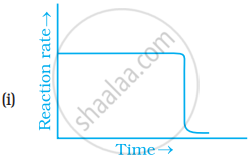
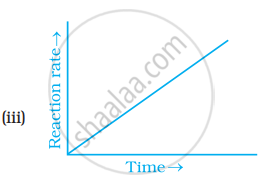
Which of the following graphs is correct for a zero order reaction?


Write the rate equation for the reaction `2A + B -> C` if the order of the reaction is zero.
Derive an expression to calculate time required for completion of zero order reaction.
A solution with initial concentration of a mol dm-3 follow zero order kinetic. The time taken for the completion of reaction is
If the initial concentration of substance A is 1.5 M and after 120 seconds the concentration of substance A is 0.75 M, the rate constant for the reaction if it follows zero-order kinetics is ______.
Derive integrated rate law for zero order reaction.
What is zero order reaction?
If unit of rate constant is mol dm−3s−1, the order of reaction would be ______.
