Advertisements
Advertisements
प्रश्न
What is half life of first order reaction if time required to decrease concentration of reactants from 0.8 M to 0.2 M is 12 hours?
Advertisements
उत्तर १
Given: [A]0 = 0.8 M, [A]t = 0.2 M, t = 12 hours
To find: Half life of reaction (t1/2)
Formulae:
- k = `2.303/"t" log_10 (["A"]_0)/(["A"]_"t")`
- `"t"_(1/2) = 0.693/"k"`
Calculation: Substituting given value in
k = `2.303/"t" log_10 (["A"]_0)/(["A"]_"t")`
k = `2.303/(12 "hr") log_10 0.8/0.2`
= `2.303/(12 "hr") log_10 (4)`
= `2.303/(12 "hr") xx 0.6020`
= Antilog10 (log10 2.303 + log10 0.6020 − log10 12)
= Antilog10 (0.3623 + `bar(1).7796` − 1.0792 )
= Antilog10 `(bar(1).0627 )`
= 0.1115 hr–1
`"t"_(1/2) = 0.693/"k" = 0.693/(0.1155 "hr"^-1)` = 6 hr
उत्तर २
Concentration is reduced to 25%. It means it takes two half-lives to decrease the concentration of reactant from 0.8 M to 0.2 M in first-order reaction. Hence, half-life of the reaction is 12/2 = 6 hours.
The half life of reaction is 6 hours.
APPEARS IN
संबंधित प्रश्न
Answer the following in one or two sentences.
Write the relationships between rate constant and half-life of the first order and zeroth-order reactions.
Answer the following in one or two sentences.
How do the half-lives of the first order and zero-order reactions change with the initial concentration of reactants?
What are pseudo-first-order reactions?
How will you represent first order reactions graphically.
Answer the following in brief.
What is a zeroth-order reaction?
Write order of the following reaction:
\[\ce{2NH_{3(g)} -> N_{2(g)} + 3H_{2(g)}}\]
The rate constant of the first order reaction is 1.386 min–1. Calculate the time required for 80% reactant to decompose?
For a first order reaction \[\ce{A ->Product}\] with initial concentration x mol L−1, has a half life period of 2.5 hours. For the same reaction with initial concentration `("x"/2)` mol L−1 the half life is
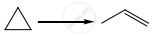
This reaction follows first-order kinetics. The rate constant at particular temperature is 2.303 × 10⁻² hour−1. The initial concentration of cyclopropane is 0.25 M. What will be the concentration of cyclopropane after 1806 minutes? (log 2 = 0.3010)
In a first order reaction \[\ce{x -> y}\]; if k is the rate constant and the initial concentration of the reactant x is 0.1 M, then, the half life is
Give two examples for zero order reaction.
Identify the order for the following reaction.
Radioactive disintegration of 92U238
From the following data, show that the decomposition of hydrogen peroxide is a reaction of the first order:
| t (min) | 0 | 10 | 20 |
| V (ml) | 46.1 | 29.8 | 19.3 |
Where t is the time in minutes and V is the volume of standard KMnO4 solution required for titrating the same volume of the reaction mixture.
A first order reaction has a rate constant 0.00813 min-1. How long will it take for 60% completion?
What is the value of rate constant of first order reaction, if it takes 15 minutes for consumption of 20% of reactants?
The following reactions follow zero order kinetics, EXCEPT ____________.
A first order reaction has rate constant 1 × 10⁻² s−1. What time will, it take for 20 g or reactant to reduce to 5 g?
The time of completion of 90% of a first order reaction is approximately ____________.
If [A]0 is the initial concentration, then the half life of zero order reaction is ____________.
For the first order reaction, plot of log10 [A]t against time 't' is a straight line with a negative slope equal to ____________.
For first order reaction the slope of the graph of log10 [A]t Vs. time is equal to ____________.
The rate of formation of B at time t for reaction \[\ce{2A -> 3B}\] is equal to ____________.
Which among the following is an example of pseudo first order reaction?
A first order reaction takes 40 minutes for 30% decomposition. What is the half-life of reaction?
A first order reaction is 50% completed in 16 minutes. The percentage of reactant that will react in 32 minutes is ____________.
The integrated rate equation is Rt = log C0 – log Ct, then the straight-line graph is obtained by plotting.
The expression to calculate time required for completion of zero order reaction is ______.
If the rate constant for a first-order reaction is k, the time (t) required for the completion of 99% of the reaction is given by:
A radioactive isotope decayed to 17/32 of its original mass after 60 minutes. Find the half-life of this radioisotope.
