Advertisements
Advertisements
प्रश्न
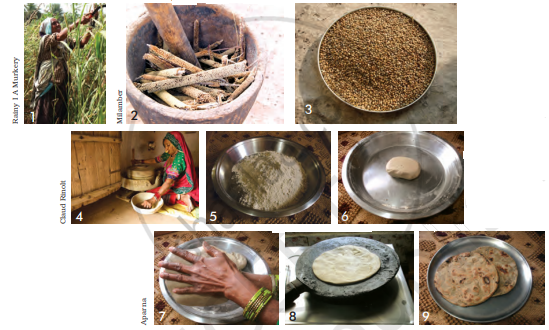
What can you see in each picture on the next page?
In picture 2 you can see the bajra cobs in the mortar (okhli, used for crushing). The cobs are crushed with a pestle (moosli) and the seeds are separated from the cob. You can see the separated seeds in picture 3. Now this work is also done by big machines, like threshers. We call both these different ‘technologies’ – using our hands or big machines – to crush the seeds.
What technology could have been used to cut the stem in picture 1? What do you think is being done in the grinder (chakki ) in picture 4? What ways (technologies) would have been used to do the work shown in pictures 5 and 6? You can see that the dough is ready in picture 6. When do you think a sieve (chhalni ) would have been used? Discuss each step in detail, in any language you wish to use.
Advertisements
उत्तर
Picture 1: A lad is separating and taking out the cobs from the bajra crops.
Picture 2: The bajra cob is kept in a mortar. It will be pounded by a pestle to separate grains from the cobs.
Picture 3: Bajra seeds are kept on a plate.
Picture 4: A lady is grinding bajra seeds to make flour. She is using chakki (grinding stone) for that.
Picture 5: Bajra flour is kept on a plate.
Picture 6: Dough has been made from bajra flour.
Picture 7: Chapatti is being made from dough.
Picture 8: Chapatti is being cooked on Tawa.
Picture 9: Chapattis kept in a plate.
The stem is usually cut by a sickle.
Flour is being made in the grinder.
In most households, making dough does not involve using technologies. Ladies simply use the age-old method of kneading the dough with bare hands. Flour is usually sieved before making the dough. After that, water needs to be added to the flour. People usually estimate the required amount of water for making dough. After kneading for some time, the dough gets ready.
APPEARS IN
संबंधित प्रश्न
Have you eaten roti made from bajra or jowar? Did you like these?
Talk to the elders in your family and find out if there were some special foods cooked earlier that are not cooked anymore?
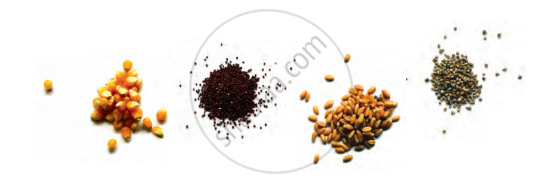
Can you recognize these grains?
The bajra seed saw differences in the way Damjibhai and Hasmukh did farming (for example, in irrigation, ploughing, etc). What were these differences?
What kind of progress would you like to see in your area?
What can happen to Hasmukh’s farm after some years?
There have been many changes over time, in our food. What can this mean? Use the seed story and what you know from your elders to explain.
What would happen if all the farmers were to use only one kind of seed and grow only one kind of crop?
What technology could have been used to cut the stem in picture 1?
What ways (technologies) would have been used to do the work shown in pictures 5 and 6? You can see that the dough is ready in picture 6. When do you think a sieve (chhalni) would have been used? Discuss each step in detail, in any language you wish to use.
