Advertisements
Advertisements
प्रश्न
We can see a non-luminous object when the light
विकल्प
emitted by the object falls on the eye
is reflected from the object towards our eye
completely passes through the object
gets completely absorbed by the object
Advertisements
उत्तर
is reflected from the object towards our eye
Explanation:
We can see a non-luminous object (object that does not produce its own light), when light reflected by the object enters our eyes.
APPEARS IN
संबंधित प्रश्न
Fill in the blank
Angle of incidence = ___________
Select the correct alternative
The angle of incidence on a plane mirror is 30°.The angle of reflection will be:
A ray of light falls normally on a plane mirror. What is the angle of incidence ?
In the following diagrams, measure and write the angle of incidence and draw the reflected ray in each case.
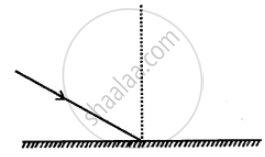
In the following diagram, measure and write the angle of incidence and draw the reflected ray.
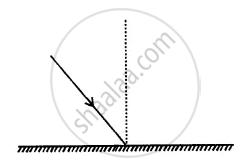
Define the following term
Angle of incidence
A small hole P is made in a piece of cardboard. The hole is illuminated by a torch as shown in the following figure. The pencil of light coming out of the hole falls on a mirror.

At which point should the eye be placed, so that the hole can be seen?
The angle between incident ray and reflected ray is 60°. What is the value of angle of incidence?
Draw figure showing the position of the plane mirror. Also, label the angle of incidence and angle of reflection on it.

A ray of light fall on a plane surface at an angle of incidence of 9° and reflection occurs. Calculate the angle of reflection in degree.
