Advertisements
Advertisements
प्रश्न
Advertisements
उत्तर
If the sum of the measures of two angles is 90°, they are known as complementary angles.
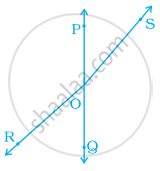
(i) m∠B + m∠N
= 60° + 30°
= 90°
∴ ∠B and ∠N are complementary angles.
(ii) m∠Y + m∠E
= 90° + 0°
= 90°
∴ ∠Y and ∠E are complementary angles.
(iii) m∠D + m∠F
= 75° + 15°
= 90°
∴ ∠D and ∠F are complementary angles.
If the sum of the measures of two angles is 180°, they are known as supplementary angles.
(iv) m∠B + m∠G
= 60° + 120°
= 180°
∴ ∠B and ∠G are supplementary angles.
(v) m∠N + m∠J
= 30° + 150°
= 180°
∴ ∠N and ∠J are supplementary angles.
संबंधित प्रश्न
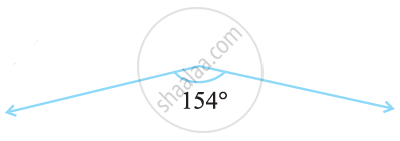
Find the supplement of the following angle:
Can two angles be supplementary if both of them are acute?
Find the measure of the supplements of the following angle.
180°
What will be the measure of the supplement of the following angles?
100º
Find the measure of the supplement of an angle of 135°.
0° and 180° are supplementary
Find the supplementary angle of 70°
Write the measure of the supplementary angle of the following angles
150°
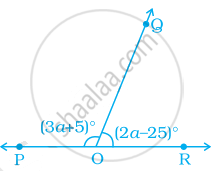
In the following figure, POR is a line. The value of a is ______.
Name the pairs of supplementary angles in the following figure: