Advertisements
Advertisements
प्रश्न
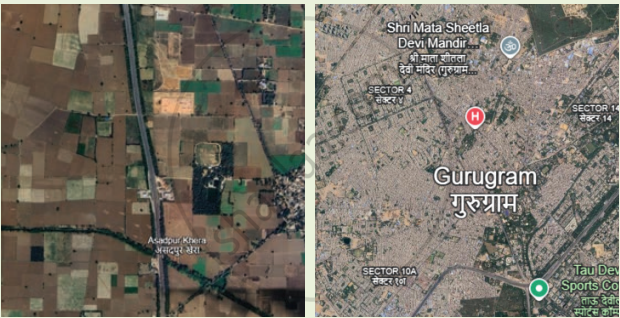
Shows the satellite view of a village and a city in Haryana, respectively. The larger blocks of green and brown land on the left in the village show open areas, whereas the grey built-up area on the right shows a complex network of buildings. What can you infer about the population density of the two regions? Why do you think such a difference exists?
Advertisements
उत्तर
The village has a lower population density because it has large areas of farmland, green spaces, and open land, with fewer houses and buildings. Most people in villages depend on agriculture and related activities, so there are fewer economic opportunities. In contrast, the city has a higher population density because many people live and work in a smaller area. Cities offer diverse opportunities in industries, businesses, education, healthcare, transport, and services. Better infrastructure and facilities also attract people from rural areas. Therefore, the concentration of jobs, services, buildings, and infrastructure makes cities more densely populated than villages.
