Advertisements
Advertisements
प्रश्न
Show that function f(x) =`3/"x" + 10`, x ≠ 0 is decreasing.
Advertisements
उत्तर
f(x) = `3/"x" + 10`
For function to be decreasing, f '(x) < 0
Then f '(x) = `(- 3)/"x"^2 < 0` ....[∵ x ≠ 0, - x2 < 0]
Negative sign indicates that it always decreases as x2 never becomes negative.
Thus, f(x) is a decreasing function for x ≠ 0.
APPEARS IN
संबंधित प्रश्न
Find the least value of a such that the function f given by f (x) = x2 + ax + 1 is strictly increasing on [1, 2].
Prove that the function f(x) = loge x is increasing on (0, ∞) ?
Show that f(x) = \[\frac{1}{1 + x^2}\] is neither increasing nor decreasing on R ?
Find the interval in which the following function are increasing or decreasing f(x) = x2 + 2x − 5 ?
Find the interval in which the following function are increasing or decreasing \[f\left( x \right) = 3 x^4 - 4 x^3 - 12 x^2 + 5\] ?
Find the interval in which the following function are increasing or decreasing \[f\left( x \right) = \frac{3}{2} x^4 - 4 x^3 - 45 x^2 + 51\] ?
Find the intervals in which f(x) = sin x − cos x, where 0 < x < 2π is increasing or decreasing ?
Show that the function f(x) = cot \[-\] l(sinx + cosx) is decreasing on \[\left( 0, \frac{\pi}{4} \right)\] and increasing on \[\left( 0, \frac{\pi}{4} \right)\] ?
Show that f(x) = x2 − x sin x is an increasing function on (0, π/2) ?
Let f defined on [0, 1] be twice differentiable such that | f (x) | ≤ 1 for all x ∈ [0, 1]. If f(0) = f(1), then show that | f'(x) | < 1 for all x ∈ [ 0, 1] ?
Write the set of values of k for which f(x) = kx − sin x is increasing on R ?
If the function f(x) = 2x2 − kx + 5 is increasing on [1, 2], then k lies in the interval
Function f(x) = cos x − 2 λ x is monotonic decreasing when
The function f(x) = −x/2 + sin x defined on [−π/3, π/3] is
Test whether the following functions are increasing or decreasing: f(x) = `x-(1)/x`, x ∈ R, x ≠ 0.
Show that f(x) = x – cos x is increasing for all x.
Find the value of x, such that f(x) is increasing function.
f(x) = 2x3 - 15x2 + 36x + 1
State whether the following statement is True or False:
The function f(x) = `"x"*"e"^("x" (1 - "x"))` is increasing on `((-1)/2, 1)`.
Find the values of x for which the function f(x) = 2x3 – 6x2 + 6x + 24 is strictly increasing
The price P for the demand D is given as P = 183 + 120D − 3D2, then the value of D for which price is increasing, is ______.
A ladder 20 ft Jong leans against a vertical wall. The top-end slides downwards at the rate of 2 ft per second. The rate at which the lower end moves on a horizontal floor when it is 12 ft from the wall is ______
In which interval is the given function, f(x) = 2x3 - 21x2 + 72x + 19 monotonically decreasing?
y = x(x – 3)2 decreases for the values of x given by : ______.
The function f(x) = tanx – x ______.
2x3 - 6x + 5 is an increasing function, if ____________.
Let f(x) be a function such that; f'(x) = log1/3(log3(sinx + a)) (where a ∈ R). If f(x) is decreasing for all real values of x then the exhaustive solution set of a is ______.
Let f(x) = tan–1`phi`(x), where `phi`(x) is monotonically increasing for `0 < x < π/2`. Then f(x) is ______.
Read the following passage:
|
The use of electric vehicles will curb air pollution in the long run. V(t) = `1/5 t^3 - 5/2 t^2 + 25t - 2` where t represents the time and t = 1, 2, 3, ...... corresponds to years 2001, 2002, 2003, ...... respectively. |
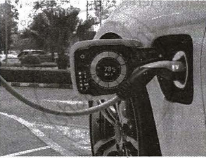
Based on the above information, answer the following questions:
- Can the above function be used to estimate number of vehicles in the year 2000? Justify. (2)
- Prove that the function V(t) is an increasing function. (2)
The function f(x) = sin4x + cos4x is an increasing function if ______.
Find the values of x for which the function f(x) = `x/(x^2 + 1)` is strictly decreasing.
