Advertisements
Advertisements
प्रश्न
Select the statement which explains best parasitism.
विकल्प
One organism is benefited.
Both the organisms are benefited.
One organism is benefited, other is not affected.
One organism is benefited, other is affected.
Advertisements
उत्तर
One organism is benefited, other is affected.
Explanation:
Parasitism is an interaction between two species in which one species (parasite) derives benefit while the other species (host) is harmed. For example, lice (parasites) on the human body and ticks on dogs represent this interaction, where the parasites receive benefits. On the other hand, these parasites reduce host fitness and harm the human body.
APPEARS IN
संबंधित प्रश्न
Explain mutualism with the help of any two examples.
Name important defence mechanisms in plants against herbivory.
Mention any two examples where the organisms involved are commercially exploited in agriculture.
How is mutualism different from commensalism?
Name the type of association: Hummingbirds and host flowering plants
Distinguish between the following: Parasitism and Mutualism.
Community is defined as ______.
How absolute Natality differs from Realized Natality
Explain different population interactions with examples.
What is population interaction? Explain the interactions in Mutualism and Competition.
Identify the interspecific interaction in which species A is harmed and species B is unaffected.
Two species competing for the same resources, avoid competition by choosing different times for feeding, also known as ______
Identify the interspecific interaction depicted in the following figure.
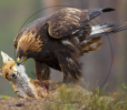
Brood parasitism is best explained by the example of ____________.
In the given picture, identify the type of interspecific interaction.
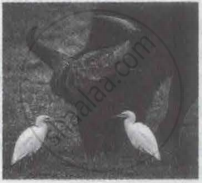
Which one of the following is an example of predation?
Which of the following is not an example of commensalism?
Define stenohaline species.
In a pond, we see plants which are free-floating; rooted–submerged; rooted emergent; rooted with floating leaves; Write the type of plant against the following examples.
| Plant Name | Type | |
| a. | Hydrilla | ______ |
| b. | Typha | ______ |
| c. | Nymphaea | ______ |
| d. | Lemna | ______ |
| e. | Vallisneria | ______ |
Fill in the blanks
| Species A | Species B | Type of Interaction | Example |
| + | - | ______ | ______ |
| + | + | ______ | ______ |
| + | 0 | Commensalism | ______ |
Give one example for the following:
A parasitic angiosperm
Sea Anemone gets attached to the surface of the hermit crab. The kind of population interaction exhibited in this case is ______.
Complete the following chart regarding population interaction and re-write:
| Sr. No. | Name of interaction | Interaction between |
| 1. | ? | Plasmodium and Man |
| 2. | ? | Leopard and Lion |
| 3. | ? | Clownfish and Sea-anemone |
A Tight one-to-one relationship between many species of fig tree and certain wasps is an example of ______.
In which interaction of species, both the species are at a loss?
Describe mutualism.
Give one example of camouflage.
Association between clown fish and sea anemone is ______.
