Advertisements
Advertisements
प्रश्न
Read the given sentence carefully and fill in with an appropriate phrasal verb. Choose them from the help option.
There will be a ______ next week in the office.
विकल्प
get along with
take off
shut down
look after
warm-up
Advertisements
उत्तर
There will be a shut down next week in the office.
APPEARS IN
संबंधित प्रश्न
Complete these sentence using the appropriate modal. The clues in the bracket will help you.
Sibi has not practised hard but he ____________ win the race. (possibility)
Rearrange the words in the correct order to make a meaningful sentence.
your / today / put on / new / since / is / birthday /dress / the.
Write the noun form of the following word.
Accept ______.
Change the underlined word with the correct pronoun.
He helped the old lady. He gave the old lady food.
Punctuate the following sentence.
we went through the smoky mountains, near shimla on our way to leh.
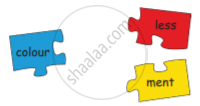
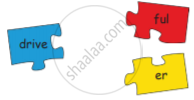
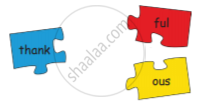
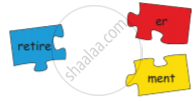
Write the correct suffix.
 |
|
 |
|
 |
|
 |
Note the following words from the story. They all refer to different ways of walking. Find out their meanings and use each of them in meaningful sentences of your own. Refer a thesaurus and add a few more to the list.
- trod
- fluttered
- hurried
- skipped
- strode
- sped
Fill in the blank with the correct form of the verb given in the bracket.
Yusuf ______ to the movies once in a while (go)
Recall your learning of basic preposition and complete the sentence using the prepositions given in options.
There is usually a garden ______a bungalow
Write the compound words from the picture.
 |
+ |  |
| ______ | ||
