Advertisements
Advertisements
प्रश्न
Name one pair of liquids which can be separated by using a separating funnel.
Advertisements
उत्तर
Kerosene and water are two immiscible liquids which can be separated by using a separating funnel.
APPEARS IN
संबंधित प्रश्न
Define the term matter. What is it composed of?
What do you mean by the inter-molecular spaces? How do they vary in different states of matter?
Fill in the following blanks with suitable words :
An element is made up of only one kind of ........
What are the three groups into which all the elements can be divided ? Name two elements belonging to each group.
Give reason why copper metal is used for making electric wires.
Name a metal which is yellow in colour.
Which of the following are not compounds ?
Chlorine gas, Potassium chloride, Iron powder, Iron sulphide, Aluminium foil, Iodine vapour, Graphite, Carbon monoxide, Sulphur powder, Diamond
Iron powder and sulphur powder were mixed together and divided into two parts A and B. When part A was heated strongly over a burner, then a substance C was formed. The part B was, however, not heated at all. When dilute hydrochloric acid was added to substance C, then gas D was evolved and when dilute hydrochloric acid was added to part B then gas E was evolved.
- What type of substance is B ?
- What type of substance is C ?
- Name the gas (i) D, and (ii) E ?
- State one characteristic property of gas D.
- Write one test to identify gas E.
What is meant by the concentration of a solution ?
21.5 g of sodium chloride dissolves in 60 g of water at 25°C. Calculate the solubility of sodium chloride in water at that temperature.
One of the following represents the solution of solid in a solid. This one is :
When the solid A is added to water, it dissolves with the evolution of a lot of heat and making little explosions to form two products B and C. The properties of products B and C are entirely different from those of solid A as well as water. Moreover, products B and C cannot be reconverted into solid A and water. When another solid D is added to water, it dissolves with the absorption of a little heat to form a product E which cools down. The product E shows the properties of both, solid D as well as water. Moreover, product E can be converted into solid D and water.
(a) What type of change occurs when solid A is dissolved in water ? Why ?
(b) What type of change occurs when solid D is dissolved in water ? Why ?
(c) Name a metal which you think could behave like solid A. Also name the products B and C.
(d) Name the solid D if it is the one which is used in making ordinary dry cells.
(e) Name the process by which D can be recovered from E.
What is the general name of the process by which tea-leaves are separated from prepared tea ?
Name the process by which all the dye can be recovered from black ink.
How is cream separated from milk ?
Explain how, impure copper sulphate can be purified by crystallisation.
A solid mixture contains four constituents P, Q, R and S. P consists of tiny grains and it is mixed with
cement for plastering the walls. Q is a white solid which is recovered on a large scale from sea water by the
process of evaporation. R is in the form of tiny particles of a material whose corrosion is called rusting. And
S is a white solid which is used in making ordinary dry cells.
- What could P, Q, R and S be ?
- How would you separate a mixture containing P, Q, R and S ?
Justify your answer.
| Figure 1 | Figure 2 | Figure 3 |
 |
 |
 |
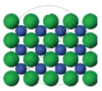
The arrangement of particles in three different phases of matter is shown above.
- Which state is represented by Fig. 1?
- In which state will the inter-particle attraction be maximum?
- Which one of them cannot be contained in an open vessel?
- Which one can take the shape of its container?
Define the term matter.
Define the term matter.
