Advertisements
Advertisements
प्रश्न
Name and state the following with reference to the elements of the first three periods of the periodic table.
Alkaline earth metal in period 3.
Advertisements
उत्तर
Magnesium
APPEARS IN
संबंधित प्रश्न
Name the element that has two shells, both of which are completely filled with electrons.
Classify the following elements into metals, non-metals and metalliods
As, C, Hg, Mg, S, Si
What happens to the metallic character of the elements as we move from left to right in a period of the periodic table?
The atomic numbers of the elements Na, Mg, K and Ca are 11, 12, 19 and 20 respectively. The element having the largest atomic radius is:
(a) Mg
(b) Na
(c) K
(d) Ca
An element X belong to 4th period and 17th group, state.
name the family to which it belong.
How can the valency of an element be determined if its electronic configuration is known?
Study the extract of the Periodic Table given below and answer the questions that follow. Give the alphabet corresponding to the element in question. DO NOT repeat an element. 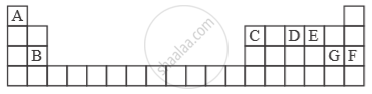
Which is an inert gas?
Explain
Size of atom changes when it loses or gain electron
Arrange the following as per instruction given in the bracket.
Mg, Cl, Na, S, Si (decreasing order of atomic size)
An element A has 2 electrons in its fourth shell. State:
position in the periodic table
