Advertisements
Advertisements
प्रश्न
Mark the most appropriate answer in the following:
Transpiration is very low during storms due to:
विकल्प
Presence of moisture in the wind
Low temperature during storms
High velocity of wind
None of the above
Advertisements
उत्तर
High velocity of wind
संबंधित प्रश्न
(a) State whether the following statements are True Or False?
(b) Rewrite the false statements,in the correct form by changing either the first or the last word only .
Voltmeter is an instrument used for measuring the rate of transpiration in green plants.
Name the following.
The process by which the aerial parts of a green plant give out water as water vapour.
Given below is an example of a certain structure and its special functional activity:
chloroplasts and photosynthesis
In a similar way, write the functional activity against the following:
Xylem and ______
The figure given below represents an experimental setup with a weighing machine to demonstrate a particular process in plants. The experimental setup was placed in bright sunlight. Study the diagram and answer the following questions.
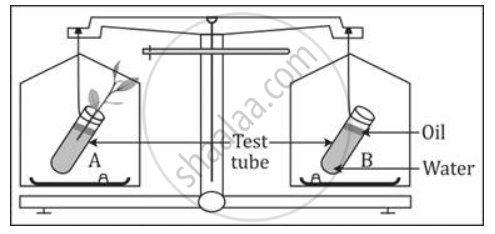
When the weight of the test tubes A and B is taken before and after the experiment, what change is observed? Justify.
The figure given below represents an experimental setup with a weighing machine to demonstrate a particular process in plants. The experimental setup was placed in bright sunlight. Study the diagram and answer the following questions.
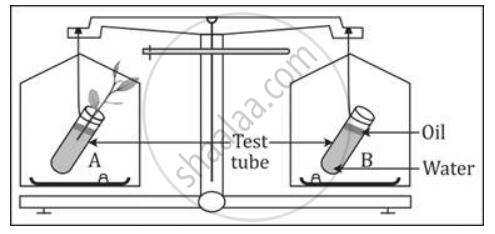
What is the purpose of keeping the test tube B in the experimental setup?
Give Reasons for the following:
Young plants wilt on a hot sunny day.
Give Reasons for the following:
Plants absorb more water than their requirement
Explain the Term :
Wilting
Write the functional activity of the following structure:
Cuticle
Write the functional activity of the following structure:
Guard cells
