Advertisements
Advertisements
प्रश्न
Listen carefully and guess how the sentence would end.
When the teacher read the answer papers, she was ______.
Advertisements
उत्तर
When the teacher read the answer papers, she was disappointed.
संबंधित प्रश्न
Find evidence from the lesson and write in your own words.
We Indians are obsessed with foreign things.
‘But the peasant bowed and prayed to God ...........’ What could he have prayed for?
Complete the phrase using a word from the poem.
______ march
Form suitable groups and discuss the following.
You have heard/read stories of Akbar and Birbal, Tenali Raman, Mulla Nasruddin. Recollect and write down the names of those stories.
Pick out those aspects of a story that you find a common in all their stories.
- Humour
- Supernatural event
- Wisdom
- Suspense
- Magic
- Beauty of Nature
- Wit
- Play upon words
- Sadend
- Violence
Discuss in groups and think about it.
List a few occasions on which you had become angry. What do you do when you are angry?
Make a list of the rhyming words in the poem.
Add one more rhyming word of your own to each pair.
What do you understand by the mother’s act of throwing the shoe?
Use this passage to play the game. You can collect information on other famous personalities and play too.
Charlie Chaplin was born on April 16, 1889, in London England. His birth name was Charles Spencer Chaplin, though he had many nicknames growing up such as Charlie, Charlot, and The Little Tramp. His father, Charles Chaplin, and his mother, Hannah Chaplin, were inducted into the music hall of fame, leading the way to his exposure even as a young boy. His first onstage moment was when he was 5 years old; he sang a song that was intended to be sung by his own mother; she had become ill at the time of the performance, so little Charlie Chaplin stood instead and performed for his mother.
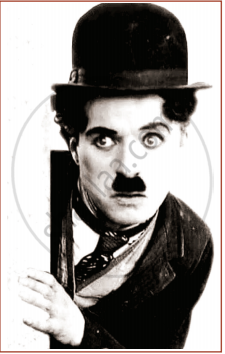
Charlie Chaplin came to the United States in 1910, at the age of 21. He was brought to New York, which was known to be a great place to start out for anyone trying to become a professional actor. Two years later, in 1913, Chaplin signed his very first contract at Keystone and it was no time before he headed to Hollywood. His first movie premiered in 1914, “Making a Living,” and went on to make over 35 movies total in that year alone. Charlie Chaplin grew to become one of the most popular and successful actors of all time. The moment that really kicked off his long career was in 1921 when he starred in, and produced, his first full-length film called “The Kid.” From then on, most people all over the world knew Charlie Chaplin and loved his movies. He had a great career and life, dying on December 25, 1977, in Vevey, Switzerland. He had apparently died of natural causes in his sleep from old age.
The child won’t ______ anything, if he closes his ears.
Enact any one anecdote in the classroom.
