Advertisements
Advertisements
प्रश्न
How many types of seeds can you collect? Where will you find them? Each of you should try to collect as many different types of seeds as you can. After that, put all the seed collections together. Now observe these seeds carefully – their shapes, sizes, colours, textures (smooth or rough). Make a seed chart to put up in the class. You can start with a table like this.

Advertisements
उत्तर
| Name of the seed | Colour | Shape (draw) | Texture |
| Rajma | Reddish-brown |  |
Smooth |
| Moong | Green | Draw self | Soft |
| Chana | Brown | Draw self | Soft |
| Papaya | Black | Draw self | Rough |
| Mango | Whitish yellow | Draw self | Rough |
| Anisteed | Gree | Draw self | Soft |
APPEARS IN
संबंधित प्रश्न
Do you remember that in Class IV you did an activity with seeds? Now try another one.
- Take some chana and three bowls.
- Put five chana in the first bowl and fill it up with water.
- Put a damp piece of cloth or some cotton wool in the second bowl. Now keep the same number of chanas in it. Make sure that the cotton wool or cloth remains wet.
- Put the same number of chanas in the third bowl. Do not put anything else in it. Cover all three bowls.
Observe after two days and note the changes in the bowls.
| Bowl 1 | Bowl 2 | Bowl 3 | |
| Are the seeds getting air? | No | Yes | Yes |
| Are the seeds getting water? | |||
| What changes did you see? | |||
| Have the seeds sprouted? |
Why did Gopal’s mother tie the chana in a damp cloth?
Name of the seed: ______
The date on which you planted them: ______
The day you observe something coming out of the soil, start filling the table:
| Date | Height of the plant (in cm) | Number of seen leaves | Any other change |
To find the height of a plant use thread and then measure it on the scale.
What is inside the seed?
Which was the smallest seed and which was the biggest seed in your collection?
Make lists of :
Seeds that are used as spices in your home.
Make lists of :
Seeds of fruits.
Plants cannot move around. Once they grow, they remain in the same place. But their seeds are great travellers! They can reach far and wide. Look at picture 1 and see the flying seeds.

Picture 1
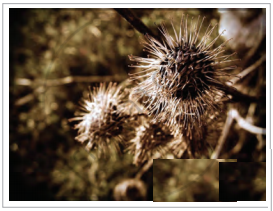
Picture 2
What is it called in your area?
Plants cannot move around. Once they grow, they remain in the same place. But their seeds are great travellers! They can reach far and wide. Look at picture 1 and see the flying seeds.
Picture 1
Picture 2
Look at your seed collection. Guess how many of those could have travelled by flying.
Reena has drawn this picture of the seed sprouted by her. What do you think the seeds need for sprouting? Write in your own words. How would Reena’s seeds look if they did not get the things needed? Show by drawing a picture.

