Advertisements
Advertisements
प्रश्न
Give two important unique features of the human reproductive system.
Advertisements
उत्तर
(i) It has the longest reproductive phase.
(ii) There is no specific breeding season. It can take place at any time during the year.
संबंधित प्रश्न
What name is given to the fusion of sperm and ovum?
What joins embryo to placenta in mother's body?
Write two examples of sexually transmitted diseases caused by virus.
List and explain in brief three methods of contraception.
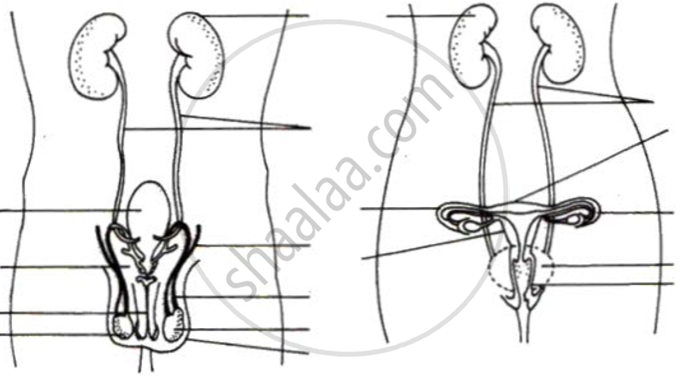
Label the folowing diagram
Mention, if the following statement is True or False. If false rewrite the wrong statement in its correct form:
Women after the age of 45 years normally cannot produce children.
Choose the Odd One Out:
How does human sperm locomote?
Distinguish between Vasa efferentia and Vasa deferentia.
Arrange the following stages of human reproduction in their correct sequential order: Fertilisation, Gametogenesis, Parturition, Insemination, Gestation, Implantation.
