Advertisements
Advertisements
प्रश्न
Find the shortest distance between the lines whose vector equations are `vecr = (hati + 2hatj + 3hatk) + lambda(hati - 3hatj + 2hatk)` and `vecr = 4hati + 5hatj + 6hatk + mu(2hati + 3hatj + hatk)`.
Advertisements
उत्तर
Compare the given equations
`vecr = vec(a_1) + λvec(b_1)` and `vecr = vec(a_2) + µvec(b_2)` respectively, we have `vec(a_1) = hati + 2hatj + 3hatk, vec(b_1) = hati - 3hatj + 2hatk`
`vec(a_2) = 4hati + 5hatj + 6hatk` and `vec(b_2) = 2hati + 3hatj + hatk`
Now, `vec(a_2) - vec(a_1) = 3hati + 3hatj + 3hatk`
And `vec(b_1) xx vec(b_2) = |(hati, hatj, hatk), (1, -3, 2), (2, 3, 1)|`
= `-9hati + 3hatj + 9hatk`
`|vec(b_1) xx vec(b_2)| = 3sqrt19`
∴ `(vec(a_2) - vec(a_1)). (vec(b_1) xx vec(b_2)) = 9`
d = `|((vec(a_2) - vec(a_1)). (vec(b_1) xx vec(b_2)))/|vec(b_1) xx vec(b_2)||`
`= |(-9 xx 3 + 3 xx 3 + 9 xx3)/sqrt((-9)^2 + 3^2 + 9^2)|`
`= |9/ (sqrt(3^2) sqrt(3^2 + 1 + 3^2))|`
= `9/(3sqrt19)`
= `3/sqrt19`
APPEARS IN
संबंधित प्रश्न
If the lines
`(x-1)/-3=(y-2)/(2k)=(z-3)/2 and (x-1)/(3k)=(y-5)/1=(z-6)/-5`
are at right angle then find the value of k
Find the shortest distance between the lines
`bar r = (4 hat i - hat j) + lambda(hat i + 2 hat j - 3 hat k)`
and
`bar r = (hat i - hat j + 2 hat k) + mu(hat i + 4 hat j -5 hat k)`
where λ and μ are parameters
Show that lines:
`vecr=hati+hatj+hatk+lambda(hati-hat+hatk)`
`vecr=4hatj+2hatk+mu(2hati-hatj+3hatk)` are coplanar
Also, find the equation of the plane containing these lines.
Find the shortest distance between the lines:
`vecr = (hati+2hatj+hatk) + lambda(hati-hatj+hatk)` and `vecr = 2hati - hatj - hatk + mu(2hati + hatj + 2hatk)`
Find the shortest distance between lines `vecr = 6hati + 2hatj + 2hatk + lambda(hati - 2hatj + 2hatk)` and `vecr =-4hati - hatk + mu(3hati - 2hatj - 2hatk)`.
Find the shortest distance between the lines `(x+1)/7=(y+1)/(-6)=(z+1)/1 and (x-3)/1=(y-5)/(-2)=(z-7)/1`
Find the shortest distance between the lines `vecr = (4hati - hatj) + lambda(hati+2hatj-3hatk)` and `vecr = (hati - hatj + 2hatk) + mu(2hati + 4hatj - 5hatk)`
Find the shortest distance between the lines
Find the shortest distance between the lines
Find the shortest distance between the lines given by `vec"r" = (8 + 3lambdahat"i" - (9 + 16lambda)hat"j" + (10 + 7lambda)hat"k"` and `vec"r" = 15hat"i" + 29hat"j" + 5hat"k" + mu(3hat"i" + 8hat"j" - 5hat"k")`
|
The fuel cost per hour for running a train is proportional to the square of the speed it generates in km per hour. If the fuel costs ₹ 48 per hour at a speed of 16 km per hour and the fixed charges to run the train amount to ₹ 1200 per hour. Assume the speed of the train as v km/h. |
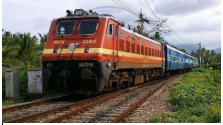
The most economical speed to run the train is:
|
The fuel cost per hour for running a train is proportional to the square of the speed it generates in km per hour. If the fuel costs ₹ 48 per hour at a speed of 16 km per hour and the fixed charges to run the train amount to ₹ 1200 per hour. Assume the speed of the train as v km/h. |
The fuel cost for the train to travel 500 km at the most economical speed is:
Find the shortest distance between the following lines:
`vecr = (hati + hatj - hatk) + s(2hati + hatj + hatk)`
`vecr = (hati + hatj - 2hatk) + t(4hati + 2hatj + 2hatk)`
Find the angle between the following pair of lines:- `(x - 2)/ = (y - 1)/5 = (z + 3)/(-3)` and `(x + 2)/(-1) = (y - 4)/8 = (z - 5)/4`
What will be the shortest distance between the lines, `vecr = (hati + 2hatj + hatk) + lambda(hati - hatj + hatk)` and `vecr = (2hati - hatj - hatk) + mu(2hati + hatj + 2hatk)`
Distance between the planes :-
`2x + 3y + 4z = 4` and `4x + 6y + 8z = 12` is
The planes `2x - y + 4z` = 5 and `5x - 2.5y + 10z` = 6
Read the following passage and answer the questions given below.
|
Two motorcycles A and B are running at the speed more than the allowed speed on the roads represented by the lines `vecr = λ(hati + 2hatj - hatk)` and `vecr = (3hati + 3hatj) + μ(2hati + hatj + hatk)` respectively.
|
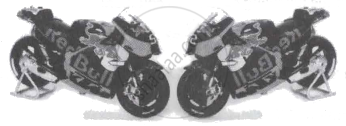
Based on the above information, answer the following questions:
- Find the shortest distance between the given lines.
- Find the point at which the motorcycles may collide.
Find the shortest distance between the following lines:
`vecr = 3hati + 5hatj + 7hatk + λ(hati - 2hatj + hatk)` and `vecr = (-hati - hatj - hatk) + μ(7hati - 6hatj + hatk)`.
If the shortest distance between the lines `vecr_1 = αhati + 2hatj + 2hatk + λ(hati - 2hatj + 2hatk)`, λ∈R, α > 0 `vecr_2 = - 4hati - hatk + μ(3hati - 2hatj - 2hatk)`, μ∈R is 9, then α is equal to ______.
The shortest distance between the line y = x and the curve y2 = x – 2 is ______.
The largest value of a, for which the perpendicular distance of the plane containing the lines `vec"r" = (hat"i" + hat"j") + λ(hat"i" + "a"hat"j" - hat"k")` and `vec"r" = (hat"i" + hat"j") + μ(-hat"i" + hat"j" - "a"hat"k")` from the point (2, 1, 4) is `sqrt(3)`, is ______.
Find the distance between the lines:
`vecr = (hati + 2hatj - 4hatk) + λ(2hati + 3hatj + 6hatk)`;
`vecr = (3hati + 3hatj - 5hatk) + μ(4hati + 6hatj + 12hatk)`
The lines `vecr = hati + hatj - hatk + λ(2hati + 3hatj - 6hatk)` and `vecr = 2hati - hatj - hatk + μ(6hati + 9hatj - 18hatk)`; (where λ and μ are scalars) are ______.
An aeroplane is flying along the line `vecr = λ(hati - hatj + hatk)`; where 'λ' is a scalar and another aeroplane is flying along the line `vecr = hati - hatj + μ(-2hatj + hatk)`; where 'μ' is a scalar. At what points on the lines should they reach, so that the distance between them is the shortest? Find the shortest possible distance between them.
Show that the line whose vector equation is `vecr = (2hati - 2hatj + 3hatk) + λ(hati - hatj + 4hatk)` is parallel to the plane whose vector equation is `vecr.(hati + 5hatj + hatk) = 5`. Also find the distance between them.
For parallel lines with common direction vector \[\vec{b}\], which expression gives \[SD\]?
Given \[\vec r=\vec a_1+\lambda\vec b_1\] and \[\vec r=\vec a_2+\mu\vec b_2\], what are \[\vec a_1\] and \[\vec a_2\]?
Which vector form gives the distance \[\mathbf d\] between skew lines?
For \[\vec a_1=\hat i+\hat j\] and \[\vec a_2=2\hat i+\hat j-\hat k\], what is \[\vec a_2-\vec a_1\]?
For \[\vec b_1=2\hat i-\hat j+\hat k\] and \[\vec b_2=3\hat i-5\hat j+2\hat k\], what is \[\vec b_1\times\vec b_2\]?
What is \[SD\] for intersecting lines?
