Advertisements
Advertisements
प्रश्न
Explain the reason behind the launching of the Khilafat Movement in India. Why were the Khilafat and Non-cooperation Movements merged in 1920?
Advertisements
उत्तर
The reason for launching Khilafat Movement are as follows:
In the World War I, Turkey, a Muslim nation was defeated along with Germany. The victorious allies divided the territories of Turkish empire amongst themselves, which caused anger among Muslims.
They also abolished the office of Khalifa (Caliph) of Turkey, who was regarded as religious head of all Muslims.
This caused a wave of pro-turkey or pro-caliph or Khilafat sentiments. Thus, Indian Muslims started a powerful agitation known as Khilafat Movement. Under the leadership of Ali Brothers-Mohammed Ali and Shaukat Ali, Maulana Azad, Hasrat Mohain, a country wide agitation was organised.
Gandhiji saw is in this movement. He advised the Khilafat Committee to adapt a policy of non-cooperation with the government. As their objectives, aims and programmes were similar by the end of 1920, the Khilafat Movement and the Non-Cooperation Movement merged into one nation wide movement.
Gandhiji saw in the movement an opportunity of uniting the Hindus and the Muslims. He advised the khilafat Committee to adapt a policy of non-cooperation with the Government. As their objectives, aims and programmes were similar, by the end of 1920, the khilafat movement and the Non-Cooperation Movement merged into one nation wide movement.
संबंधित प्रश्न
With reference to the picture given below, answer the following questions:

- Identify the Memorial built for those who were killed in this incident.
- Where did this incident take place?
- Name the movement launched by Gandhi in 1920 as a consequence.
Name the movement and its purpose, which he started in South Africa.
When did the Congress decide to start the Non-Cooperation Movement? Who was the leader of this movement?
Mention one item each of the positive and negative programme of the Non-Cooperation Movement.
Why is the Khilafat Movement significant in the history of the National Movement?
Mention any two effects of the Satyagraha and Non-Cooperation Movement started by Gandhiji.
In what way did Gandhiji involve Indian masses in the National Movement? In this respect, how did he differ from the Moderates?
Which mass struggle was launched by Gandhiji on non-violence lines in 1920? Explain in brief the programmes of such a campaign.
Answer the following:
(i) Identify the male personality in the given picture.
(ii) Mention four ideological tenets of this Indian leader.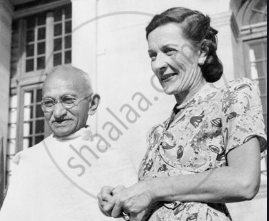
The Rowlatt Act was called the Black Act because the Indians ______.
