हिंदी

During a medical investigation, an infant was found to possess an extra chromosome 21. Describe the symptoms the child is likely to develop later in the life. - Biology

Advertisements
Advertisements

प्रश्न

During a medical investigation, an infant was found to possess an extra chromosome 21. Describe the symptoms the child is likely to develop later in the life.

During a medical investigation, an infant was found to possess an extra chromosome 21. Tell the symptoms of the child is likely to develop in the life.

लघु उत्तरीय
Advertisements

उत्तर

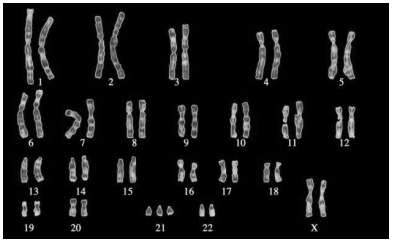
An additional copy of chromosome number 21 (trisomy of 21) leads to Down’s syndrome. The affected individual will have:

  1. short statured with small round head
  2. furrowed tongue
  3. partially open mouth
  4. broad palm with characteristic palm crease
  5. retarded physical, psychomotor and mental development
shaalaa.com
  क्या इस प्रश्न या उत्तर में कोई त्रुटि है?
अध्याय 5: Principles of Inheritance and Variation - Test Your Progress [पृष्ठ २०४]

APPEARS IN

नूतन Biology [English] Class 12 ISC
अध्याय 5 Principles of Inheritance and Variation
Test Your Progress | Q 61. (ii) | पृष्ठ २०४

संबंधित प्रश्न

Mention any two autosomal genetic disorders with their symptoms.


In which of the following disorders number of chromosomes present is 47?
(A) Turner’s syndrome
(B) Cushing’s syndrome
(C) Acquired Immuno - Deficiency Syndrome
(D) Down’s syndrome


Identify the option that correctly represents the number of chromosomes in Down syndrome.


Mongolism is a genetic disorder which is caused by the presence of an extra chromosome number ______.


Rajesh and Mahesh have defective haemoglobin due to genetic disorders. Rajesh has too few globin molecules while Mahesh has incorrectly functioning globin molecules. Identify the disorder they are suffering from.

  Rajesh Mahesh
A. Sickle cell anaemia - an autosome linked recessive trait Thalassemia - an autosome linked dominant trait
B. Thalassemia - an autosome linked recessive blood disorder Sickle cell anaemia - an autosome linked recessive trait
C. Sickle cell anemia - an autosome linked recessive trait Thalassemia - an autosome linked recessive blood disorder
D. Thalassemia - an autosome linked recessive blood disorder Sickle cell anaemia - an autosome linked dominant trait

Read the following and answer from given below:

Turner's syndrome is an example of monosomy. It is formed by the union of an allosome-free egg and a normal 'X' containing sperm or a normal egg and an allosome-free sperm. The individual has 2n = 45 chromosomes (44 + X0) instead of 46. Such individuals are sterile females who have rudimentary ovaries, underdeveloped breasts, small uterus, short stature, webbed neck, and abnormal intelligence. They may not menstruate or ovulate. This disorder can be treated by giving female sex hormones to women from the age of puberty to make them develop breasts and have menstruation. This makes them feel more normal.

Turner's syndrome is a/an ______ 


Read the following and answer from given below:

According to Mendel, one gene controls the expression of one character only. The ability of a gene to have multiple phenotypic effects because it influences a number of characters are an exception. The gene has multiple phenotypic effects because its ability to control two or more characters can be seen in cotton. In cotton, a gene for the lint also influences the height of the plant, size of the ball, number of ovules, and viability of seeds.

Which of the following disorder is an example of genes with multiple phenotypic effects?


The practice of analyzing inheritance patterns in human beings is called ______


Mention any one symptom of Turner's syndrome.


Jacob is genetically a carrier of the disorder that affects the shape of the RBCs, as shown in the diagram below. His son James suffers from the same disorder.
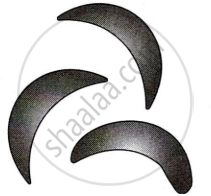
  1. Give the biochemical reason for the disorder that changes the shape of the RBCs, as shown above.
  2. Draw a Punnett square to show the genotype of the mother of James.
  3. Name and define the type of 'point mutation' responsible for this disorder.

Share
Notifications

Englishहिंदीमराठी


      Forgot password?
Use app×