Advertisements
Advertisements
प्रश्न
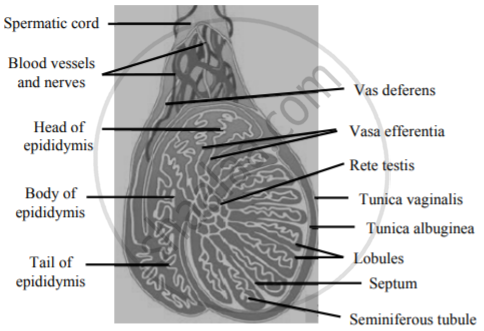
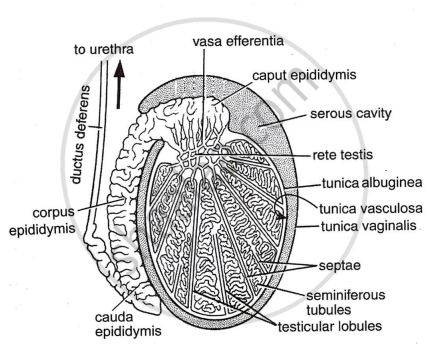
Draw a well labelled diagram of L.S. human testis.
Advertisements
उत्तर १
उत्तर २
संबंधित प्रश्न
Mention the problems that are taken care of by reproduction and child health care programme.
List four points of significance of reproductive health in a society. Name any two areas related to the reproductive health which have improved over the past 50 years in our country.
Is sex education necessary in schools? Why?
What is amniocentesis and why there is a statutory ban on it?
What is the name of surgical method of birth control in human females in which the oviducts are cut and ligated (tied) at both ends?
Describe the surgical methods of birth control for men
Name two devices used in the barrier method of birth control.
Which method of contraception prevents fertilised egg from being implanted in the uterus?
What is the name of surgical method of birth control (or preventing pregnancy) which is carried out in women?
The sexually transmitted disease which is caused by bacteria is :
(a) malaria
(b) diarrhoea
(c) gonorrhoea
(d) AIDS
What is contraception? List four different methods. State four reasons for adopting contraceptive methods.
What can you suggest to your classmates to keep himself/herself clean and healthy?
Which one amongst the following is the first country in the world to initiate action plans and programmes at a national level to attain total reproductive health as social goal?
RCH stands for ______.
The technique which makes use of amniotic fluid for the detection of prenatal disorder is called as ______.
Reproductive health includes ______.
In the following figure, mark the positions of the endocrine glands which release the hormones that:
- control the release of sex hormone
- are responsible for the secondary sexual characters in boys.
- prevent diabetes.
- maintain the correct salt balance in the blood.

What is the full form of RCH?
Given below are four aspects of Reproductive Health in Column A and their related information in Column B:
| Column A | Column B | ||
| S. No. | Terms used in Reproductive Health | S. No. | Significant information |
| (A) | MTP | (i) | Analysing fetal cells from amniotic fluid of the foetus |
| (B) | Amniocentesis | (ii) | Legalised in 1971 |
| (C) | Saheli | (iii) | Programme initiated in 1951 |
| (D) | Family Planning | (iv) | Non-steroidal oral Planning contraceptive |
Select the correct match from the following options:
