Advertisements
Advertisements
प्रश्न
Draw a suitable diagram for the structure of the atmosphere and label it and describe it.
Advertisements
उत्तर
The atmosphere consists of different layers with varying density and temperature. Density is highest near the surface of the earth and decreases with increasing altitude. The atmosphere is divided into five different layers depending upon the temperature condition.
They are troposphere, stratosphere, mesosphere, thermosphere, and exosphere.

Structure of atmosphere
1. Troposphere: The troposphere is the lowermost layer of the atmosphere. Its average height is 13 km and extends roughly to a height of 8 km near the poles and about 18 km at the equator. The thickness of the troposphere is greatest at the equator because heat is transported to great heights by strong convectional currents. This layer contains dust particles and water vapour. All changes in climate and weather take place in this layer. The temperature in this layer decreases at the rate of 1°C for every 165 m of height.
2. Stratosphere: The stratosphere is found above the tropopause and extends up to a height of 50 km. One important feature of the stratosphere is that it contains the ozone layer. This layer absorbs ultra-violet radiation and shields life on the earth from an intense, harmful form of energy.
3. Mesosphere: The mesosphere lies above the stratosphere, which extends up to a height of 80 km. In this layer, the temperature starts decreasing with the increase in altitude and reaches up to minus 100°C at the height of 80 km.
4. Ionosphere: The ionosphere is located between 80 and 400 km above the mesopause. It contains electrically charged particles known as ions, and hence, it is known as the ionosphere. Radio waves transmitted from the earth are reflected back to the earth by this layer. Temperature here starts increasing with height.
5. Exosphere: The uppermost layer of the atmosphere above the thermosphere is known as the exosphere. This is the highest layer but very little is known about it.
APPEARS IN
संबंधित प्रश्न
Give role of atmosphere in climatic control.
Set up an experiment to measure gain and loss of heat by water, sand and air.
Discuss the importance of the different layers of the atmosphere?
Fill in the blank
The rate at which the temperature drops in the ____________ is 1°C per 165 metres.
Choose the correct answer.
This gas protects us from the harmful ultraviolet radiation.
Fill in the blank:
The layer of the atmosphere where ozone is found is called the ________.
What is the troposphere?
Why is the thermosphere important?
This is a picture of a supersonic aircraft.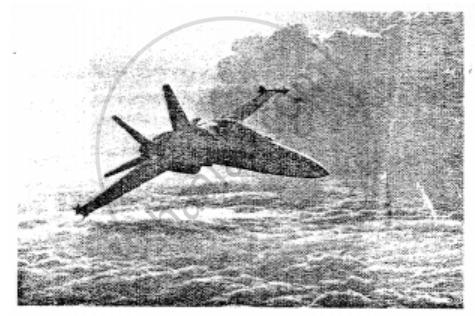
This layer of the atmosphere is also known to protect living beings from the harmful rays of the sun. How?
In your notebooks, draw a diagram showing the layers of the atmosphere. Mark clearly the ozone layer, the height at which a jet plane can fly and also the height up to which birds can fly.
What is responsible for causing a hole in the ozone layer?
Tick the correct answer
The most important layer of the atmosphere is
How is ozone important for us?
Answer the following question briefly:
Name the different layers of atmosphere.
Short Answer Type Question:
What is the atmosphere? Write about its different layers.
The study of weather is called ___________.
The upper limit of the troposphere is called as ______.
The part of atmosphere which contains gases with even composition is called ______.
Why is Heterosphere called so?
Give Reason:
Exosphere is characterised by aurora Australis and aurora borealis.
What are Auroras?
The atmosphere is held in place by the earth’s ______.
The atmosphere is made of ______ different layers.
Analogy:
Weather changes: Troposphere.
Ozone layer: ______.
Why do aircraft usually fly above the troposphere layer?
Choose the correct sequences
