Advertisements
Advertisements
प्रश्न
Describe a simple experiment with the help of a diagram to show that Air has mass
Advertisements
उत्तर
Air has mass
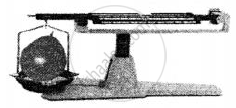
- An inflated balloon is placed on one side of the scale.
Observation: It is seen that the scale moves towards one side. It moves on the side on which the inflated balloon was placed.
Conclusion: Air has mass.
संबंधित प्रश्न
What do you observe when a beam of light is allowed to enter in a closed dark room through a small hole.
Define the following:
Respiration
Tick (√) the correct alternative from the choice given for the following statement.
Air pollution is due to the
Explain Lavoisier’s experiment which provided evidence to the discovery of components in air.
Draw a neat labelled diagram for the following experiment.
To study the presence of carbon dioxide in air.
List five activities that are possible due to the presence of air.
About 78% of the volume of air is ______.
In a number of musical instruments, air plays an important role. Can you name some such instruments?
A list of words is given in a box. Use appropriate words to fill up the blank in the following statement.
Air is a ______ of some gases.
Explain the following observations very briefly
The arrow of weather cock points towards a particular direction at a particular moment.
