Advertisements
Advertisements
प्रश्न
Column ‘II’ is a list of items related to ideas in Column ‘I’. Match the term in Column ‘II’ with a suitable idea given in Column ‘I’.
| Column I | Column II |
| (i) Transpiration | (a) Cacti plants |
| (ii) Movement of water | (b) Stomata |
| (iii) Guttation | (c) Maize plant |
| (iv) Low rate of transpiration | (d)Xylem |
| (v) The high rate of transpiration | (e) Hydathodes |
Advertisements
उत्तर
| Column I | Column II |
| (i) Transpiration | (b) Stomata |
| (ii) Movement of water | (d) Xylem |
| (iii) Guttation | (e) Hydathodes |
| (iv) Low rate of transpiration | (a) Cacti plants |
| (v) The high rate of transpiration | (c) Maize plant |
संबंधित प्रश्न
Fill in the blank with the suitable term given below:
Transpiration is reduced if the air is __________.
Describe an experiment to show that the plant loses water through its leaves.
Why are the stomata in most plants more numerous on the lower surface of a leaf instead of being on the upper surface?
Choose the correct answer:
In herbaceous plants, following percentage of absorbed water comes out __________
Choose the correct answer:
Transpiration generates __________
The figure given below represents an experimental setup with a weighing machine to demonstrate a particular process in plants. The experimental setup was placed in bright sunlight. Study the diagram and answer the following questions.
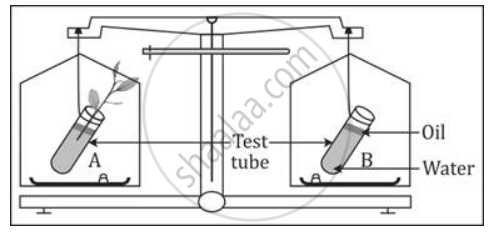
Define the above mentioned process.
Explain the Term :
Wilting
Explain the Term :
Hydathode
Mention, if the following statement is True or False. If false rewrite the wrong statement in its correct form:
Transpiration takes place only in green plants
Mention, if the following statement is True or False. If false rewrite the wrong statement in its correct form:
Evaporation is a physiological process
