Advertisements
Advertisements
प्रश्न
Anti-Partition Agitation of 1905 was essentially aimed at undoing the Partition of Bengal. In this context what limitations did the agitation suffer?
Advertisements
उत्तर
The Anti-Partition Agitation suffered from many limitations which are often described as causes of the failure of the Movement. First of all the agitationists though spoke about overthrowing the British, they had no plan to provide any alternative Government in India. The Swadeshi and Boycott Movement focused only on economic aspects of the programme. It was not used as a political weapon to destabilise the Government. It had the potential of causing such a Revolution but nothing of that sort was done. Even the Congress remained a divided house between the Moderates and Assertives and the doors had finally to be closed to the Assertives at the Surat session of the Congress in 1907. These limitations however don’t undermine the significance of the Anti-Partition Movement.
संबंधित प्रश्न
What was the General Service Enlistment Act?
Mention one important anti-India policy adopted by Lord Curzon, which brought about aggressive nationalism in India.
Briefly state how people reacted to the partition of Bengal?
Why was 16th October 1905 observed as Raksha Bandhan Day?
What is meant by Swadeshi?
What were Curzon’s two real motives behind the partition of Bengal.
How did the ideas of Swadeshi help Indians to be united against the British?
Give two reasons for the partial failure of the Swadeshi Movement.
How did the agitation bring about the ‘real awakening of India’ as Gandhiji said later?
Answer the following:
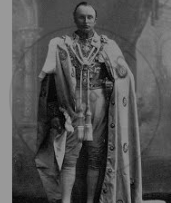
(i) Name the person in the picture given alongside.
(ii) Which event the person showing in the picture was associated with? What justification he give for that incident.
