Advertisements
Advertisements
प्रश्न
3, 1, 2 electrons are in valence shells of X, Y, Z elements resp. From this information, write the name of the groups it belongs to and its valency.
Advertisements
उत्तर
| Valence shell electron(s) |
Group | Valency |
| 3 | 13 | 3 |
| 1 | 1 | 1 |
| 2 | 2 | 2 |
APPEARS IN
संबंधित प्रश्न
Answer the following in respect of element `31/15 P `
Is it a metal or non - metal
Give the trend in metallic character:
(i) across the period left to right
How do the following change on moving from left to right in a period of the periodic table?
Give examples in support of your answer.
Nature of oxides of the elements ?
How does the chemical reactivity of
alkali metals vary?
iii) Observe the figure and answer the following questions.
a) Identify the block shown by box A and write an electronic configuration of any one element of this block.
b) Identify the block of element denoted by letter B and write its period number.
In Period 3, the most metallic element is ______.
Study the extract of the Periodic Table given below and answer the questions that follow. Give the alphabet corresponding to the element in question. DO NOT repeat an element. 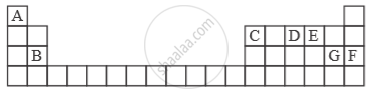
Which non-metallic element has the valency of 2?
Among the elements of the second period, Li to Ne, pick out the element that is the most reactive metal
In the third period, which is the most metallic and most non-metallic element?
Select the correct answer
Which of the following electronic structure is of a metal?
Select the correct answer
Configuration of an element is 2, 8, 1. Which of the following statement is true?
Supply the missing word from the words given in brackets.
If an element has one electron in its outermost energy level, then it is likely to be _ (metallic, non metallic)
The tendency of an element to form cation is the ______ character of that element.
Write an explanation.
Electropositivity
Write scientific reason.
The metallic character of elements increases while going down the groups.
An element has atomic number 17. To which group, the period does it belong? It is metal or non-metal?
Which of the following set of elements is written in order of their increasing metallic character?
Arrange the following as per instruction given in the bracket.
Cs, Na, Li, K, Rb (increasing metallic character)
A group of elements in the periodic table is given below (Boron is the first member of the group and Thallium is the last).
Boron, Aluminium, Gallium, Indium, Thallium
Answer the following question in relation to the above group of elements:
Will the elements in the group to the right of this boron group be more metallic or less metallic in character? Justify your answer.
