Health is a state of complete physical, mental and social well-being and not merely the absence of disease or infirmity.
Definitions [53]
Definition: Hygiene
Hygiene is defined as the science of the rules of health.
Define homeostasis.
It is to maintain a stable equilibrium of the body in accordance with the pressures and changes of the body environment.
Definition: Health
Definition: Communicable or infectious diseases
A disease caused by a specific pathogenic organism and capable of being transmitted to another individual by direct or indirect contact is known as a communicable (infectious) disease.
Definition: Disease
Adverse functioning of one or more organs or systems of the body, characterised by specific signs and symptoms, is called disease.
Definition: Pathogens
Pathogens are disease-causing organisms or infectious agents that invade a host organism, multiply, and disrupt its normal physiological functions, resulting in a disease.
Definition: Non-communicable or non-infectious diseases
A disease not caused by pathogenic organisms and not transmitted from one person to another by direct or indirect contact is known as a non-communicable (non-infectious) disease.
or
The diseases which don’t spread from an infected person to a healthy person are known as non-communicable or non-infectious diseases.
Definition: Benign tumour
A benign tumour is a non-cancerous tumour that remains confined to its original site and does not spread to other parts of the body.
Definition: Cancer
Cancer is a disease characterised by uncontrolled and abnormal division of body cells due to loss of normal growth regulation.
Definition: Metastasis
Metastasis is the process by which cancer cells spread from the primary site to distant organs via the bloodstream or lymphatic system.
Definition: Tumour
A tumour is a mass of abnormally proliferating cells formed due to uncontrolled cell division.
Definition: Malignant tumour
A malignant tumour is a cancerous tumour that grows rapidly, invades surrounding tissues and spreads to distant organs.
Definition: Carcinogens
Agents that cause cancer by disturbing the normal genetic and regulatory processes of cells are called carcinogens.
Definition: Oncogene
A cancer-causing gene that induces the transformation of normal cells into cancerous cells is called an oncogene.
Definition: Proto-oncogene
A normal cellular gene involved in growth and development that can become an oncogene upon mutation or activation is called a proto-oncogene.
Definition: Pathogen
A pathogen is any organism capable of producing disease in a host.
Definition: Portals of Entry
The organisms which produce disease must enter through a certain route called the portal of entry.
Definition: Interferon
The antiviral substance secreted by virus-infected cells that inhibits viral multiplication is called interferon.
Definition: Humoral Immune Response
The antibody-mediated defence mechanism is called the humoral immune response.
Definition: Innate (natural) Immunity
The hereditary, non-specific protection present from birth is called innate (natural) immunity.
Definition: Acquired (specific) Immunity
The immunity developed during an individual’s lifetime, following exposure to antigens, is called acquired (specific) immunity.
Definition: Cellular Immune Response
The defence mechanism involving lymphocytes and macrophages, without antibody production, is called the cell-mediated (cellular) immune response.
Definition: Immune System
The system of defence mechanisms that protects the body against harmful agents is called the immune system.
Definition: Antigen
A substance that induces an immune response and antibody formation when introduced into the body is called an antigen.
Definition: Antigenicity
The ability of an antigen to stimulate the formation of specific antibodies or immune cells is called antigenicity.
Definition: Complete antigen
The antigens of proteinaceous nature are known as complete antigens.
Definition: Hapten
A non-protein substance that becomes antigenic only after combining with a protein is called a hapten.
Definition: Antibodies
When disease-causing germs gain entry into the blood stream, they produce poisonous substances called toxins (meaning poisons). In response, the lymphocytes of the blood produce chemical substances called antibodies which circulate freely in the blood plasma.
or
The B-lymphocytes produce an army of proteins in response to pathogens in our blood to fight with them. These proteins are called antibodies.
Definition: Effector Mechanisms
The processes by which antibodies label antigens for destruction by the immune system are called effector mechanisms.
Define the term “allergy”.
Allergies, also known as allergic diseases, are a number of conditions caused by hypersensitivity of the immune system to something in the environment that usually causes no adverse effects to most people. These diseases include hay fever, dermatitis, asthma, food allergies, etc.
Definition: Allergen
The substance that triggers an allergic immune response in a sensitive individual is called an allergen.
Definition: Allergy
The exaggerated immune response to certain environmental antigens is called an allergy.
Definition: Immunity
The overall ability of the host to fight the disease-causing organisms conferred by the immune system is called immunity.
Definition: Immunology
The study of the immune system and immune responses is called immunology.
Define health.
Health is defined as the state of complete physical, mental, and social well-being and not merely the absence of disease or infirmity.
Definition: Innate Immunity
Innate immunity is the inborn, non-specific defence that protects the body from pathogens from birth.
Definition: Passive immunity
The immunity obtained by the direct transfer of ready-made antibodies from another individual is called passive immunity.
Definition: Acquired Immunity
Acquired immunity is the specific defence developed after exposure to a pathogen, characterised by memory and a stronger response on re-exposure.
Definition: Active immunity
The immunity developed when the body produces its own antibodies in response to exposure to antigens through infection or vaccination is called active immunity.
Definition: Vaccine
A vaccine is a biological preparation introduced into the body to stimulate active immunity against a specific disease.
Definition: Monoclonal Antibodies
Monoclonal antibodies are homogeneous antibodies of a single specific type produced against one antigen.
Definition: Interferon
A group of small protein molecules produced in the body or by transgenic organisms and used in the treatment of viral diseases is called interferon.
Definition: Autoimmunity
Autoimmunity is the condition in which the immune system fails to recognise self and reacts against the body’s own cells and tissues.
Definition: Autoimmune response
Autoimmune response is an immune reaction in which antibodies or immune cells are produced against the body’s own antigens.
Definition: Autoimmune disease
Autoimmune disease is a pathological condition caused by autoimmunity, where self-tissues are damaged or destroyed by the immune system.
Definition: Transplantation
Replacement of diseased tissues or organs by healthy ones is called transplantation.
Definition: Kidney transplantation
Kidney transplantation is the surgical transfer of a healthy kidney into a patient with end-stage renal disease.
Definition: Adolescence
Adolescence is the period between the beginning of sexual maturation and entry into adult life.
Definition: Addiction
Addiction is a condition of physical and psychological dependence on a substance or habit, leading to compulsive use despite harmful effects.
Definition: Psychoactive Drugs
Psychoactive drugs are chemical substances that act on the central nervous system (CNS) and produce changes in perception, mood, consciousness, cognition, and behaviour.
Definition: Drug
Any chemical substance which, when taken, alters the normal functioning of the body is called a drug.
Definition: Hallucinogens
Drugs that act on the central nervous system and produce marked changes in perception, thought and consciousness are called hallucinogens.
Definition: Drug abuse
Drug abuse is the improper or excessive use of drugs that leads to harmful effects on physical, mental and social health.
Key Points
Key Points: Health
- Health is a state of complete physical, mental, and social well-being and not merely the absence of disease or infirmity.
- It is a fundamental human right that reflects an organism's functional efficiency and drives work productivity and economic prosperity.
- Hygiene serves as the scientific foundation and set of rules required to achieve and maintain good health.
- Personal well-being heavily relies on consuming a balanced diet, drinking clean water, and maintaining regular physical exercise or yoga.
- Sustaining overall health requires community efforts such as proper waste disposal, vector control, disease awareness, and vaccination.
Key Points: Communicable / Infectious Diseases
- Communicable / infectious diseases are caused by pathogens and spread from an infected person to a healthy person via air, water, food, vectors, or contact.
- Common pathogens: bacteria (cholera, typhoid, TB), viruses (AIDS, hepatitis), protozoa (malaria), and helminths (ascariasis, filariasis).
- Incubation period: time between infection and symptoms – varies from hours (cholera) to years (HIV/AIDS, leprosy).
- TB (Mycobacterium tuberculosis) spreads through the air and is prevented by the BCG vaccine, isolation, and DOTS.
- Hepatitis spreads through contaminated water, needles, or blood; it is prevented by boiled water and hygiene.
- Cholera, typhoid, and dysentery spread through contaminated food and water; prevented by hygiene, boiled water, ORS, and vaccination.
Key Points: Modes of Transmission of Diseases through Pathogens
| Feature | Direct Transmission | Indirect Transmission |
|---|---|---|
| Meaning | Spread occurs without an intermediate agent. | Spread occurs through an intermediate agent or medium. |
| Common route | Contact, droplets, wounds, blood, placenta, and bites. | Vectors, contaminated food/water, fomites, air, and unclean hands. |
| Speed of spread | Often immediate during close interaction. | Often depends on contamination or carrier exposure. |
| Examples | Measles, rabies, tetanus, hepatitis, HIV. | Malaria, dengue, cholera, typhoid, amoebiasis. |
| Prevention focus | Isolation, cough etiquette, safe blood use, and wound care. | Hygiene, vector control, safe food, safe water, and sanitation. |
Key Points: Typhoid
| Aspect | Details |
|---|---|
| Disease & Type | Typhoid – a highly infectious bacterial enteric fever of the intestine |
| Causative organism | Salmonella typhi - Gram-negative bacterium; pathogenicity due to O antigen; flagella have H antigen |
| Mode of spread | Contaminated food and water, houseflies and cockroaches transfer bacteria from faeces to food |
| Symptoms | Prolonged high fever (39–40°C / up to 104°F), headache, weakness, abdominal pain, constipation or diarrhoea, loss of appetite, rose-coloured rash, white-coated tongue |
| Severe effects | Intestinal perforation, haemorrhage, breathlessness, irregular heartbeat, and death if untreated |
| Diagnosis | Widal test; blood, urine, and faeces tests |
| Treatment | Antibiotics, isolation, fluids, and gall bladder surgery in severe cases |
| Prevention | Sanitation, hygienic food, safe water, and avoid eating open food |
| Vaccination | Oral Ty21a, injectable polysaccharide, TAB (~3 years' immunity) |
| Carrier state | Recovered persons may carry bacteria in the intestine without symptoms – e.g., Typhoid Mary (Mary Mallon) |
Key Points: Pneumonia
| Aspect | Details |
|---|---|
| Disease & Type | Pneumonia – acute infection/inflammation of the lungs; alveoli fill with fluid, causing breathing difficulty |
| Causative organism | Mainly Streptococcus pneumoniae and Haemophilus influenzae |
| Mode of spread | Inhaling droplets/aerosols from an infected person; sharing glasses, utensils, or used items |
| Symptoms | High fever, chills, cough (dry or with yellow/green sputum), headache, chest pain, rapid breathing, shortness of breath, fatigue, vomiting, joint and muscle pain |
| Severe effects | Lips and fingernails turn grey to bluish |
| Treatment | Antibiotics (for bacterial pneumonia), bed rest, plenty of fluids, and close follow-up |
| Prevention | Personal and public hygiene; vaccination against Haemophilus influenzae and Streptococcus pneumoniae, especially early in life |
Key Points: Diphtheria
| Aspect | Diphtheria |
|---|---|
| Cause | Infection caused by Corynebacterium diphtheriae |
| Symptoms | Sore throat, fever, breathing difficulty, grey membrane in throat |
| Spread | Droplet infection or contact with contaminated objects |
| Treatment | Diphtheria antitoxin and antibiotics (penicillin/erythromycin) |
| Prevention | Vaccination, face mask, proper sanitation |
Key Points: Plague
| Aspect | Plague |
|---|---|
| Cause | Infection caused by Yersinia pestis |
| Symptoms | Fever, chills, headache, fatigue, swollen lymph nodes |
| Spread | Bite of infected rat fleas transmitted from rats to humans |
| Treatment | Antibiotics and supportive therapy |
| Prevention | Control of rats and fleas, isolation of patients, avoiding contact with infected animals |
Key Points: Common cold
| Aspect | Details |
|---|---|
| Disease & Type | Common cold – a viral infectious disease of the upper respiratory tract; also called 'nasopharyngitis' or 'acute coryza' |
| Causative agent | Mainly rhinoviruses; also coronaviruses |
| Site of infection | Nose and respiratory passages (lungs not affected) |
| Nature | Highly contagious; common in winter |
| Mode of spread | Droplets from coughing and sneezing; contaminated objects (pens, books, doorknobs, cups, keyboards) |
| Symptoms | Runny nose, nasal congestion, sore throat, hoarseness, cough, headache, tiredness; lasts 3–7 days |
| Treatment | Supportive measures: rest, plenty of fluids, painkillers, steam inhalation, extra sleep |
| Prevention | Maintain personal and public hygiene |
Key Points: Dengue fever
| Aspect | Dengue Fever |
|---|---|
| Cause | Viral infection caused by the dengue virus (Flavivirus) |
| Transmission | Bite of infected female Aedes aegypti mosquito |
| Symptoms | High fever, severe headache, muscle and joint pain, rash, bleeding in severe cases |
| Treatment | Supportive care, fluids, paracetamol, blood transfusion in severe cases |
| Prevention | Elimination of mosquitoes and prevention of mosquito bites |
Key Points: Chikungunya
| Aspect | Chikungunya |
|---|---|
| Cause | Viral disease caused by the chikungunya virus (Alphavirus) |
| Transmission | Bite of infected Aedes aegypti or Aedes albopictus mosquito |
| Symptoms | Sudden fever, severe joint pain, joint swelling, headache, muscle pain, rash |
| Diagnosis | Blood test (ELISA or PCR) to detect antibodies or viral RNA |
| Treatment & Prevention | No specific treatment; symptomatic relief, mosquito control and bite prevention |
Key Points: Malaria
| Aspect | Details |
|---|---|
| Disease & Type | Malaria – a vector-borne infectious disease |
| Causative organism | Plasmodium - P. vivax, P. ovale, P. malariae, P. falciparum (falciparum is most serious, can be fatal) |
| Vector / Host | Female Anopheles mosquito; needs two hosts - human and mosquito |
| Mode of spread | Bite of an infected female Anopheles mosquito; sporozoites enter human blood |
| Life cycle | Sporozoites multiply in liver → infect RBCs → rupture them → form gametocytes → taken up by mosquito → form zygote → oocyst → new sporozoites in salivary glands |
| Symptoms | Appear in 7–15 days; cyclic high fever with chills, shivering, and sweating; headache, nausea, muscle pain, vomiting, anaemia, hepatomegaly; severe cases: cerebral malaria |
| Cause of fever | Rupture of infected RBCs releases haemozoin (toxic pigment), causing chills and recurring fever |
| Fever pattern | P. vivax & P. ovale: every 48 hrs; P. malariae: every 72 hrs; P. falciparum: irregular (22–48 hrs) |
| Diagnosis | Microscopic blood smear; rapid diagnostic tests using nucleic acid amplification |
| Treatment | Artemisinin-based combination therapies (ACTs) – artesunate, sulfadoxine, pyrimethamine; also quinine, chloroquine, primaquine |
| Prevention & control | Mosquito nets, insect repellents, insecticide spraying, draining stagnant water, larvivorous fish (Gambusia), kerosene on water, vaccine: RTS, S/AS01 |
Key Points: Amoebiasis (Amoebic dysentery)
| Aspect | Details |
|---|---|
| Disease & Type | Amoebiasis (Amoebic Dysentery) - protozoan disease of the large intestine |
| Causative organism | Entamoeba histolytica |
| Mode of spread | Contaminated food and water; faeco-oral route; houseflies as mechanical carriers |
| Symptoms | Diarrhoea, abdominal pain, cramps, constipation, blood and mucus in stool, flatulence |
| Severe effects | Liver involvement – hepatomegaly or liver abscess, fever, weight loss |
| Diagnosis | Microscopic examination of stool |
| Treatment | Antiamoebic drugs – metronidazole, tinidazole; aspiration in severe liver cases |
| Prevention | Personal hygiene, safe (boiled/filtered/chlorinated) water, clean covered food, proper sanitation and sewage disposal |
Key Points: Ascariasis
| Aspect | Details |
|---|---|
| Disease & Type | Ascariasis – a helminthic disease; endoparasite of the human small intestine |
| Causative organism | Ascaris lumbricoides - parasitic roundworm (phylum Nematoda) |
| Mode of spread | Ingestion of food or water contaminated with Ascaris eggs; eggs hatch in intestine, larvae migrate through organs and settle as adults in the digestive tract |
| Symptoms | Nausea, vomiting, abdominal pain, fever, loss of appetite, weight loss, live worms in faeces, pneumonitis, eosinophilia, dizziness, anaemia |
| Diagnosis | Microscopic examination of stool to detect eggs |
| Treatment | Piperazine citrate, pyrantel pamoate, mebendazole, levamisole - all anthelmintic drugs |
| Prevention | Proper sanitation, avoid open defecation, hand-washing, washing fruits and vegetables, avoid raw vegetables in endemic areas, and personal hygiene |
Key Points: Filariasis (Elephantiasis)
| Aspect | Details |
|---|---|
| Disease & Type | Filariasis (Elephantiasis) - parasitic helminthic disease; the advanced stage causes gross enlargement due to chronic lymphatic obstruction |
| Causative organism | Wuchereria bancrofti (primary) and Brugia malayi – filarial nematode worms |
| Vector | Female Culex mosquito (transmits microfilariae) |
| Habitat of worms | Adult worms live in lymphatic vessels and lymph nodes – mainly the lower limbs and genital organs |
| Pathogenesis | Chronic inflammation → lymph obstruction → lymph accumulation → lymphedema → gross enlargement (elephantiasis) |
| Symptoms | Acute: fever with chills, lymph vessel inflammation; Chronic: swelling of legs, scrotum, or breasts; Advanced: skin thickening, deformity of genital organs |
| Treatment | Diethylcarbamazine (DEC) - drug of choice; anti-inflammatory drugs, antiallergics, antibiotics, diuretics; surgery in severe cases |
| Prevention | Mosquito nets, repellents, screens; eliminate stagnant water; community-level vector control |
Key Points: Ringworm
| Aspect | Details |
|---|---|
| Disease & Type | Ringworm (Dermatophytosis / Tinea) - contagious fungal skin disease (not caused by any worm) |
| Causative organisms | Three fungal genera – Microsporum, Trichophyton, and Epidermophyton – feed on keratin in skin, hair, and nails |
| Sites of infection | Tinea capitis (scalp), corporis (body), cruris (groin), pedis (feet – athlete's foot), onychomycosis (nails) |
| Predisposing conditions | Warm and moist areas – groin, armpits, between toes; poor personal hygiene |
| Mode of spread | Infected soil, sharing towels, clothes, combs; direct skin-to-skin contact |
| Symptoms | Ring-shaped, red, dry, scaly lesions with intense itching; inflamed edges with a clearer centre; thick, deformed nails; athlete's foot between toes |
| Diagnosis | Physical examination of the characteristic ring-shaped lesion |
| Treatment | Antifungal drugs – Nystatin, Fluconazole, Itraconazole |
| Prevention | Personal and public hygiene: keep skin clean and dry; avoid sharing personal articles; hot wash clothes with fungicidal soap; avoid contact with infected persons |
Key Points: Non-communicable or Non-infectious diseases
- Non-communicable diseases are non-transmissible conditions that do not spread from an infected individual to a healthy person.
- Instead of being caused by external pathogens, they arise from internal factors such as genetic defects, organ malfunction, or general physical weakness.
- Common examples include nutritional deficiencies (such as scurvy), metabolic disorders (such as diabetes), and genetic conditions (such as haemophilia).
- Other major classifications encompass allergies, degenerative diseases associated with ageing, mental illnesses, and various forms of cancer.
Key Points: Cancer
- Meaning: Cancer is the abnormal, uncontrolled division of cells forming a mass called a neoplasm/tumour. Cancer cells lack contact inhibition and compete with normal cells for nutrients.
- Benign Tumour: Grows slowly, stays restricted to its site of origin (localised), and does not spread. It can still be harmful (e.g., a brain tumour). Examples: adenoma and fibroid.
- Malignant Tumour: Grows rapidly, invades surrounding tissues, and spreads to other organs via the bloodstream or lymphatic system, forming secondary tumours. This spreading process is called metastasis.
- Types of Cancer: Based on tissue affected – Carcinoma, Sarcoma, Lymphoma, Leukaemia, and Adenocarcinoma.
Key Points: Types of Cancer
| Type of Cancer | Tissue of Origin | Nature of Tumour | Percentage | Examples |
|---|---|---|---|---|
| Carcinoma | Epithelial tissue (ectoderm/endoderm) | Malignant epithelial tumour | ~85% | Breast, lung, stomach cancer |
| Sarcoma | Connective tissue (mesoderm) | Solid malignant tumour | ~2% | Bone, cartilage, muscle sarcoma |
| Lymphoma | Lymphatic tissue | Excessive lymphocyte production | ~5% | Hodgkin’s disease |
| Leukaemia | Blood and bone marrow | Abnormal proliferation of leucocytes | ~4% | Acute and chronic leukaemia |
Key Points: Causes of Cancer
- Carcinogens disrupt normal cellular genetics, potentially transforming growth-regulating proto-oncogenes into cancer-causing oncogenes.
- Chemical factors such as nicotine, polycyclic aromatic hydrocarbons, and imbalanced sex hormones are known to induce various cancers.
- Radiation acts as a physical carcinogen, with ionising (e.g., X-rays) and non-ionising (e.g., UV rays) radiation damaging DNA and increasing cancer risk.
- Biological factors such as oncogenic viruses (e.g., HPV and EBV) carry viral oncogenes that can transform normal cells into cancerous ones.
- Lifestyle habits, particularly smoking, tobacco chewing, and alcohol abuse, significantly heighten the risk for multiple types of cancer.
Key Points: Organs Commonly Affected by Cancer
| Organ/System Affected | Percentage of Total Cancer Cases |
|---|---|
| Stomach and Bowels | 24% |
| Lungs | 16% |
| Breast | 15% |
| Bladder, Kidneys and Prostate Gland | 13% |
| Skin | 9% |
| Female Reproductive Organs (ovaries and uterus) | 9% |
| Other Organs | 14% |
Key Points: Chemical carcinogens and their target tissues
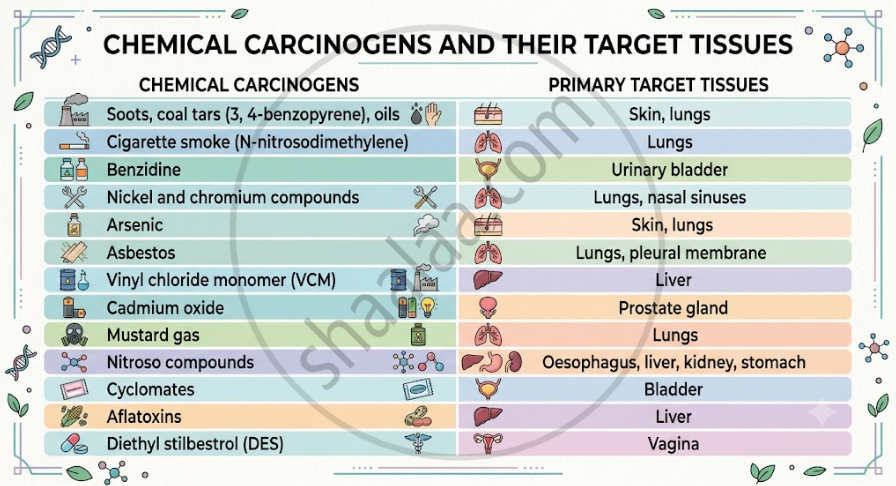
Key Points: Symptoms and Diagnosis of Cancer
- Cancer is detected through biopsy (tissue sample stained and examined under a microscope), histopathological studies, and blood/bone marrow tests (for leukaemia).
- CT scans use X-rays to produce 3D images of internal organs, while MRI uses strong magnetic fields and non-ionising radiation to detect tissue changes.
- Antibodies against cancer-specific antigens are also used for detecting certain cancers.
- Molecular biology techniques identify genes associated with inherited cancer susceptibility, helping in early prevention.
- Individuals with inherited cancer susceptibility are advised to avoid specific carcinogens, e.g., tobacco smoke, in the case of lung cancer.
Key Points: Treatment of Cancer
| Treatment Method | Main Purpose | How it Works | Examples / Notes |
|---|---|---|---|
| Surgery | Remove cancer | Cancerous tissue and nearby lymph nodes are cut out | Used in breast, bowel, lung, skin cancers |
| Radiotherapy | Destroy cancer cells | Uses X-rays/radiation to kill rapidly dividing cells | Effective in skin and breast cancers |
| Chemotherapy | Kill cancer cells | Cytotoxic drugs destroy cancer cells | Used in leukaemia, Hodgkin’s disease |
| Immunotherapy | Boost immunity | Activates immune system to fight tumour | α-interferon used |
Key Points: Microbial Pathogenesis and Portals of Entry
- A pathogen is any biological organism capable of causing disease within a host.
- Koch's postulates consist of four specific criteria used to scientifically prove that a particular microorganism is the exact cause of a specific disease.
- These scientific postulates have recognised limitations, particularly concerning viral infections, human-only diseases without animal models, and ethical restrictions on human testing.
- To successfully cause an infection, a pathogen must enter the host's body through a specific route, commonly referred to as a portal of entry.
- The primary portals of entry are the skin, respiratory tract, digestive tract, and urogenital tract, with each route being linked to specific pathogens and diseases.
Key Points: Barriers to Invasion by Pathogens
Key Points: The Body's Defence Mechanisms
- Innate immunity provides the body's initial, non-specific protection against pathogens using a multi-layered defence system.
- Physical barriers, such as skin and mucous membranes, prevent microbial entry, while chemical barriers, such as stomach acid and lysozyme, actively destroy trapped pathogens.
- During cellular responses, specialised cells such as neutrophils and macrophages engulf and enzymatically break down pathogens through a process known as phagocytosis.
- When infected by a virus, cells secrete an antiviral substance called interferon to alert nearby healthy cells and inhibit further viral multiplication.
- The inflammatory response helps isolate and resolve infections by increasing local blood flow to deliver defensive cells or by inducing a systemic fever to slow pathogen reproduction.
Key Points: The Immune System
- The immune system defends the body against infectious agents and consists of lymphoid organs, tissues, cells, and soluble molecules like antibodies.
- Primary lymphoid organs (bone marrow and thymus) are the sites where immature lymphocytes originate, develop, and differentiate into antigen-sensitive cells.
- Secondary lymphoid organs (spleen, lymph nodes, tonsils, and MALT) provide the specific sites where mature lymphocytes interact with antigens and proliferate.
- The spleen acts as a blood filter, trapping blood-borne microorganisms, while lymph nodes trap antigens in the lymphatic fluid, triggering localised immune responses.
- The humoral immune response is driven by specific lymphocytes that produce circulating antibodies to bind, neutralise, and eliminate foreign antigens.
- The cellular immune response does not involve circulating antibodies but instead relies on the direct cooperation of lymphocytes and macrophages to destroy pathogenic organisms.
Key Points: Lymphoid Organs
| Lymphoid Organ | Type | Location | Main Function |
|---|---|---|---|
| Bone marrow | Primary | Bones | Formation of all blood cells and maturation of B-lymphocytes |
| Thymus | Primary | Upper chest (thoracic cavity) | Maturation and differentiation of T-lymphocytes |
| Lymph nodes | Secondary | Along lymph vessels (neck, armpit, groin) | Filtration of lymph, activation and proliferation of B- and T-cells |
| Spleen | Secondary | Left upper abdomen | Filtration of blood, immune response, removal of old RBCs |
| MALT (GALT, BALT, NALT) | Secondary | Mucosal linings of gut, lungs, nose, throat | Defence against pathogens entering through mucosal surfaces |
Key Points: Production of Lymphocytes
- Origin of lymphocytes: In embryos, lymphocytes arise from mesenchymal cells of the yolk sac, liver and spleen, while in adults they originate from stem cells in the bone marrow.
- T-lymphocytes: Some lymphocytes migrate from bone marrow to the thymus, where they mature into T-lymphocytes responsible for cellular immunity.
- B-lymphocytes: Lymphocytes that do not pass through the thymus mature in other lymphoid tissues and are called B-lymphocytes, which produce antibodies.
- Circulation and function: Both T- and B-lymphocytes circulate between blood and lymphoid organs, responding to antigens to provide cellular and humoral immunity, respectively.
Key Points: Cellular Immune Response (Response of T-cells to antigens)
| Type of T-cell | Main Function | Role in Immunity |
|---|---|---|
| Cytotoxic T-cells (Killer T-cells) | Destroy antigen-containing cells directly | Kill virus-infected cells by releasing cytotoxic substances |
| Helper T-cells | Activate and regulate immune response | Stimulate B-cells to produce antibodies and activate macrophages through lymphokines |
| Suppressor T-cells (Regulatory T-cells) | Control immune reactions | Suppress excessive immune responses and maintain immunological tolerance |
| Memory T-cells | Provide long-term immunity | Remember antigens and produce faster, stronger response on re-exposure |
Key Points: Humoral immune response (Response of B-cells to antigens)
- The humoral immune response is driven by specific B lymphocytes that are individually programmed to recognise a single, distinct antigen.
- Instead of continuously circulating, B-lymphocytes primarily settle in lymphoid tissues like the spleen and lymph nodes to encounter antigens processed by macrophages.
- Upon activation, these B-lymphocytes transform into plasmablasts, which then multiply and differentiate into antibody-producing plasma cells.
- A specific fraction of these activated cells becomes long-lasting memory cells, remaining in the lymphoid tissue to provide ongoing immunity.
- Plasma cells release antibodies either directly at the site of infection or into lymphoid tissues, where they are transported by the blood and lymphatic systems.
- Secreted antibodies bind to their target antigens to form a complex, triggering antigen destruction through direct neutralisation, opsonisation, or complement activation.
Key Points: Antibodies
- Antibodies are specialised defensive proteins produced by B-lymphocytes to protect the body against disease-causing pathogens and their toxins.
- They feature a distinct Y-shaped molecular structure consisting of two heavy chains and two light chains connected by disulphide bonds.
- Each antibody contains a variable region designed to bind to specific antigens and a constant region that determines its overall classification.
- These proteins are categorised into five primary classes – IgG, IgM, IgA, IgD, and IgE – each fulfilling a specific role within the immune system.
- Their specific functions vary widely, such as IgG providing passive immunity to foetuses, IgA protecting mucosal surfaces, and IgE mediating allergic reactions.
- Antibodies neutralise systemic threats through diverse mechanisms, including clumping pathogens together, marking them for cellular destruction, and activating further immune responses.
Key Points: Mechanism of Action (Effector Mechanisms)
| Mechanism | Trigger | Primary Action | End Result |
|---|---|---|---|
| Agglutination | Multivalent antibody-antigen binding | Clumping of antigens | Easier removal by immune cells |
| Opsonization | Antibody coating on antigen surface | Marks pathogen for phagocytosis | Enhanced phagocytic uptake |
| Complement-Mediated Lysis | IgM/IgG binding activates complement cascade | Pore formation in pathogen membrane | Direct cell lysis + inflammation |
Key Points: Allergies
- An allergy is an exaggerated immune response to environmental antigens.
- IgE is the antibody involved in allergic reactions.
- Histamine and serotonin released from mast cells are responsible for allergic symptoms.
- H1 receptors are related to allergic manifestations, whereas H2 receptors are related to gastric acid secretion.
- Severe systemic allergy is called anaphylactic shock.
- Diagnosis is done by testing with small doses of allergens.
- Antihistamines, adrenaline, steroids, and sodium cromoglycate are used in treatment.
Key Points: Immunity
- Immunology studies the immune system, while immunity is the host's ability to fight disease-causing organisms.
- Body defence works at two levels: external local barriers that prevent entry, and the internal immune system that fights invading germs.
- The immune system can accurately distinguish between the body's own cells (self) and foreign invaders (non-self).
- Foreign substances that trigger an immune response are antigens, and the protective chemicals produced against them are antibodies.
- Stimulated lymphocytes divide into active effector cells (to fight the immediate infection) and dormant memory cells.
- Memory cells stay in the lymph nodes to mount a much faster and stronger immune response upon subsequent encounters with the same antigen.
Key Points: Types of Immunity > Innate Immunity
- Innate immunity is a non-specific, natural defence present at birth that prevents the entry of and destroys foreign agents.
- Physical barriers, such as the skin and mucous membranes, physically block and trap invading microorganisms.
- Physiological barriers utilise bodily secretions – like stomach acid, saliva, and lysozyme in tears – to inhibit or destroy microbial growth.
- Cellular barriers rely on phagocytic cells (neutrophils, macrophages) and natural killer cells to actively ingest and destroy pathogens.
- Cytokine barriers consist of interferons, which are secreted by virus-infected cells to protect surrounding healthy cells from further viral infection.
- Additional systemic defences include fever, the complement protein system, and acute-phase proteins that enhance host resistance and eliminate pathogens.
Key Points: Types of Immunity > Acquired Immunity
- Acquired immunity is a pathogen-specific defence system developed over a lifetime that remembers infections and forms the basis of vaccination.
- Its main features include specificity against distinct pathogens, diversity in recognising various antigens, self/non-self recognition, and immunological memory.
- Initial pathogen exposure causes a low-intensity primary response, while later exposures trigger a much faster and stronger secondary response due to memory cells.
- B-lymphocytes produce protective proteins called 'antibodies' (structured as H₂L₂), and T-lymphocytes help B-cells while mediating cellular responses.
- The immune response is classified as either humoral (antibody-mediated in the blood) or cell-mediated (T-cell-mediated, responsible for graft rejection).
- Immunity can be active (the body produces its own antibodies, providing long-term protection) or passive (the body receives ready-made antibodies for immediate, short-term protection).
Key Points: Vaccine
- A vaccine is a biological preparation introduced into the body to stimulate active immunity.
- Vaccines contain weakened, killed pathogens or their antigenic proteins that induce antibody production.
- Vaccination also produces memory B-cells and T-cells, providing long-term protection against future infections.
- Modern vaccines include genetically engineered second- and third-generation vaccines developed using biotechnology.
Key Points: Monoclonal Antibodies
- Monoclonal antibodies are homogeneous antibodies of a single, specific type produced against one antigen.
- They are produced by hybridoma technology using fused antibody-producing lymphocytes and myeloma cells.
- Hybridoma cells combine continuous growth with the ability to secrete specific antibodies.
- Monoclonal antibodies are highly specific and therefore useful for accurate diagnosis and screening.
- They are widely used in immunoassays, pregnancy tests, drug detection, and diagnosis of diseases like AIDS.
Key Points: Interferons
- Interferons are fast-acting, species-specific proteins that serve as the body's rapid first line of defence against viral infections.
- They are produced and released directly by host cells that have been infected by a multiplying virus.
- Once released, interferons bind to neighbouring healthy cells, making them completely resistant to subsequent viral attacks.
- Instead of directly destroying the virus, they create an 'anti-viral state' in healthy cells that stops viral replication, protein synthesis, and assembly.
- Their production can also be stimulated by other factors, including inactivated viruses, double-stranded RNA, and bacterial endotoxins.
- They are highly active biological molecules that naturally defend against diseases such as hepatitis and influenza and are effective against breast and lymph node cancers.
Key Points: Autoimmunity
- Autoimmunity is a condition where the immune system loses its ability to distinguish between "self" and "non-self" cells, mistakenly targeting the body's own tissues.
- An autoimmune response is a specific abnormal reaction in which the body actively produces antibodies or immune cells directed against its own self-antigens.
- Autoimmune disease is the resulting pathological condition where this misdirected immune response causes actual physical damage and destruction to self-tissues.
- Common examples include rheumatoid arthritis, Hashimoto’s disease (targeting the thyroid), myasthenia gravis (targeting muscles), Addison’s disease, and chronic anaemia (targeting red blood cells).
Key Points: Immunodeficiency Disorder
| Immunodeficiency Disorder | Type | Cells Affected | Key Features |
|---|---|---|---|
| Severe Combined Immunodeficiency (SCID) | Congenital | T-cells and B-cells absent | Extremely susceptible to infections, patients may need germ-free isolation |
| Di George’s Syndrome | Congenital | T-cells absent | Thymus absent or poorly developed; only B-cells present |
| Agammaglobulinemia | Congenital | B-cells deficient | Recurrent severe infections; T-cell function normal |
| Acquired Immunodeficiency Syndrome (AIDS) | Acquired | T-cells severely reduced | Fatal disease causing severe cellular immunodeficiency and widespread infections |
Key Points: AIDS
- AIDS is a fatal, non-congenital condition caused by HIV, leading to severe immune system deficiency.
- HIV is a spherical retrovirus featuring two single-stranded RNA molecules, the enzyme reverse transcriptase, and a lipid envelope with specific glycoproteins.
- The virus targets and destroys CD4 (T4) helper T-cells and uses macrophages as replication factories, progressively weakening the host's immune response.
- Transmission occurs through contact with infected body fluids, specifically via sexual intercourse, contaminated blood transfusions, shared needles, or from mother to child.
- Individuals at high risk include those with multiple sexual partners, intravenous drug users, recipients of repeated blood transfusions, and children born to infected mothers.
- Diagnosis involves a primary screening test called ELISA, followed by a highly specific confirmatory test known as the Western Blot.
- While there is no cure, antiretroviral drugs like AZT can partially reduce viral load and extend patients' lifespans.
- Prevention – including education, safe sexual practices, blood screening, and the use of disposable needles – is critical, supported by social sympathy for those living with HIV.
Key Points: Organ Transplants and Immunosuppression
- Transplantation involves replacing diseased organs, but foreign tissues are typically recognised as antigens and rejected by the recipient's immune system.
- Rejection does not occur if the transplanted tissue is taken from the patient's own body, as the immune system naturally accepts its own cells.
- To prevent foreign organ rejection, medical procedures rely on careful tissue matching, X-irradiation, and immunosuppressive medications such as cortisol and cyclosporine.
- Current immunosuppressive treatments suppress the entire immune system, which is not only expensive but also leaves patients highly vulnerable to infections and cancer.
- A promising future solution involves using specialised antibodies to destroy only the specific immune cells causing rejection, allowing the rest of the immune system to function safely and normally.
Key Points: Kidney Transplantation
- Kidney transplantation is a surgical treatment specifically for patients suffering from end-stage renal disease.
- The first successful kidney transplant was performed in 1954 between genetically identical twins.
- Kidneys obtained from living donors typically function better and last longer than those from deceased donors.
- During the operation, the new kidney is placed in the lower abdomen while the patient's original kidneys are usually left in place.
- Immunosuppressant medications are required to prevent the patient's immune system from rejecting the new donor kidney.
- Following surgery, patients must follow a specific diet low in fat and high in magnesium and phosphorus.
Key Points: Role of Stem Cells in Medical Treatment
- Stem cells are unique cells that have the ability to renew themselves and develop into various specialised cell types.
- The two main categories of mammalian stem cells are embryonic stem cells and adult stem cells.
- Stem cell therapy involves introducing new, healthy cells into damaged tissues to treat diseases or physical injuries.
- Medical professionals currently use stem cells from bone marrow and umbilical cord blood to treat cancers like leukaemia.
- Researchers anticipate that stem cell technology will eventually cure severe conditions such as spinal cord injuries and diabetes.
Key Points: Adolescence
- Adolescence is the stage between childhood and adulthood (ages 10–19), marked by fast physical and emotional changes.
- It has three stages: Early (10–14), Middle (15–17), and Late (18–19), each with different body and thinking developments.
- Puberty brings sexual and physical changes due to hormones—testosterone in boys and oestrogen in girls.
- Physical changes include growth in height, changes in body shape, changes in voice, and increased sweat/oil production.
- Emotional and social changes include mood swings, seeking independence, peer pressure, and identity formation.
Key Points: Addiction
- Meaning: Physical, mental, and physiological dependence on habits (gambling) or substances (nicotine, alcohol, drugs) despite harmful consequences.
- Brain Mechanism: Involves the brain's reward & reinforcement pathways using the neurotransmitter dopamine, affecting motivation.
- Reversibility: Neurological changes are reversible once substance use or behaviour is stopped.
- Effects: Impairs physical, physiological, and psychological functions of the body.
- Causes in Adolescents: Insufficient parental supervision, lack of communication, family conflicts, risk-taking behaviour, and favourable parental attitudes towards drugs/alcohol.
Key Points: Tobacco
| Aspect | Tobacco |
|---|---|
| Source | Obtained from Nicotiana tabacum and N. rustica. |
| Addictive agent | Nicotine, which stimulates the nervous system. |
| Health hazards | Causes cancer, heart disease, bronchitis, emphysema and ulcers. |
| Mode of intake | Smoking, chewing, or inhalation. |
| Control | Quitting with strong will, medical help and nicotine substitutes. |
Key Points: Tobacco Smoking: Health Impacts and Statistics
- Tobacco smoke contains highly dangerous cancer-causing agents, including polycyclic hydrocarbons and radioactive polonium-210.
- It is a leading cause of global mortality, resulting in approximately three million deaths worldwide and one million deaths in India each year.
- Smoking drastically shortens a person's lifespan and increases the risk of a heart attack by three to four times compared to a non-smoker.
- Long-term tobacco use causes severe, life-threatening conditions, including multiple types of cancers, cardiovascular diseases, and respiratory illnesses like bronchitis and asthma.
- Tobacco exposure is extremely harmful during pregnancy, leading to serious paediatric complications like low birth weight, respiratory distress, and unsuccessful pregnancies.
- Passive smoking forces non-smokers to inhale toxic chemicals, increasing their disease risk, while treating tobacco-related illnesses costs the Indian economy ₹25,000 crore annually.
Key Points: Alcohol
| Aspect | Details |
|---|---|
| Nature | Alcoholic beverages are depressants that lower the activity of the brain. |
| Types | Alcohol is classified into fermented (wine and beer) and distilled forms (whisky, brandy, and rum). |
| Addiction | Alcoholism is dependence on alcohol causing mental, physical, social and professional problems. |
| Effects on body | Alcohol damages the brain, liver, nervous system, heart, stomach and blood. |
| Treatment | Management includes counselling, behavioural therapy, social rehabilitation and drug therapy. |
Key Points: Common Misconceptions about Alcoholism
- Not a Character Flaw: Alcoholism is not caused by moral weakness or specific personality traits; emotional problems are typically the result of addiction, rather than the cause.
- Varying Biological Risks: Addiction is not solely a matter of willpower. People have different biological risk levels, meaning some individuals can become addicted much more easily than others.
- Not Strictly Genetic: Alcoholism is not entirely inherited. However, individuals have different biological "trigger levels", and drinking enough to reach that threshold can lead to addiction regardless of genetics.
- Health Risks Outweigh Benefits: While moderate drinking may offer minor heart benefits, heavy drinking causes severe medical issues. Non-drinkers should rely on diet and exercise for heart health rather than starting to drink.
- Higher Vulnerability in Women: Women are biologically more susceptible to the effects of alcohol than men, experiencing higher blood alcohol concentrations and a greater risk of alcohol-related organ damage.
Key Points: Impact of Alcohol Use and Abuse on Health
- Alcohol consumption is directly linked to major societal harm, contributing to half of all murders, crimes, and fatal automobile accidents.
- Alcohol abuse occurs when drinking negatively interferes with a person's daily life and responsibilities, even if physical addiction has not yet developed.
- Warning signs of abuse include neglecting work or home duties, drinking while operating machinery, and continuing to drink despite legal or relationship problems.
- To prevent severe accidents and health issues, one should never drink before driving, use alcohol to cope with stress, or mix it with other medications.
- Chronic alcoholism leads to life-threatening physical conditions, including liver disease, cardiovascular problems, brain damage, and cancer.
Key Points: Symptoms of Alcohol Intoxication
- Alcohol intoxication causes sudden negative changes in behaviour, such as extreme mood swings, aggressive actions, and impaired judgement.
- Common physical symptoms of intoxication include slurred speech, poor body coordination, rapid eye movements, and the inability to walk straight.
- Extreme intoxication can dangerously affect a person's memory and attention, and in severe cases, it can lead to a coma.
- Experiencing frequent physical distress after drinking, such as nausea, severe headaches, and a rapid heartbeat, is a major warning sign of alcoholism.
- Needing alcohol in the morning, forgetting past actions, and strongly denying a drinking problem clearly indicate a serious alcohol addiction.
Key Points: Cannabis / Cannabinoids
- Source: Cannabis sativa (Indian hemp)
- Four forms: Bhang, Ganja, Charas, Marijuana - differ in plant part and resin content
- Active principle: THC (δ-9-tetrahydrocannabinol)
- Effects: Mood/memory alteration, motor and cognitive impairment
- Health risks: Immune suppression, lung/heart disease, fertility issues
- Dependence occurs, but true addiction is rare
- THC detectable in urine for up to 30 days
- Treatment: Outpatient therapy + prevention through health education
Key Points: Categories of Drugs
| Type of Drug | Action | Effect on Body | Examples |
|---|---|---|---|
| Hypnotics | Drugs that induce artificial but normal sleep | Cause sleep without major disturbance of consciousness | Phenobarbitone, Diazepam |
| Sedatives | Drugs that produce a calming effect and reduce mental activity | Bring physical and mental relaxation; may suppress consciousness | Cocaine, Opium |
| Narcotics | Drugs that depress the central nervous system and cause sleepiness | Produce stupor, coma, addiction and physical degeneration | Opium, Morphine, Heroin |
| Tranquillisers | Drugs that relieve anxiety and tension without inducing sleep | Maintain consciousness while calming mental state | Diazepam, Lorazepam, Alprazolam |
| Stimulants | Drugs that stimulate the nervous system | Increase excitement, alertness and self-confidence | Amphetamines, Cocaine |
| Hallucinogens | Drugs that cause hallucinations and distortion of perception | Alter personality, sense of time and reality | Cannabis, Mescaline, LSD |
Key Points: Hallucinogens
- Hallucinogens act on the CNS and alter perception, thought, and consciousness.
- Two categories: chemically produced (e.g., LSD) and plant-derived (e.g., mescaline, psilocybin, cannabis).
- Effects: hallucinations, impaired judgement, disturbed sense of space/time.
- "Trip" lasts several hours and can be good or bad; effects vary by individual.
- Tolerance develops with repeated use; LSD carries pregnancy-related risk.
Key Points: Drug Abuse
- Drug abuse is the excessive use of harmful substances, often starting in teenagers due to academic stress, peer pressure, or curiosity.
- Commonly abused substances include opioids, cannabinoids, and prescription medicines, which are also sometimes illegally used by athletes to boost performance.
- Severe health effects of long-term drug use include dangerous organ damage, nervous system failure, coma, and even sudden death.
- Major warning signs of addiction in students include a sudden drop in academic performance, unusual aggression, and severe social isolation.
- Effective prevention involves avoiding negative peer pressure, maintaining open communication with parents, and seeking professional medical help if needed.
Important Questions [8]
- Assertion: Lymphocytes originate and proliferate in primary lymphoid organs. Reason: Spleen is a secondary lymphoid organ.
- What are the vestigial organs? Give any one example of a vestigial organ in human body.
- Give any one example of a vestigial organ in human body.
- Give One Significant Difference Between Primary Lymphoid Organs and Secondary Lymphoid Organs. Give One Example of Each.
- An antiviral protein released from infected and dying cells is ______.
- Expand the following: SCID
- Name the antibody which is most effective in allergies.
- If a person shows the production of interferons in his body, then he is suffering from ______.
Concepts [59]
- Health
- Human Diseases > Communicable / Infectious Diseases
- Modes of Transmission of Diseases through Pathogens
- Diseases Caused by Bacteria > Typhoid
- Diseases Caused by Bacteria > Pneumonia
- Diseases Caused by Bacteria > Diphtheria
- Diseases Caused by Bacteria > Plague
- Diseases Caused by Viruses > Common Cold
- Diseases Caused by Viruses > Dengue Fever
- Diseases Caused by Viruses > Chikungunya
- Diseases Caused by Protozoa > Malaria
- Diseases Caused by Protozoa > Amoebiasis (Amoeboic dysentery)
- Diseases Caused by Helminths > Ascariasis
- Diseases Caused by Helminths > Filariasis (Elephantiasis)
- Diseases Caused by Fungi > Ringworm
- Human Diseases > Non-communicable or Non-infectious Diseases
- Cancer
- Types of Cancer
- Causes of Cancer
- Organs Commonly Affected by Cancer
- Chemical Carcinogens and their Target Tissues
- Symptoms and Diagnosis of Cancer
- Prevention/Treatment of Cancer
- Microbial Pathogenesis and Portals of Entry
- Barriers to Invasion by Pathogens
- The Body's Defence Mechanisms
- The Immune System
- Lymphoid Organs
- Production of Lymphocytes
- Cellular Immune Response (Response of T-Cells to Antigens)
- Humoral Immune Response (Response of B-Cells to Antigens)
- Antigens
- Antibodies
- Mechanism of Action (Effector Mechanisms)
- Allergies
- Immunity
- Types of Immunity > Innate Immunity
- Types of Immunity > Acquired Immunity
- Vaccines
- Monoclonal Antibodies
- Interferons
- Autoimmunity
- Immunodeficiency Disorders
- Acquired Immuno Deficiency Syndrome (AIDS)
- Organ Transplants and Immunosuppression
- Kidney Transplantation
- Role of Stem Cells in Medical Treatment
- Concept of Adolescence
- Addiction
- Tobacco
- Tobacco Smoking: Health Impacts and Statistics
- Addiction > Alcohol
- Common Misconceptions about Alcoholism
- Impact of Alcohol Use and Abuse on Health
- Symptoms of Alcohol Intoxication
- Cannabis/Cannabinoids
- Categories of Drugs
- Hallucinogens
- Drug Abuse
