Advertisements
Advertisements
प्रश्न
Write the answer in your word.
What are the practical uses of a magnet?
Advertisements
उत्तर
Magnets have a very wide range of uses:
- Magnetic compass: With the help of a magnetic compass, you can know the directions at a particular place. The red end of the needle indicates the north direction.
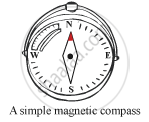
- Magnets in daily life: Magnets are used in refrigerator doors, as pin holders, in screwdrivers, etc.
- Magnet in junkyard: In the junkyard, you will see that a large magnet is attached at the bottom of the arm of a crane. The arm moves over a heap of junk and the magnet collects objects made of iron. The magnet used in a junkyard crane is not a natural or permanent magnet. It is a temporary magnet, which is called an electromagnet.
- Magnet in electrical appliances: Magnets are also used in many electrical appliances, such as electric bells, telephones, telegraphs, radios, loudspeakers, fans, electrical motors, electric generators, etc.
- Magnet for security: While going to some important places like temples, buildings, airports, etc., you will see equipment for inspection of people entering these places. These equipments use magnets and are known as metal detectors. These metal detectors are also used in the food processing industry to detect any unwanted iron/steel objects mixed unknowingly in food stuff.
संबंधित प्रश्न
Select the correct alternative
A freely suspended magnet rests in
How will you test whether a given rod is a magnet or not ?
Write true or false of the following statement.
Copper cannot be magnetised.
Answer the following in short.
What is a magnet? Differentiate between natural and artificial magnets.
Draw lines of force surrounding a bar magnet when it is placed in the magnetic meridian with its north pole pointing geographic south.
Draw a clearly labelled diagram, to show how a steel bar is magnetised by a divided touch method. A written description is not required.
Define the term Magnetic axis
Give scientific reason:
Soft iron is used to make electromagnets.
Differentiate between:
Primary and secondary cell.
