Advertisements
Advertisements
प्रश्न
What are the functions of lipids in living organisms?
थोडक्यात उत्तर
Advertisements
उत्तर
- Lipids are the integral component of the cell membrane. They are necessary for the structural integrity of the cell.
- The main function of triglycerides in animals is as an energy reserve.
- They yield more energy than carbohydrates and proteins.
- They act as a protective coating in aquatic organisms.
- Lipids of connective tissue give protection to internal organs.
- Lipids help in the absorption and transport of fat-soluble vitamins.
- They are essential for the activation of enzymes such as lipases.
- Lipids act as emulsifiers in fat metabolism.
shaalaa.com
या प्रश्नात किंवा उत्तरात काही त्रुटी आहे का?
APPEARS IN
संबंधित प्रश्न
____________ is a structural component of the cell.
Which of the following biomolecules is absent or found in least concentration in ribosomes?
____________ are esters of saturated fatty acids with long chain alcohols and ketones.
Which of the following are synthesized from cholesterol?
- Sex hormones (progesterone, testosterone)
- Vitamin D
- Adrenocorticoids
A typical fat molecule is made up of ____________.
In lipids, ____________ ratio is greater than 2 : 1
Identify the type of fatty acid that is represented in the following structure.
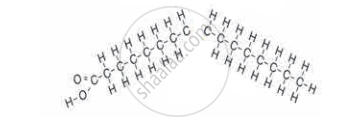
Which one of the following is NOT an unsaturated fatty acid?
Write the Zwitter ion structure of alanine
Lecithin, a small molecular weight organic compound found in living tissues, is an example of ______.
