Advertisements
Advertisements
प्रश्न
The mass of planet ‘X’ is four times that of the earth, and its radius is double the radius of the earth. The escape velocity of a body from the earth is 11.2 × 10³ m/s. Find the escape velocity of a body from the planet ‘X’.
Advertisements
उत्तर
Given:
Escape velocity on earth’s surface (vesc) = 11.2 × 10³ m/s,
Ratio of Planet (X) and earth’s mass (MX/Me) = 4,
Ratio of Planet (X) and earth’s radius (RX/Re) = 2
To find:
Escape velocity (ve)X
`"V"_"esc" = sqrt((2"GM"_"e")/"R"_"e")`
`("V"_"esc")_"X" = sqrt((2"GM"_"X")/"R"_"X")`
From formula (i) and (ii)
`("V"_"esc")_"X"/"V"_"esc" = sqrt(("M"_"X" xx "R"_"e")/("M"_"e" xx "R"_"X"))`
`= sqrt(4 xx 1/2)`
= 1.414
∴ (vsec)x = vesc × 1.414
= 11.2 × 103 × 1.414
= 15.84 × 10³ m/s
The escape velocity of a body from the planet ‘X’ is 15.84 × 10³ m/s.
APPEARS IN
संबंधित प्रश्न
A ball is thrown vertically upwards with a velocity of 49 m/s. Calculate
- the maximum height to which it rises.
- the total time it takes to return to the surface of the earth.
A stone is thrown vertically upward with an initial velocity of 40 m/s. Taking g = 10 m/s2, find the maximum height reached by the stone. What is the net displacement and the total distance covered by the stone?
What is the acceleration produced in a freely falling body of mass 10 kg ? (Neglect air resistance)
State whether the following statement is true or false :
The acceleration due to gravity acting on a freely falling body is directly proportional to the mass of the body.
Explain what is meant by the equation :
`g= Gxxm/r^2`
where the symbols have their usual meanings.
What do you understand by the term 'acceleration due to gravity of earth' ?
Explain why, a wide steel belt is provided over the wheels of an army tank.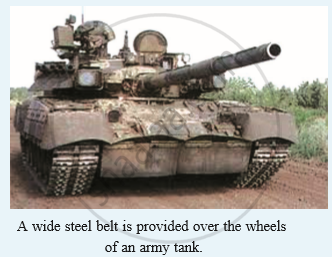
Solve the problem.
If the mass of a planet is eight times the mass of the Earth and its radius is twice the radius of the Earth, what will be the escape velocity for that planet?
A metal ball of mass 5 kg falls from a height of 490 m. How much time it will take to reach the ground? (g = 9.8 m/s2)
Choose one or more correct alternatives.
Which of the forces involved in dragging a heavy object on a smooth, horizontal surface, have the same magnitude?
- The horizontal applied force
- gravitational force
- reaction force in vertical direction
- force of friction
The acceleration produced in a body by a force of given magnitude depends on
A force of 15 N acts on a body of mass 2 kg. Calculate the acceleration produced.
A force causes an acceleration of 10 m s-2 in a body of mass 500 g. What acceleration will be caused by the same force in a body of mass 5 kg?
A body falls freely under gravity from rest and reaches the ground in time t. Write the expression for the height fallen by the body.
What force, in newton, your muscles need to apply to hold a mass of 5 kg in your hand? State the assumption.
State whether the below statement is True or False.
Neglecting air resistance, a body falling freely near the earth's surface has a constant acceleration.
The value of gravitational acceleration (g) is ______.
Write the acceleration due to gravity value on the surface of Earth.
